Products Description
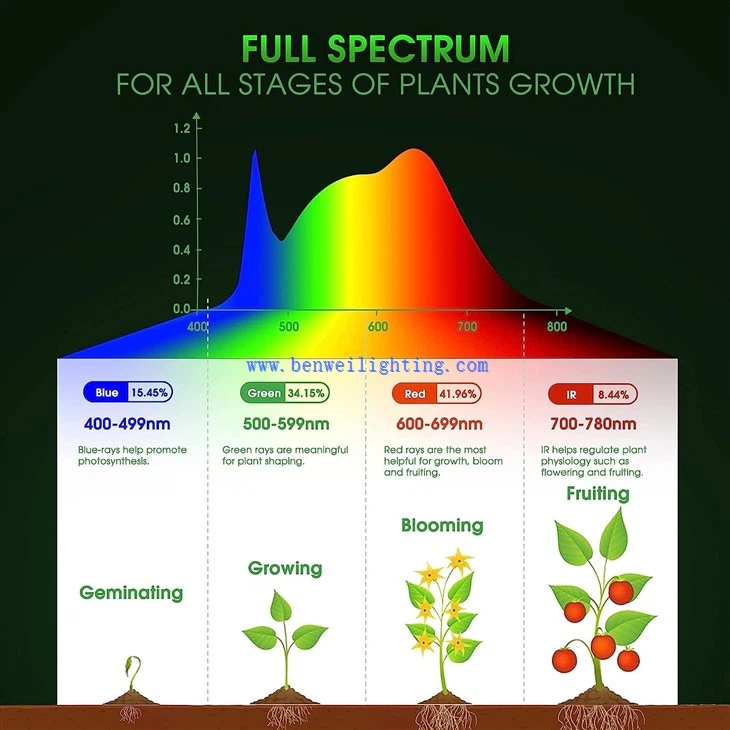
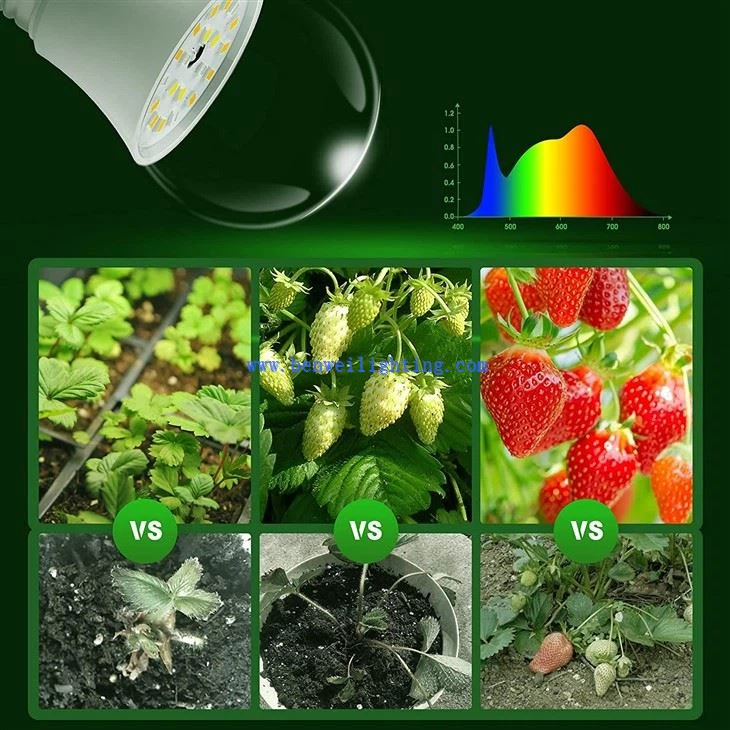
Plants mainly carry out photosynthesis through chlorophyll in their leaves. Chlorophyll mainly absorbs blue light and red light, and absorbs very little green light (that's why plants appear green).
Blue light: The wavelength is approximately 400-500 nm. It mainly promotes the vegetative growth of plants, making the plants robust and the leaves thick, and regulating the opening of stomata. It is crucial for the growth of seedlings and green leafy vegetables.
Red light: Wavelength range is 600 - 700 nm. It is mainly responsible for promoting photosynthesis, flowering and fruiting. It can effectively stimulate the elongation of plants and the synthesis of carbohydrates.
Products Specification
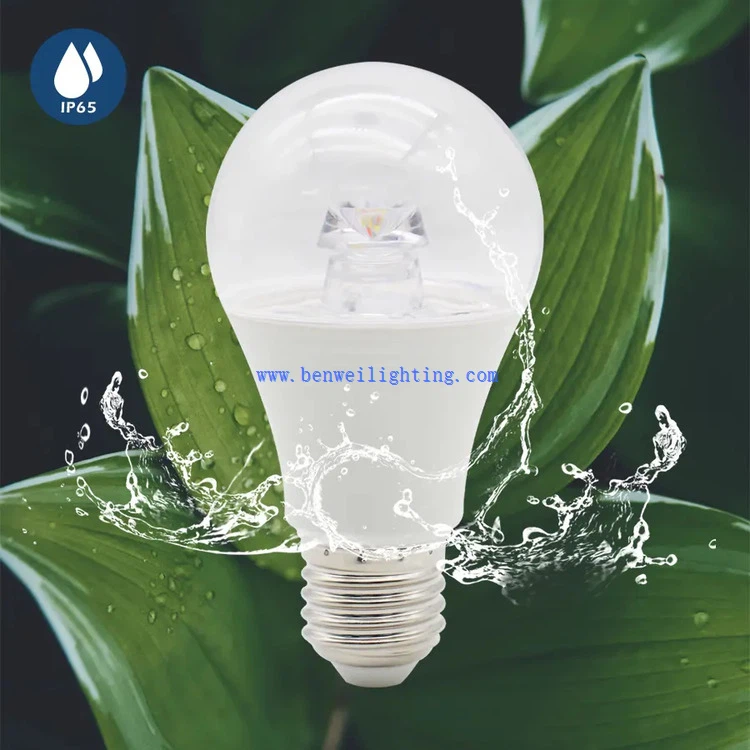
| Product Name | A60 Grow Light bulb | Lamp size | Φ2.4inch*4.2inch |
| Wattage | 9w | Material | PC |
| Lumen | 810lm | Color temperature | 4000K |
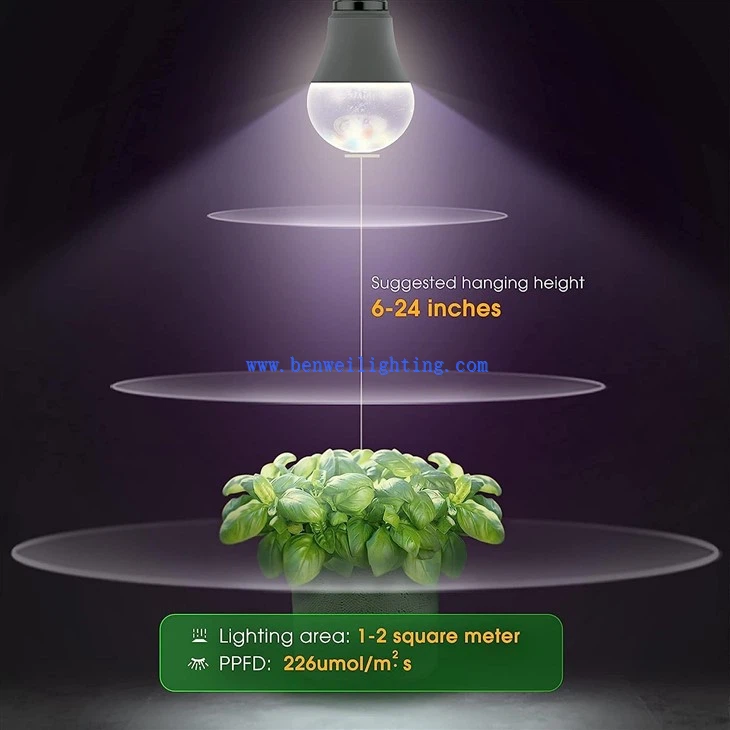
| PPFD | 3.9inch: 130 umoil*m-2*s-1 7.9inch: 40 umoil*m-2*s-1 11.8inch: 20 umoil*m-2*s-1 |
Peak Wavelength | Blue:450nm Red: 650nm |
| Ra | >80 | Power supply | AC 100-220V( ± 10%) |
Products Details
Full-spectrum bulb
Features: The emitted light is white like natural sunlight, but its spectrum has been tuned to include all plant-growth wavelengths, including blue and red light.
Advantages: Light colors are relaxing and excellent for residential use. It can light plants and grow them. Plant hues appear more realistic. It's the popular home gardening option.
A white light usually appears.
Red/blue spectrum bulbs
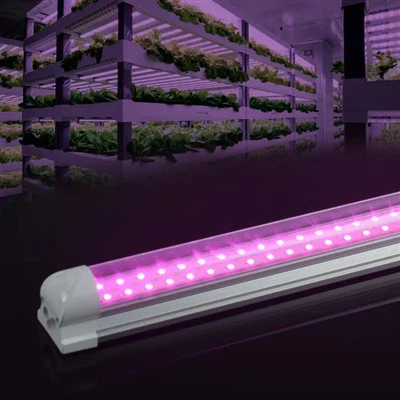
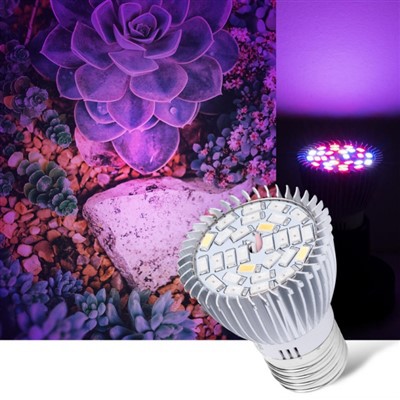
It exclusively emits red and blue light. Together, the light is purple pink or purple red.
Advantages: High light efficiency and energy concentration in plant-sensitive areas. This should be the most "energy-efficient".
Disadvantage: The purplish-red light can bother the eyes and should not be left on in living environments. Mostly used in professional planting cabinets and non-residential regions.
The usual "purple-pink glow".


Products Applications
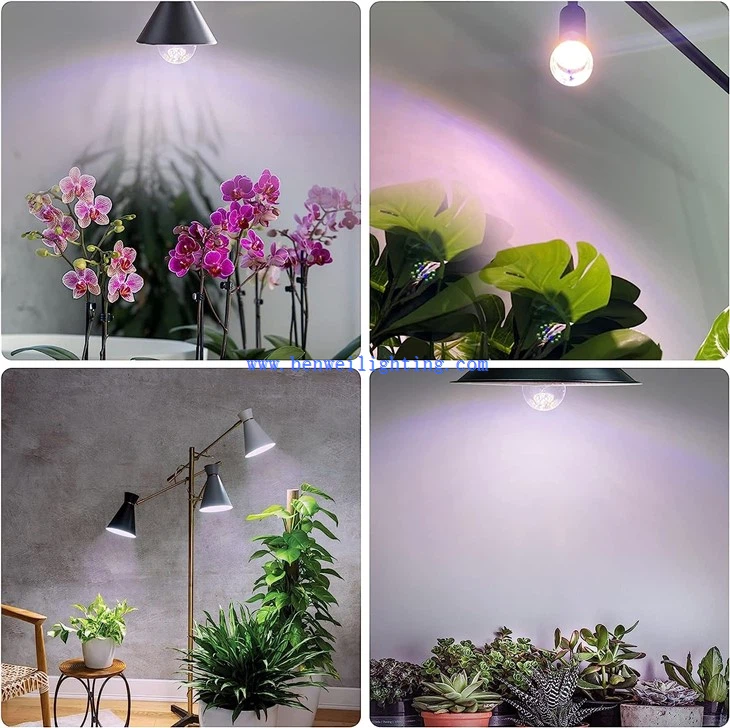
Home vegetable garden: Grow lettuce, herbs (such as basil, mint) etc. on the balcony or in the kitchen.
Supplemental lighting for succulent plants and foliage plants: In indoor environments with insufficient light, it helps prevent plants from growing excessively and fading in color.
Seedling cultivation: In early spring, seedlings are raised for vegetables such as tomatoes and peppers.
Stimulating flowering in flowering plants such as orchids: By regulating the light cycle and providing an adequate spectrum, the flowering process is accelerated.
Office desk plants: Maintain the healthy condition of the plants on the desk.

Our Company