Products Description
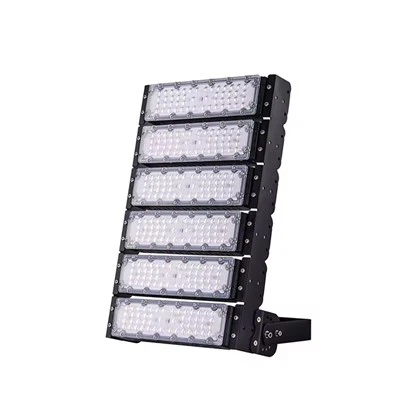
The LED modular stadium lighting system is an innovative lighting solution. Thinking of stadium lighting has changed from "fixed consumer goods" to "upgradeable and maintainable assets".
Choosing modular stadium lighting can save long-term operational costs for sports facility owners and operators, including maintenance and energy consumption.
Improved system availability and dependability.
Strong adaptability to future demand fluctuations.
It is ideal for a smart venue that values efficiency, long-term investment returns, and modern management.

Products Specification
| Power | 250W | 300W | 400W | 500W |
| Luminous Flux | 150LM/Watt | |||
| LED Source | SMD 3030 | |||
| LED Qty | 240pcs | 288pcs | 384pcs | 480pcs |
| LED Driver | Meanwell | |||
| Inpuct Voltage | 90-305V AC 50/60Hz | |||
| Color Temperature | 3000K,4000K,5000K,6500K | |||
| Color Rendering Index | CRI>80 | |||
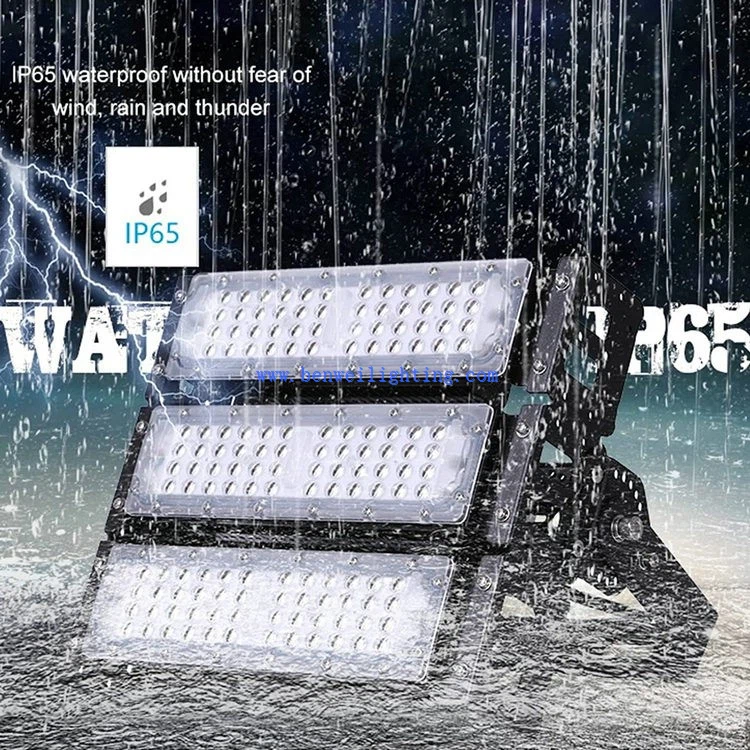
| IP Rating | IP65 | |||
Products Details
1.Unparalleled flexibility and scalability
Power configured on demand: Traditional stadium lights have fixed power, while the modular design allows you to precisely match the illumination requirements of different-sized venues by adding or reducing the number of light source modules like "building blocks". A basic platform can be applied to various scenarios ranging from community basketball courts to large football fields.
Future upgrade without worries: When the venue needs to be upgraded (such as from amateur training to television broadcasting level), you don't need to replace the entire lighting system. You can simply add modules to the existing framework or replace them with new modules with higher light efficiency, which greatly protects the initial investment.
2. Revolutionary maintenance efficiency and cost savings
Precise maintenance, with extremely low cost: If some LEDs in traditional lamps are damaged or the driver fails, they usually need to be replaced as a whole, which is very expensive. However, with the modular design, the faulty module (such as a certain LED module or power supply) can be precisely located, and only a single small module needs to be replaced, resulting in a significant reduction in maintenance costs.
Quick operation, safe and time-saving: Most modules adopt plug-in or quick-connect designs. Maintenance personnel do not need professional tools and can complete the preparatory work on the ground, significantly reducing the time for high-altitude operations, improving maintenance safety and efficiency, and minimizing interruptions during competitions or training.
3. Outstanding system reliability and long service life
Thermal management optimization: Each module is typically equipped with an independent optimized cooling path to ensure that the core components operate at the optimal temperature, thereby delaying light attenuation and guaranteeing an extremely long service life.
Fault isolation: The failure of a single module will not affect the normal operation of other modules. The stadium can still maintain basic lighting, avoiding the risk of traditional lamps being completely "out of order", and improving the reliability of the entire lighting system.
4. The ideal platform for intelligent control
The modular design is inherently compatible with intelligent lighting systems. It enables easy control of each module or module group independently, achieving:
Zone-based dimming: Only turn on full power in the areas where the competition is taking place, and reduce the brightness in the other areas to achieve significant energy savings.
One-click scene mode switching: Meeting the illumination requirements for various scenarios such as "daily training", "amateur competitions", and "professional TV broadcasts"




Products Applications

Our Company