


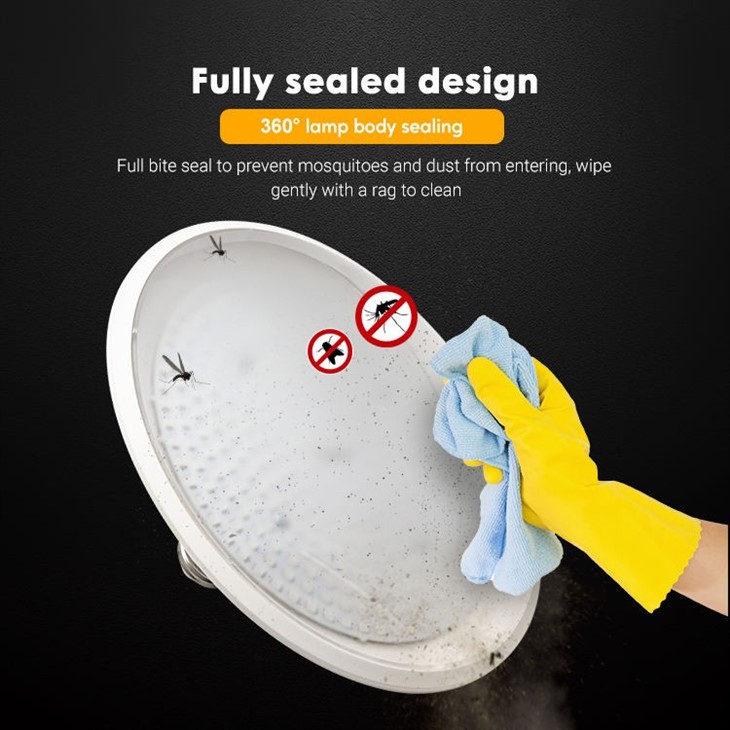


Flicker Free Waterproof 15w 30w best led light bulbs for chicken house
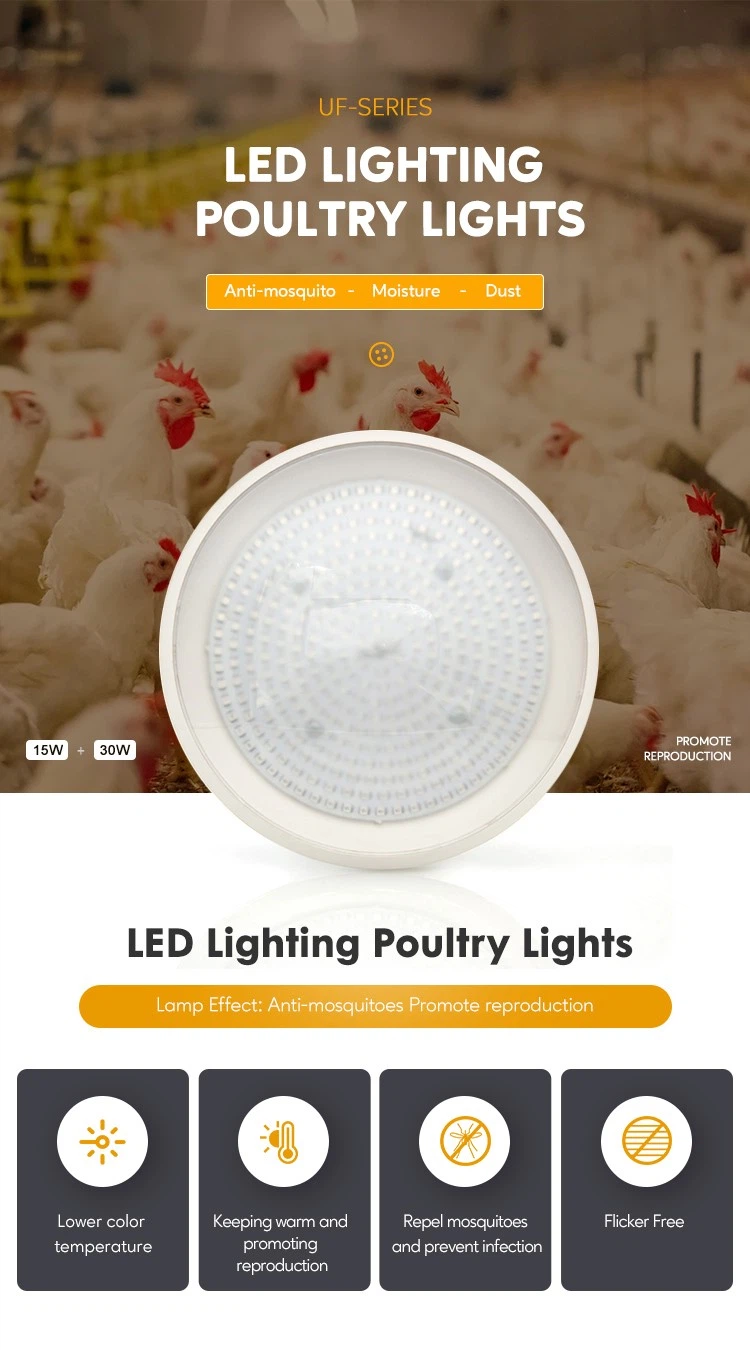
Specification:
| Model. | BW-UFB-C | |
| Wattage | 15w | 30w |
| Product Size | φ130 | φ190 |
| Led Beads Quantity | 144pcs | 244pcs |
| Led Light Source | 1800K、2200K | |
| Material | PC+PA | |
| Input Voltage | AC 165-245V | |
| Angle | 120 degree | |
| PF | >0.9 | |
| Warranty | 2 Years | |
| Spectrum | 2200-3000k | |
Products Description:
Which Poultry Lighting Fixture Type Is Best?
LEDs are the best, as can be seen from the summary above.
That is true in a lot more ways than those that were just described.
In conclusion, LEDs have several advantages that enable users to control lighting, are more durable, more effective, and easier to install.
Great, isn't that right? What you should know about LED poultry lighting is given below.


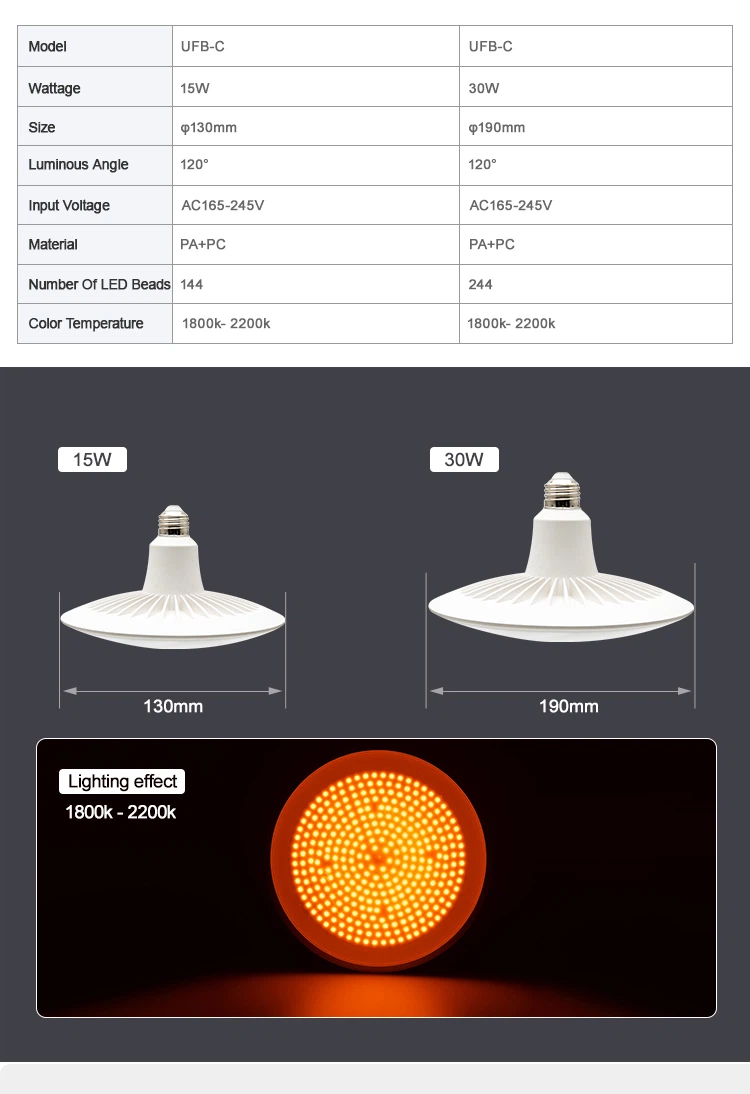
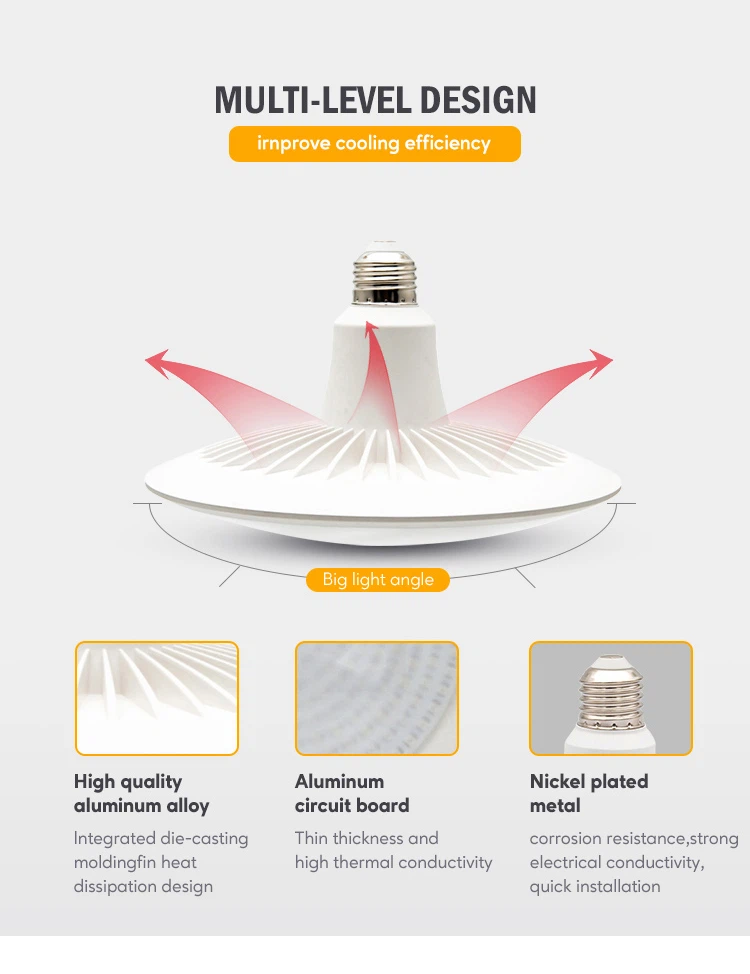


Chicken Coop Lighting: How to Light A Chicken Coop
Hens lay most frequently during the long summer days, but as the nights become longer in the autumn, productivity declines. Installing a timer-controlled light in the coop keeps hens contently laying throughout the brief winter days.
The following are some fundamental guidelines for lighting your coop:
Set the timer so that the light comes on in the morning and goes off just before dawn.
It's not necessary to have sophisticated or brilliant lighting. The light in the coop should, as a general rule, be just bright enough to read by.
The total amount of daylight and artificial light each day for winter laying should be around 15 hours.
Most chicken keepers don't give artificial lighting a second thought; they just screw an incandescent bulb into a socket and regulate it with a cheap timer. Rethink that! You're spending money on that bulb when there could be other solutions. Developed more than a century ago, incandescent bulbs are affordable, reliable in the cold, and provide strong light as soon as the switch is turned on. Sadly, they are delicate, frequently burn out, and expensive to run. The majority of the power used by incandescent bulbs is converted into heat instead of light.
Compact fluorescent bulbs first appeared on the market about 20 years ago. Fluorescent bulbs are far more energy-efficient than incandescent lights because they mostly turn their energy into light, not heat. Unfortunately, they are not the best choice for the coop because they are weak and perform worse in the cold. Although fluorescent lights have a long lifespan before they burn out, when the temperature is below zero, they hardly light up at all. Additionally, the bulbs include trace quantities of dangerous mercury.
The perfect bulbs for coops, sheds, and barns have came onto the market. Light Emitting Diode (LED) lights are ideal for chilly environments, such as hen coops. LEDs are strong and don't have any glass to shatter. Their globe is plastic, instantaneously illuminates at any temperature, seldom burns out, doesn't contain any hazardous chemicals, and works exceptionally well. Their sole drawback is price, which is rapidly declining.
You can keep your ladies content and productive even during the coldest months of the year by providing them with a little more light during the winter and using the appropriate bulb to do so!


