

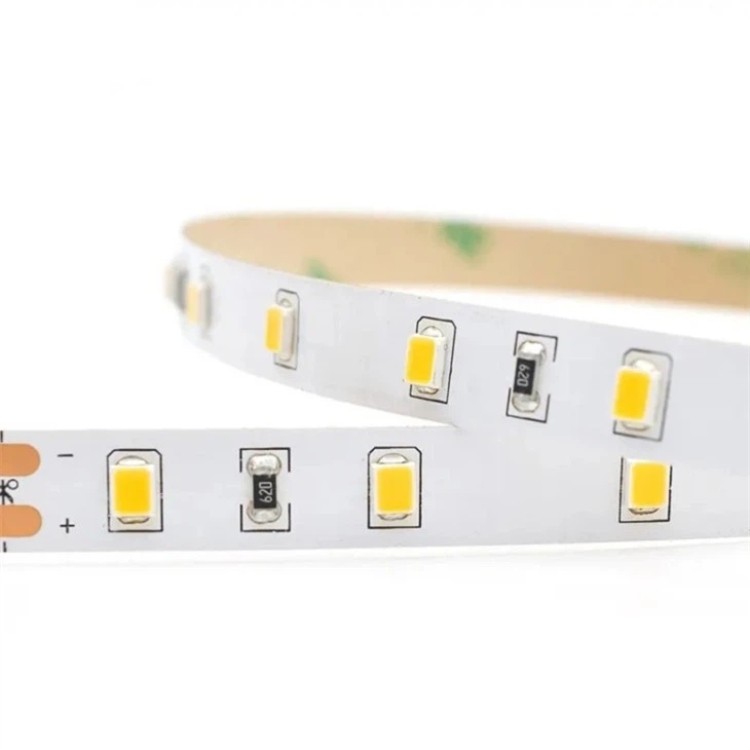
LED strips are an innovative and adaptable light source that has rapidly gained traction in the cinema and photographic lighting sector. A 12V or 24V power supply enables rapid activation of an LED strip light system.
However, contemporary photography and cinematography pros seek more than only a static, color-corrected, high CRI LED strip solution. The ability to dynamically regulate LED strips on-site is essential due to varying ambient illumination conditions and unpredictable DP orders.
The ability to adjust brightness and colour temperature or hue dynamically has become a fundamental necessity for photographers and lighting specialists.
Dimming an LED strip is often achieved by a dimmer (either DMX or analogue) that is usually positioned between the power source and the LED strip. Not all dimmers are equivalent; some may induce flickering issues when utilised in film and photography.
Consequently, it is imperative to utilise a flicker-free LED strip dimmer while illuminating a location for photography or filmmaking.
What causes flickering in an LED strip dimmer?
Nearly all LED strip dimmers function based on the electrical principle of Pulse Width Modulation (PWM). PWM operates by rapidly alternating the LEDs between "on" and "off" states, cycling through these conditions many times each second.
The observed result is diminished brightness, since the LEDs cease to generate light over the whole time of each cycle. Adjusting the ratio of "on" to "off" time in each cycle allows for the modulation of brightness, either increasing or reducing it accordingly.
Comprehending the principles of LED strip dimming and PWM will elucidate the issue of flicker. PWM dimming is essentially a regulated alternation of the LED strip between "on" and "off" states. The light source does not generate a uniform light output with consistent brightness, despite the perception of such by human visual systems.
Do all LED dimmers generate flicker? Indeed, all LED strip dimmers utilising PWM inherently generate flicker. Consequently, while the word "flicker-free" is commonly employed, it is important to recognise that a more precise meaning would be "devoid of any adverse effects associated with flicker"-and to utilise the term (in this article and beyond) with this definition in consideration.
Although the light source seems to maintain a constant brightness to humans, video cameras demonstrate that it is, in reality, oscillating rapidly between "on" and "off" states. The outcome is an unattractive variation in illuminance across each frame.
A prevalent indication of flicker is the emergence of static or oscillating black lines, referred to as "banding," that appear vertically across the screen. This phenomenon is also attributable to the on-off cycle of LED strip dimming. This phenomenon is predominantly observed in digital cameras, particularly smartphone cameras, which now have built-in software for correction.
The lines manifest vertically instead of spanning the entire image because digital cameras interpret sensory inputs linearly from the top to the bottom. The black lines indicate moments when the LED strip was in the "off" state.
It was previously said that all PWM dimmers generate flicker. The critical factor, however, is that the intensity of LED dimmer flickering fluctuates significantly based on the sophistication of the circuitry in an LED strip dimmer.
Inexpensive LED strip dimmers may generate visible flickering, but even mid-range and premium LED strip dimmers can still cause flickering in video and photographic systems, therefore cannot be deemed flicker-free.
When properly built for flicker-free operation, LED strip dimmers may be utilised in video and photography without adverse flicker effects and are even suitable for high-speed camera systems.
What is the method to ensure that LED strip dimmer operates without flickering?
PWM frequency refers to the number of on-off cycles an LED strip executes each second, measured in Hertz (Hz). The intensity of LED strip flicker is mostly influenced by the PWM frequency of the LED strip dimmer and the camera's shutter speed, which is related to the frame rate.
at elucidate the rationale for this phenomenon, consider a hypothetical scenario including a video camera capturing at 10 frames per second, paired with an LED strip dimmer configured at 50% brightness and working at 5 Hz. This indicates that the video camera captures 10 "still" images inside a 1-second interval, but the LED alternates on and off for equal durations, occurring 5 times within the same second.
Shenzhen Benwei Lighting Technology Co., Ltd was established in 2010. It is a national high-tech enterprise integrating design, R&D, production and sales of indoor and outdoor lighting products and also can do OEM ,ODM .For more details about our offerings, please contact us at bwzm18@ledbenweilighting.com





