

A variety of solar energy products have been produced, among which we have seen more estimations for solar street lighting. Solar energy is one of the new energy sources with significant potential, and because of the qualities of green energy saving and environmental protection. Since solar street lighting are quite costly, it is particularly crucial to know how to choose one that won't be a financial waste. The following is a list of some of the most significant shopping guide sources that you may choose from.
1. LED Chip
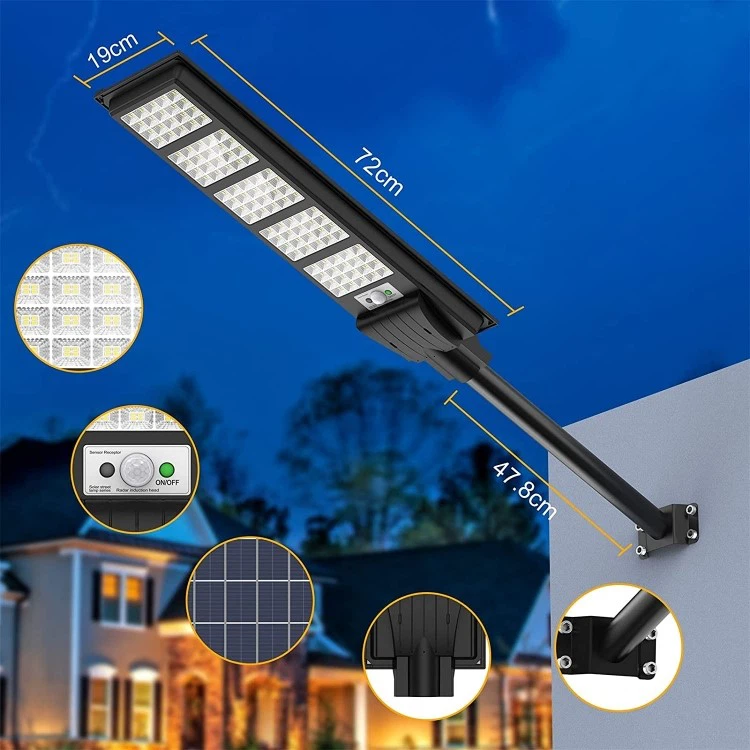
LED beads are now used in a lot of solar street lighting, however the more beads the better. In reality, the brightness increases with power level, thus the easiest method to tell whether there is a strobe failure is to put your phone on a screen recorder and check to see if it has been flashing. The benefits of solar lights and lanterns include energy savings, environmental preservation, and, of course, extended product lives. In general, low-pressure sodium lamps, LED lamps, and 12V DC energy-saving lamps are used.
2. Solar Panel
The photovoltaic effect, which occurs when light energy is converted into electricity, is the primary purpose of solar panels. Monocrystalline silicon solar cells, polycrystalline silicon solar cells, and amorphous silicon solar cells are the most prevalent and practical types of solar cells. It is preferable to utilize polycrystalline silicon solar cells in east and west locations with enough sunlight since they are more affordable than monocrystalline silicon solar cells, has a higher conversion efficiency recently, and have a reasonably straightforward manufacturing method.
Since the electrical performance characteristics of monocrystalline silicon solar cells are quite constant, they are preferable in the south where sunlight is often not particularly abundant. When the amount of indoor sunlight is extremely low, amorphous silicon solar cells perform better since they need less solar lighting. The solar panel's size is the most obvious indicator. Of course, take care of the white portion as well. The greater the board area, the better.
3. Storage Battery
In order for solar photovoltaic power production to function, the battery system must often be configured since the input energy is not steady enough. Solar lights are no exception; they need a battery to function. Batteries may be broadly categorized into three types: lead-acid, lithium, and colloidal. These three types vary depending on the use. Lithium batteries are used more often these days, but since they are more expensive than the other two, each person should make their own decision.

4. Light Pole
The height and form of the two elements should be taken into account while designing solar street light poles. The cost will increase with height, procedure complexity, and price, with certain unique places, such as coastal, doing a better job than others at protecting the light pole from corrosion and wind.
5. Controller
No matter how big the solar lamps are, the charge and discharge control circuit must function properly. Poor controller quality will result in excessive discharge, which is brought on by inadequate illumination time, which will cause the battery to sustain more damage. Limiting the charging and discharging circumstances will help the battery last longer by keeping it from overcharging and deep draining.
Also, the management of battery charging in the photovoltaic power generating system is more complicated than the control of conventional battery charging due to the very unsteady nature of the input energy of the system. The success or failure of the charge and discharge control circuit has a direct impact on the design of solar lights. Solar lights won't function properly if the charge and discharge control circuit is poor.





