

An In-Depth Homeowners Guide On How to Choose the Right Recessed Lights for Your Home
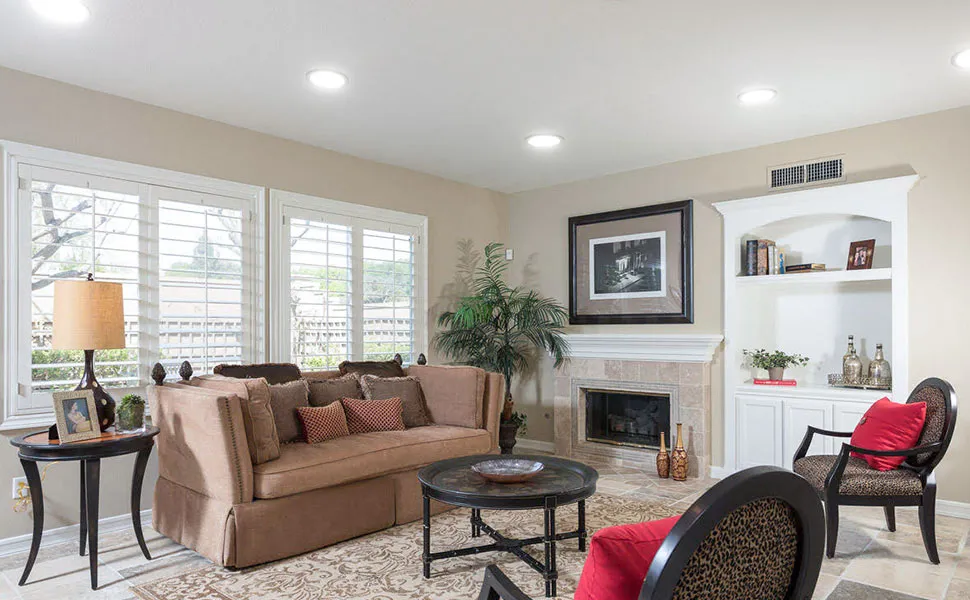
There are several names for recessed lighting, including downlights, potlights, canlights, and pucklights. Notwithstanding the nomenclature, they all relate to ceiling-mounted light fixtures that are recessed into the ceiling. They provide light without protruding into the room like a chandelier or flush mount fixture would.
Before you install recessed lights in your house, there are a lot of things you need know about them, but it may be challenging to get all the knowledge you require in one place. In order to assist you in selecting the ideal recessed light for your needs, we have put together this helpful guide.
Ceiling Lights
Here's a brief rundown of some of the most crucial phrases you should be familiar with while looking for recessed lighting before we get into the specifics.
Terminology for Recessed Lighting
A recessed light consists of three components: the housing, the bulb, and the trim. All of the cables and connectors are held in place by the housing, which is concealed inside your ceiling. The component that emits light is the bulb. The trim is the part of a recessed light that is visible and covers the housing and the ceiling hole to give it a polished appearance.
The Beam Angle, which refers to how far the trim enables the light to shine, is another important consideration. The beam angles of recessed lights can be as small as a 15-degree spotlight or as wide as a 120-degree floodlight. For normal illumination in your house, anything between 60 and 120 degrees would work nicely.
Recessed Lighting Types
These are the original recessed lights, or traditional. Although having been around the longest, they are not without their drawbacks. Compared to LED choices, they are less expensive to buy but more expensive to operate. You must be aware of your surroundings since they also emit heat.
These more modern recessed lights may cost more up front, but because they consume so little electricity to operate, their overall cost of ownership is lower. You won't have to spend money replacing LED lights every year since they last so long. They are a safer option to conventional lights since they also generate very little heat.
A tiny group of LED recessed lights called Ultra-Thin / Canless have been created especially for use in renovations. These recessed lights are significantly simpler to install in an existing ceiling since the housing is almost the same thickness as plasterboard.


Easy Installation
Installing a new recessed light to replace an old one is a very simple DIY project for homeowners. It's typically a considerably bigger undertaking to try to put recessed lights when there weren't any previously.
Recessed lights normally have a big housing, so you must put them between the ceiling's framing boards. This is not a concern with new construction since the placement of your lights may be planned throughout the building process. Creating an adequately spaced grid of lights might be a little trickier if you're installing recessed lights after the fact. To assist in appropriately running the wiring, you'll probably need to engage an electrician or contractor.
Due to their versatility and ability to be positioned practically anywhere in the ceiling, canless lights are frequently the ideal option for restorations. Even though installation is simpler, it's still a significant electrical project. You can try it if you're comfortable with that kind of DIY labour, but the majority of homeowners often employ a professional.
Sizing
After they have been installed, recessed lights typically surprise homeowners with their size. It's crucial to understand that the measurement on a recessed light's package relates to the size of the light's housing, not the trim.
You may plan out your spacing by using the measurement provided on the box to determine how big of a hole you'll need to make in your ceiling. The size of the trim will also need to be considered.
Recall that the trim on a recessed light lies below the plasterboard and extends out from the fixture to cover the edges of the light and the hole. A 4" recessed light may, after installation, seem to be 5, 6, or even 7 inches wide due to different trim designs.
Before cutting, double check that you measured the correct section; otherwise, you could have to perform a lot of plasterboard patching.
How to Choose the Correct Size
Although there are many various sizes available for recessed lights, the 6" size has long been an unofficial industry standard. Manufacturers are now figuring out how to provide the same amount of light in less packaging thanks to advancements in LED technology. These are rather powerful for their size, and their smaller 4" counterparts could end up being a better match for your area.
Light Protection
Both recessed lights in the 4" and 6" diameters work well for illuminating a whole room. As options for general illumination, they are mostly interchangeable, but there are a few considerations to take into account.
Ceiling Height: You must take your ceiling height into account. At ordinary ceiling height, both 4" and 6" work nicely. With vaulted ceilings, you may want to stay with bigger lights that have broad beam angles since the light will be distributed more evenly throughout your area as the ceiling height increases.
Current Fixtures: If you're installing recessed lights to complement an existing light fixture, such as a chandelier or ceiling fan, consider how that item already illuminates the room at various times of the day and night. If the space is too dark, 6" recessed lights can assist increase ambient light levels. If you require lighting near the shadowy borders of a space, 4" lights are frequently a better option.
The way you use the space: Not every square inch of your home's rooms requires the same amount of light. If the lighting is adjusted to the way you utilise the rooms, the atmosphere will be improved.
For instance, the lovely pendant lights in this kitchen would produce shadows on the counters if used alone. To improve the lighting on the countertop prep surfaces, this homeowner added a series of recessed lights around the kitchen's perimeter. When it's time to dine, the dining area's table is lit by a softer chandelier that is controlled by a separate switch, making the space feel cosier and more peaceful.
Cost
As 4" lights are smaller and less expensive to construct, you'll pay less up front, however pricing will vary depending on the materials, finishes, and additional features. Because they consume less electricity, they also cost less to operate.
Although 6" lights may be more expensive, you might be able to use less 6" lights—depending on the particular fixture—to have the same coverage as more 4" lights.
If you're working with a limited budget, you should plan your space using both sizes and then compare the costs to ensure you're getting the greatest value.
Decor
Homeowners have been replacing ceiling lights with a grid of recessed lights for many years. Yet as a result of the lack of visual appeal, designers are beginning to return to elegant statement ceiling lights like chandeliers and pendants.
Larger recessed lights aren't actually required in areas with a majority of ambient light coming from contemporary statement fixtures. 4" lights are a much better choice for adding lovely layers of light to your room without over-illuminating it. This size is especially prevalent in contemporary-styled rooms.
The most common places to see 6" lights are in traditional-styled rooms and huge, open spaces that require a lot of lighting.
6" lights are more prevalent, hence there are presently more trim types available. Make careful to check if a particular kind of trim is offered in the desired size before making a purchase if you have one in mind.
Location/Uses
Smaller areas like corridors, home offices, and above the kitchen sink are the most typical places to employ 4" recessed lights. When you want to see what you're doing while reading or crafting, they're ideal for illuminating the space. Also, their size is ideal for emphasising artwork or architectural details without overpowering them.
Large rooms like a living room or dining room are best lit with 6" lights. Also, because of their greater size, they are a fantastic option for spaces with high ceilings because it will assist the light spread more evenly.
If you use a method known as wall washing, strategically positioned recessed lighting may give your rooms the impression of being larger. In order to create the illusion of more space, cover the walls in your room with 4" recessed lights. This is a fantastic approach for hiding wall finish flaws in tiny areas like corridors and narrow rooms.
The placement of your recessed lights is crucial because if they are too close to the wall, they will produce wall grazing, which will not have the same space-creating effect. The objective is to achieve a smooth, even coating of the wall without any obvious lines.
Other Considerations
Although the size you select is important, there are additional factors to think about before buying! In the last several years, LED recessed lighting has advanced significantly, and new features are always being introduced to the portfolio.
Color
A broad range of colours, measured in Kelvins, are available for LED lights (K).
Up to 3000K warm light has an orange or yellow hue, similar to the light produced by conventional incandescent bulbs. It has a comfortable, soft feel and is a perfect option for bedrooms or living rooms where you want to unwind and unwind.
The light throughout the day (between 3000K and 4000K) resembles the light at the daytime. It is a terrific option for the majority of rooms in the house since it seems light and white.
When Kelvins rise, cool light (over 4,000K) begins to seem blue. Blue light helps individuals stay attentive and feels vibrant and crisp, thus it's frequently utilised in businesses and hospitals. Blue light in your house should be used with caution since it might keep you awake at night.
It's a good idea to experiment with the colour you want for your lighting first before committing since it will affect how the paint on your walls appears.
Color-changing LED lights - These lights may be programmed to provide warm or cold light, removing the tension associated with deciding which temperature to use. For homeowners who want to pick what they want, set it, and forget about it, certain lights can be altered using a switch in the housing. Others are adjustable by a remote control or a smart hub, making your home's illumination completely adaptable to any activity.
Dimmable
Where feasible, we advise mounting LED lights on a dimmer switch. It's convenient to have the option of dimming the lights throughout the day because they are so bright. If this is a feature you desire in your house, double-check before buying as most LED lights are already dimmable, but others aren't.
Advanced Technology
Recessed LED lights with communication capabilities can interact with other home automation systems like a smart hub. With the right features, you might be able to schedule the lighting or even activate it using your voice rather than a switch.
There are several factors to take into account while installing recessed lighting. In order to help you get started, our lighting specialists would delighted to share their extensive experience with you. Call us or visit our showroom to witness for yourself the dramatic difference recessed lighting can make to your house.





