

You may be enquiring whether E26 and E27 are same or interchangeable, and if an E26 bulb may be utilised in an E27 socket, or the reverse. Prior to proceeding, it is imperative to acknowledge the associated safety hazards!
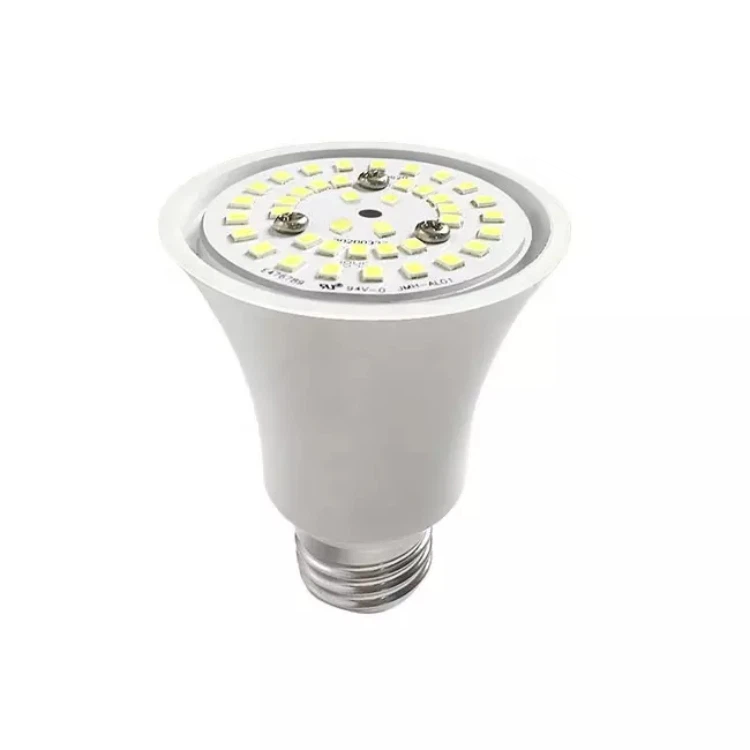
A Convergence of Dual Voltage Standards
Before the advent of energy-efficient lights like CFL and LED, incandescent bulbs functioned exclusively at specific voltage levels: 120V AC in North America and 240V AC in Europe and other regions using 240V AC.
No incandescent bulb exists that operates on both 120V AC and 240V AC as a "wide voltage" option.
The 120V AC variants employed E26 bulb bases, but the 240V AC variants utilised E27 lamp bases-similar yet somewhat different screws.
The differing voltage ratings rendered it nearly impossible for incandescent E26 lights to be utilised in an E27 socket at 240V AC, and vice versa, due to an intrinsic voltage incompatibility.
However, the advancement of CFL and LED bulbs has rendered lights compatible with a diverse array of voltages. Certain LED bulbs may function at any voltage between 90V AC and 240V AC.
The identical LED bulb may therefore be utilised on a 120V AC circuit in North America and a 240V AC circuit in Europe.
However, the inquiry emerges: should the LED light adhere to the E26 or E27 Edison Screw standard?
Additionally, if an E26 LED bulb is rated for 240V AC, is it compatible with an E27 socket, and vice versa?
Caution Against Erroneous Guidance!
Numerous manufacturers and light bulb retailers assert that E26 and E27 bulbs and sockets are compatible. They will assert that it is safe to install an E26 bulb in an E27 socket, and vice versa.
Moreover, their prevalent rationale is that "E27 measures 27 mm and E26 measures 26 mm, and since we know they are compatible, it suffices!"
This advise is erroneous and founded on misleading facts!
When produced according to the widely recognised IEC standards, E26 and E27 lamp bases include identical diameter parameters ranging from 26.05 mm (minimum) to 26.45 mm (maximum).
The distinction between E26 and E27 lies in the minimum distances between the bottom contact (live contact) and the screw threads. The disparity arises from the distinct line voltage levels for which the E26 and E27 standards are engineered: 120V AC and 240V AC, respectively.
E26 and E27 lamp bases are generally technically interchangeable; an E26 bulb may be physically inserted into an E27 socket and vice versa.
Nevertheless, the compatibility and functionality of a bulb do not guarantee that your lamp installation adheres to the electrical safety regulations for which the lamp and lampholders were manufactured. A faulty installation might elevate the danger of short circuits and electrical fires.
Generally, bulbs designated as E27 are compatible and safe for use in E26 lampholders; nevertheless, E26 bulbs may provide an electrical safety risk when utilised in E27 lampholders and 240V AC systems.
E26 bulb bases are designed to accommodate voltages up to 120V AC, not 240V AC. Elevated voltages need an increased spacing between live and neutral connections; hence, E27 imposes more stringent standards regarding the separation distance.
We will thoroughly examine the distinction between E26 and E27.
Mechanical differences between E26 and E27; Production of Edison Screw lamp bases are regulated by IEC regulations, specifying the necessary dimensions in IEC 7004-21A-2 for E26 and IEC 7004-21-9 for E27.
Although sometimes characterised as a 1 mm discrepancy between E26 and E27 screw size, the specifications for the screws are essentially identical.
The most notable distinctions are observed in:
1) Total screw length, 2) Diameter of screw thread at the trough, and 3) Height of the insulator cap.
Minimum screw length: E26 - 19.56 mm
E27 - 22.0 millimetres
Diameter of the screw at the apex of the thread:
E26: 26.05 mm to 26.41 mm
E27: 26.05 mm to 26.45 mm
Maximum screw diameter at thread trough: E26: 24.72 mm, E27: 24.26 mm
Distance between threads (OC): E26: 3.629 mm; E27: 3.629 mm
Live contact pad width: E26: 9.14 mm - 11.56 mm
E27: 4.8 mm - 11.5 mm
Minimum insulator height: E26: 3.25 mm; E27: 5 mm
Divergences in Electrical Safety Between E26 and E27
The mechanical distinctions previously mentioned may appear trivial, although they arise from the specific voltage levels for which each light base is constructed.
E26 lights are intended for the North American market, utilising 120V AC, whilst E27 lamps are tailored for other areas that mostly employ 240V AC.
Due to the design of E27 bulbs for higher voltage circuits, extra care are necessary to provide adequate space between the live and neutral conductors.

Shenzhen Benwei Lighting Technology Co., Ltd was established in 2010. It is a national high-tech enterprise integrating design, R&D, production and sales of indoor and outdoor lighting products and also can do OEM ,ODM .For more details about our offerings, please contact us at bwzm18@ledbenweilighting.com





