If you work on hotel, hospital, or apartment projects, you've likely encountered this scenario: corridor lights left on all night, bathroom lights forgotten-and when the electricity bill arrives at the end of the month, the property manager is far from happy. This leads to a common question: are PIR (passive infrared) sensor switches actually reliable?
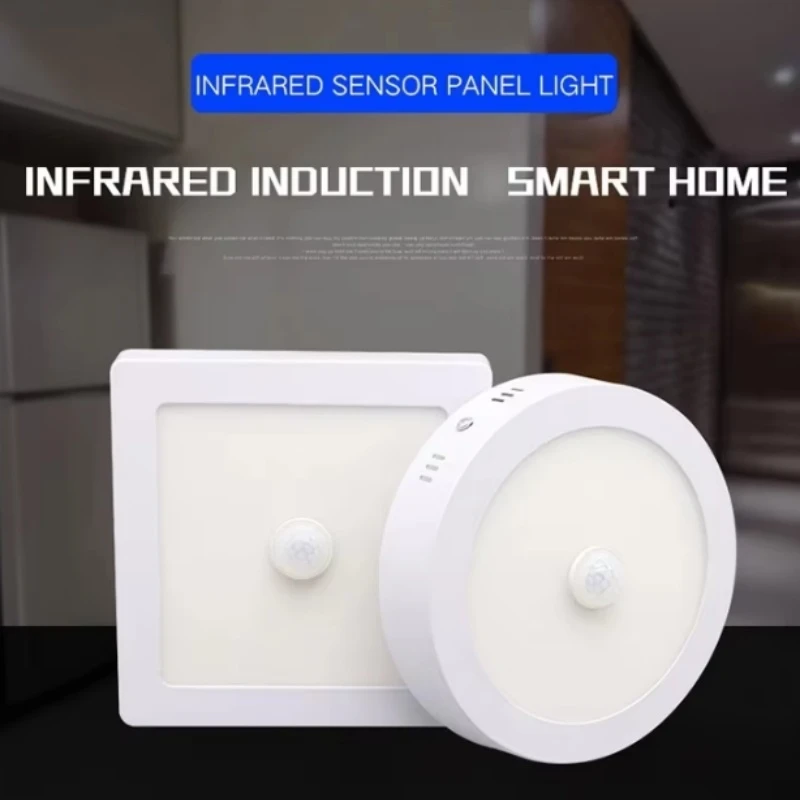
In short, PIR sensor switches detect changes in infrared heat emitted by the human body to determine whether a space is occupied. The lights turn on when someone enters and switch off after a set delay once they leave. While the underlying principle is straightforward, its effectiveness-and the specific considerations for implementation-vary significantly depending on the building type. This article explores the suitability of PIR sensors for hotels, hospitals, and apartment buildings, and highlights key factors to consider when selecting them.
The Verdict: Suitable, but not a "plug-and-play" solution
PIR sensors have a place in all three types of facilities, offering three primary benefits:
• Energy savings: Lights are only active when a space is occupied, yielding the most significant savings in common areas and infrequently used spaces.
• Convenience: Eliminates the need for manual switching and the risk of lights being left on accidentally.
• Touchless operation: No physical contact with switches is required-a major advantage for environments with high hygiene standards.
However, success depends entirely on "choosing the right location and configuring the settings correctly." The same sensor might provide an excellent user experience in a corridor, yet prove highly frustrating in an office where people remain seated for long periods.
Hotel Settings: Where to install-and where to exercise caution
Ideal locations include:
• Guest room entryways and bathrooms: Lights turn on automatically upon entry and switch off after a delay upon exit; this also ensures guests don't have to fumble for a switch in the dark during the night.
• Guest room corridors and elevator lobbies: Given the irregular foot traffic, sensor-based control is far more flexible than fixed-timer scheduling.
• Back-of-house corridors, linen rooms, and storage closets: These areas see low usage and are the most common places where lights are left on by mistake. Areas Requiring Caution:
• Guest Room (Master Bedroom): Guests often remain nearly motionless while reading or watching TV in bed; if the lights were to suddenly turn off, it would result in a very poor experience. In these areas, it is generally better to stick with traditional switches, or perhaps limit the use of motion sensors to night-lights only.
• Lobbies and Banquet Halls: Given the large scale of these spaces and the complexity of their lighting circuits, they are better managed via a centralized control system.
Hotels prioritize guest experience, so avoid setting the "off-delay" timer too short. In bathrooms, it is advisable to be more generous with the timeout duration-since movements while showering can be minimal, having the lights turn off unexpectedly would be quite awkward.
Healthcare Settings: Hygiene and Nighttime Illumination are Key
Why it's a good fit:
• Touchless Operation: Medical staff often have their hands occupied with instruments or need to maintain sterility; a "wave-to-activate" feature is more convenient than a physical switch and eliminates a potential point of cross-contamination.
• Nighttime Corridors and Patient Restrooms: Lights activate automatically when a patient gets up at night, reducing the risk of falls. If the sensor panel includes ambient light sensing, the lights can remain off during the day when natural light is sufficient.
• Storage Rooms, Changing Rooms, and Utility/Equipment Rooms: These are also areas with low frequency of use.
Points to Consider:
• Operating Rooms, ICUs, and Emergency/Resuscitation Areas: These spaces require stable, uninterrupted lighting; automatic shut-off logic should not be used here.
• Patient Wards: Patients may remain in bed without moving for long periods. Lighting should remain under manual control to prevent sensor panels from incorrectly assuming the room is unoccupied.
• Ease of Cleaning: Sensor panel surfaces should be flat and resistant to wiping, facilitating routine disinfection.
Apartment Buildings: Common Areas are the Primary Focus
In residential apartment buildings, tenants generally control the lighting within their own private units; the real challenge for property management lies in the common areas.
• Stairwells and Fire Exits: Using PIR (passive infrared) sensors-where lights turn on upon arrival and switch off after a delay-is the classic application. This directly reduces energy consumption, which is reflected in lower property management costs.
• Underground Garage Entrances and Storage Rooms: These areas see infrequent, sporadic use; installing sensor panels means they can essentially be left to operate on their own.
• Building Entrances and Public Corridors: Ideal for use with ambient light sensors-the lights remain off during the day and only activate at night.
• Residential Entryways (Foyers): A great value-add for rental apartments; tenants don't need to fumble for a light switch upon entering, offering a more intuitive user experience.
Another characteristic of apartment buildings is the high volume of units. A single building may require dozens or even hundreds of sensors, so the consistency of the units and the ease of installation will directly impact construction efficiency.
Key Parameters to Consider During Selection
Regardless of the application, be sure to clarify the following specifications when requesting quotes or samples:
• Detection Range and Angle: Typically around 120° with a range spanning from a few meters to over ten meters; ensure this aligns with the dimensions of the actual space.
• Adjustable Time Delay: This is crucial for the user experience; ideally, it should be adjustable from a few seconds up to several minutes (or even longer).
• Ambient Light Sensing: The ability to set the device to "activate only when dark" is highly useful for corridors and stairwells.
• Load Type and Power Capacity: Different loads-such as LEDs, halogen bulbs, or fans-have distinct electrical characteristics. Verify that the sensor is compatible with your specific lighting fixtures to avoid issues like flickering after installation.
• Wiring Requirements: Determine whether a neutral wire is required, as this significantly affects the complexity of retrofitting older buildings.
• Panel Appearance and Dimensions: Ensure the design complements the existing switch series in the project. Also, confirm compatibility with required regional standards (e.g., European, American, or British standards).
Common Pitfalls During Installation
• Proximity to Heat Sources: Placing sensors near air conditioning vents, radiators, or areas exposed to direct, intense sunlight can lead to false triggers.
• Improper Installation Height: While generally installed at the same height as standard light switches, be mindful of potential "blind spots" if there are many obstructions.
• Overlooking Scenarios Involving Minimal Movement: Passive Infrared (PIR) sensors are highly sensitive to significant motion but less responsive to subtle, localized movements; therefore, they are unsuitable for areas where occupants remain stationary for long periods.
• Lack of a Manual Override: Every space should retain the option for manual control to accommodate special circumstances.
Conclusion
In summary, PIR sensor panels offer significant value for hotels, hospitals, and apartment buildings, though the focus varies by setting:
• Hotels: Best suited for entryways, restrooms, corridors, and back-of-house areas; use with caution in guest rooms.
• Hospitals: Ideal for nighttime lighting and touchless operation; however, automatic shut-off is not recommended for critical medical areas.
• Apartment Buildings: Highly effective in common areas such as stairwells, garages, and hallways, providing a direct way to save energy.
By selecting the right locations, configuring appropriate time delays, and ensuring load compatibility, you can enjoy a seamless and worry-free experience with PIR sensor panels.
Are you currently selecting equipment for a hotel, hospital, or apartment project? Let us know your project type, intended use cases, and required panel specifications. Our team can recommend the ideal PIR sensor panel solution tailored to your specific needs, and provide samples and price quotes. Simply click the inquiry button on the page or send us a message directly-we will get back to you promptly.
Our address
No. 5-3 Niujiao Road, Yanchuan Community, Yanluo Subdistrict, Bao'an District, Shenzhen
bwzm18@ledbenweilighting.com