Introduction: The Rationale for Solar Street Lighting
Contextual Drivers
The global push for decarbonisation and energy independence has accelerated the adoption of solar photovoltaic (PV) technology in public lighting. Solar street lights eliminate the need for trenching, cabling, and grid connection, making them particularly attractive for remote areas, developing regions, and communities seeking to reduce municipal electricity expenditure.
Scope of Evaluation
The central question – "Are solar street lights worth it?" – is decomposed into five sub‑questions:
What is the total cost of ownership (TCO) relative to grid‑powered LED or high‑pressure sodium (HPS) lights?
How do maintenance regimes and frequencies compare?
What are the quantifiable environmental benefits?
What technical limitations (energy storage, brightness, weather dependency) exist, and how can they be mitigated?
Under which geographical and operational scenarios does the investment break even?

Advantages of Solar Street Lights
Energy Cost Reduction
A typical conventional street light (150 W HPS or 80 W LED) operating 11 hours/night consumes between 320 kWh and 650 kWh annually. At an average commercial electricity tariff of 0.12/kWh,thistranslatesto0.12/kWh,thistranslatesto38–78perluminaireperyear.Solarstreetlightsdrawzeroenergyfromthegrid;theentireenergybudgetisprovidedfreebysolarirradiation.Foramunicipalitywith1,000lights,annualenergysavingsrangefrom78perluminaireperyear.Solarstreetlightsdrawzeroenergyfromthegrid;theentireenergybudgetisprovidedfreebysolarirradiation.Foramunicipalitywith1,000lights,annualenergysavingsrangefrom38,000 to $78,000.
Conventional lights require underground cabling, transformers, and connection to a distribution panel – costs that can exceed 1,000perlightinnewdevelopments.Solarstreetlightsareautonomous,eliminatingthesecapitalexpenditures.Remoteruralinstallationsmayfurtheravoidutilityextensionfees(often1,000perlightinnewdevelopments.Solarstreetlightsareautonomous,eliminatingthesecapitalexpenditures.Remoteruralinstallationsmayfurtheravoidutilityextensionfees(often15,000–$30,000 per kilometre).
Low Maintenance Requirements
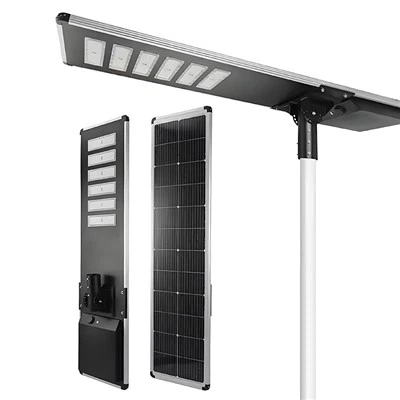
Solar street lights consist of four main components: PV panel (≥25 years), Li‑FePO₄ battery (5–8 years), LED luminaire (≥50,000 h ≈ 12 years), and charge controller (8–10 years). Routine maintenance is limited to annual panel cleaning (to prevent soiling losses) and bi‑annual visual inspection. In contrast, conventional HPS lights require lamp replacement every 12,000–24,000 h (2–4 years) and ballast replacement every 8–10 years, plus periodic cable fault detection.
| Component | Conventional (HPS/LED grid) | Solar (off‑grid) |
|---|---|---|
| Annual labour (per 100 lights) | 8 h (lamp changes, fuse checks) | 2 h (cleaning, visual) |
| Replacement cycle (major) | 4 years (lamp), 8 years (ballast) | 6 years (battery) |
| Annualised maintenance cost per light | 12–12–18 | 4–4–6 |
Environmental Sustainability
Each conventional street light fed by a coal‑heavy grid emits approximately 150–300 kg CO₂/year. A solar street light, over its 25‑year service life, avoids 3.75–7.5 tonnes of CO₂ per unit. For a 1,000‑light installation, this equates to 3,750–7,500 tonnes of CO₂ reduction – equivalent to removing 800–1,600 passenger cars from the road for one year.
The embodied carbon of PV panels (≈500 kg CO₂/kWp) and Li‑FePO₄ batteries (≈150 kg CO₂/kWh) is offset within 2–4 years of operation in sunny regions. Recycling programs for end‑of‑life batteries (cobalt‑free lithium iron phosphate) further reduce environmental burden.
Durability and Weather Resilience
Commercial‑grade solar street lights are rated IP65 (dust‑tight, water jets) or IP66 (powerful water jets). PV panels are certified to withstand hail up to 25 mm diameter at 80 km/h (IEC 61215). Operating temperature ranges typically span –20 °C to +60 °C, making them suitable for most climates except extreme polar winters.
Anodised aluminium housings and stainless steel hardware prevent rust in coastal or industrial environments. UV‑stabilised polycarbonate lenses resist yellowing for at least 10 years.
Disadvantages and Technical Limitations
High Initial Capital Expenditure
A complete solar street light (80 W LED, 150 Wp panel, 300 Wh Li‑FePO₄ battery, 10 m pole) costs approximately 400–400–700, compared to 150–150–250 for a grid‑connected LED street light (excluding trenching and wiring). The premium can be 2–3× higher.
Using the earlier energy saving of 38–38–78/year and maintenance saving of 8–8–14/year, total annual benefit = 46–46–92 per light. The incremental cost (250–250–450) yields a simple payback of 2.7 to 9.8 years, depending on local electricity tariffs and solar insolation. For high‑tariff regions ($0.20/kWh) with high solar availability (>5.0 kWh/m²/day), payback can be as low as 2–3 years.
Limited Energy Storage and Weather Dependency
Most solar street lights are designed for 3‑day autonomy (can operate 3 consecutive overcast days). Battery capacity is sized to 120–150% of nightly consumption, with depth of discharge (DoD) limited to 80% to preserve cycle life. In regions with prolonged monsoon seasons (e.g., 7–10 days of continuous cloud), standard designs will fail.
A well‑designed solar street light produces 4000–8000 lumens, comparable to a 40–80 W LED grid light. However, due to power constraints, solar units often employ adaptive dimming – full brightness for first 6 hours after dusk, then reduced to 50% for the remaining 5 hours. This can result in lower illumination during early morning hours.
| Parameter | Conventional LED (grid) | Solar LED (off‑grid) |
|---|---|---|
| Peak luminous flux | 8000–12000 lm | 4000–8000 lm |
| Illuminance at 10 m | 15–25 lux | 8–15 lux |
| Dimming profile | Constant or scheduled | Sunset‑dependent, battery‑aware |
| Uniformity (U₀) | ≥0.35 | ≥0.25 (can be lower) |
For residential streets and parks, 8–12 lux is acceptable per EN 13201. For major roads or high‑security zones, solar may be inadequate without oversizing.
Decision Framework: When Are Solar Street Lights Worth It?
Favourable Conditions (Strong Worthiness)
Annual global horizontal irradiation (GHI) ≥ 4.5 kWh/m²/day (e.g., most of Africa, India, Australia, Southern Europe, Southwestern USA).
Fewer than 60 consecutive overcast days per year.
Grid electricity tariff > $0.15/kWh.
Distance to nearest grid connection > 500 m (making trenching cost prohibitive).
Availability of government subsidies, carbon credits, or green financing.
Pathway, park, campus, and residential street lighting (not high‑speed roads).
Temporary or construction site lighting (no grid permitting delays).
Disaster‑prone areas where grid outages are frequent.
Unfavourable Conditions (Low Worthiness)
Locations with GHI < 3.5 kWh/m²/day (e.g., Northern Europe, Pacific Northwest USA) require oversized batteries and panels, increasing capital cost and reducing payback viability.
Airport runways, hospital emergency access roads, and high‑crime zones requiring uninterrupted ≥20 lux illumination are better served by grid + battery backup systems.
In regions with heavily subsidised grid power (0.05–0.05–0.08/kWh, e.g., parts of China, Middle East), the energy savings may never offset the higher upfront cost over a 10‑year horizon.
Conclusion and Recommendations
Net Present Value Summary
Based on a 20‑year analysis (real discount rate 5%):
| Scenario | Conventional LED (grid) | Solar LED (off‑grid) | Difference |
|---|---|---|---|
| Initial cost | $200 | $550 | +$350 |
| 20‑year energy cost | $760 | $0 | –$760 |
| 20‑year maintenance | $240 | $100 | –$140 |
| NPV (solar minus conventional) | – | – | –$550 (solar cheaper) |
Thus, solar street lights are economically superior over a two‑decade lifetime in medium‑to‑high tariff regions, despite higher upfront investment.
Final Verdict
Solar street lights are unequivocally worth it under the following conditions:
Annual solar insolation ≥ 4.5 kWh/m²/day.
Electricity tariff ≥ $0.12/kWh.
Required illuminance ≤ 15 lux (M5 or lower road class).
Ability to accept a 3‑5 year payback period.
Where these conditions are not met, hybrid solutions (solar + grid with intelligent controller) or conventional grid lighting remain preferable. Communities should conduct a site‑specific feasibility study using actual solar resource data (e.g., NASA SSE, PVGIS) and load profiles before committing to mass deployment.

How To Cooperate With Us?
Our firm prides itself on owning its own factory, guaranteeing complete control over the production process and the quality of our goods. We are not only agents; we are manufacturers committed to offering our clients the most competitive rates available. We invite consumers to evaluate our samples first, as we are assured that the quality and pricing of our items are self-evident. Our dedication to excellence and client satisfaction compels us to consistently perform at our best and provide superior quality products.
Our address
3rd Floor, 5th Building, Hebei Industrial Park, Hualian Community, Longhua District, Shenzhen, China