

If you are selecting lighting fixtures for a supermarket or a cold storage facility, you may have encountered a common dilemma: are "tri-proof" (waterproof, dustproof, and corrosion-proof) batten lights suitable for these spaces? The answer is: in most cases, yes-but it depends on the specific environment and technical requirements. Supermarkets and cold storage facilities have vastly different operating conditions; the former prioritizes brightness, comfort, and product display, while the latter must contend with low temperatures, condensation, and frequent switching cycles. Below, we break down the key factors to consider when selecting lighting for these applications.
What are "tri-proof" batten lights, and why are they considered for these environments?
"Tri-proof" batten lights are linear fixtures designed to be waterproof, dustproof, and corrosion-resistant. They typically feature an elongated housing covered by a translucent or transparent lens, sealed using clips or gaskets.
They are often considered for supermarkets and cold storage facilities for several clear reasons:
Excellent sealing, which prevents the ingress of water and dust.
Linear light distribution that provides uniform illumination-ideal for aisles between shelves or storage racks.
Simple installation, making them easy to replace or scale up.
Greater durability compared to standard batten lights or louvered fixtures.
However, "suitable for use" does not mean they can be used indiscriminately. Since the requirements for these two types of environments differ, let's examine them separately.
Supermarket Applications: Where are tri-proof lights appropriate?
Not every area in a supermarket requires tri-proof lighting; choosing the right location is essential to maximizing their value. Suitable areas:
Storage and unloading areas: These zones are prone to dust and occasional moisture, making the protective features of "tri-proof" (dustproof, waterproof, and corrosion-proof) lights ideal.
Fresh food processing areas: The handling of meat, seafood, and produce often involves frequent washing, making waterproof capabilities a necessity.
Commercial kitchens and deli preparation areas: These spaces feature high levels of oil mist and humidity; sealed light fixtures are easier to clean.
Underground parking lots and entry/exit passageways: These environments are often damp and subject to significant temperature fluctuations, making them well-suited for such fixtures.
Areas requiring caution:
Main retail display areas: These spaces demand high color rendering and a specific visual atmosphere. Professional shelf lighting or track spotlights are generally better choices here, as tri-proof lights are better suited for basic, functional illumination.
In short, within a supermarket, tri-proof lights are best applied in "functional spaces" rather than "display spaces."
Cold storage environments: Key requirements for low-temperature settings
Cold storage facilities are a classic application for tri-proof lights, though they come with more stringent requirements. There are three primary factors to consider:
Low temperatures: Standard cold storage units typically operate between 0°C and 5°C, while freezers can reach as low as -18°C or even -25°C.
High humidity and condensation: The exchange of hot and cold air when entering or exiting the facility can cause condensation or even frost to form on the surfaces of light fixtures.
Frequent switching: Some cold storage facilities utilize motion-activated lighting, leading to a high frequency of on/off cycles.
Consequently, when selecting tri-proof lights for cold storage, it is not enough to simply ensure they are waterproof; one must also verify that their specified operating temperature range covers the actual environment. Many standard models are rated for a temperature range of approximately -20°C to 40°C; using these in a -25°C deep-freeze facility would pose a risk. It is essential to choose models explicitly rated for low-temperature use.
Choosing an Ingress Protection (IP) Rating: IP65, IP66, or IP69K?
The IP rating is a core specification for "tri-proof" (dustproof, waterproof, and corrosion-resistant) lights. The appropriate rating depends on the specific environment:
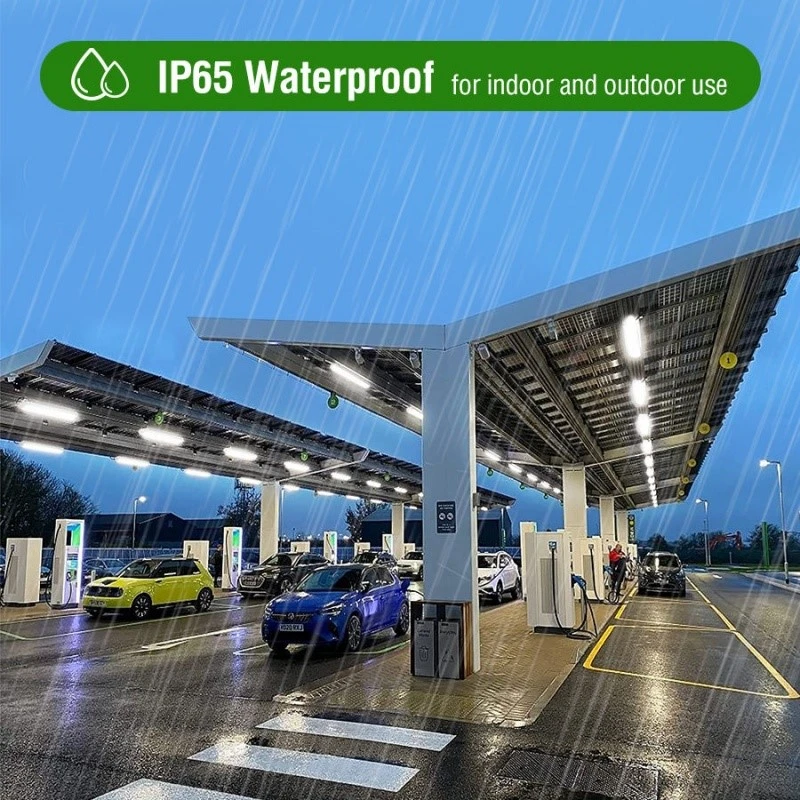
IP65: Offers protection against dust and low-pressure water jets; suitable for general storage areas and standard cold storage facilities.
IP66: Withstands powerful water jets; ideal for fresh-food processing areas that require high-pressure washdowns, or cold storage environments that undergo frequent cleaning.
IP69K: Withstands high-temperature, high-pressure water jets; designed for food processing facilities with extremely high hygiene requirements.
When making a selection, there is no need to automatically aim for the highest possible rating. If your cold storage facility is used only for routine storage and is rarely cleaned with high-pressure water jets, an IP65 rating is usually sufficient. If your cleaning protocol involves high-pressure washdowns, an IP66 rating or higher is a safer choice. Furthermore, the quality of the sealing gaskets is often more critical to long-term performance than the IP rating itself; as gaskets age over time, the effective protection level may decline.
Low-Temperature Startup and Driver Stability
In cold storage lighting, the LED driver-rather than the LED chips themselves-is the component most prone to failure.
At low temperatures, the performance of certain electrolytic capacitors can degrade, leading to slow startup, flickering, or even a complete failure to turn on.
High-quality, low-temperature-rated drivers utilize components designed for cold environments and have undergone rigorous low-temperature aging tests.
In settings where lights are switched on and off frequently, pay close attention to the driver's switching lifespan and its surge-withstand capability.
When procuring lighting, ask the supplier directly: Has the driver undergone low-temperature startup testing, and what is its minimum startup temperature? Suppliers who can provide specific data are generally more reliable.
Luminous Efficacy, Color Rendering Index (CRI), and Light Color Selection
Lighting quality also impacts practical utility-a factor that is particularly significant in supermarket environments. Luminous Efficacy: For cold storage areas, it is advisable to choose products with high luminous efficacy. This ensures sufficient brightness while reducing power consumption-a key benefit, given that cold storage facilities are already energy-intensive. Furthermore, lighting that generates less heat helps alleviate the load on the refrigeration system.
Color Rendering Index (CRI): For general warehousing and cold storage, a CRI (Ra) of 80 or higher is typically sufficient. In areas used for processing fresh produce or handling prepared foods, a CRI of 90 or higher is recommended to ensure that the colors of meat, fruits, and vegetables appear natural and authentic.
Color Temperature: Cold storage and warehousing facilities generally utilize neutral-to-cool white light (4000K–6500K), which provides excellent visual clarity. For supermarket back-of-house areas, a color temperature of around 4000K is often preferred for greater visual comfort.
Installation Methods and Maintenance Costs
Another advantage of "tri-proof" (waterproof, dustproof, and corrosion-resistant) lights is their installation flexibility:
They can be surface-mounted (attached directly to the ceiling) or suspended using chains or rods.
They support end-to-end (daisy-chain) connection, allowing multiple units to be linked on a single circuit, which simplifies wiring.
Available in standard lengths-0.6m, 1.2m, and 1.5m-they can be easily configured to suit various spatial layouts.
Since ceiling heights and shelving configurations vary across cold storage facilities, it is important to verify aisle widths and the clearance between the lighting fixtures and the stored goods to prevent the lights from being obstructed or struck by cargo. In terms of maintenance, the smooth surface of these fixtures makes them easy to wipe clean. Additionally, should a lens cover become damaged or aged, it can be replaced individually, resulting in a lower total cost of ownership over the long term.
Common Pitfalls to Avoid When Purchasing
Based on frequent feedback, there are several issues worth noting in advance:
Focusing solely on the IP rating while ignoring the operating temperature: For cold storage lighting, you must verify the low-temperature specifications.
Overlooking the diffuser (lens) material: Polycarbonate (PC) diffusers offer superior impact resistance and low-temperature performance; some cheaper materials may become brittle in cold environments.
Neglecting the sealing of cable entries: If the cable entry point is not properly sealed, moisture can seep into the fixture housing along the cable.
Prioritizing the lowest price: Low-temperature and humid environments demand high-quality components. Excessively low prices often indicate inferior materials, which can lead to higher costs later due to the need for replacements.
Conclusion
Returning to the initial question: Are "tri-proof" (ruggedized/protected) lights suitable for supermarkets and cold storage facilities?
Supermarkets: Suitable for functional areas such as storage zones, fresh-food processing areas, back-of-house kitchens, and parking garages. They are generally not recommended as the sole light source for main retail display areas.
Cold Storage: Suitable, provided you select models explicitly rated for low-temperature use-paying close attention to the operating temperature range, the LED driver, and the diffuser material.
Ingress Protection (IP) Rating: IP65 is sufficient for standard environments; choose IP66 or higher if high-pressure washdowns are required.
Selection Criteria: First, define the operating environment; then, verify the temperature range, protection rating, luminous efficacy, and color rendering index (CRI).
Every project has unique requirements regarding temperature, ceiling height, and cleaning protocols-and the consequences of selecting the wrong specifications often only become apparent after six months of use. If you are planning a lighting project for a supermarket, cold storage facility, or warehouse, please share the project environment, total area, and operating temperature with us. Our team can recommend the most suitable tri-proof lighting models for your specific needs and provide detailed technical specifications, samples, and price quotes.
Our address
No. 5-3 Niujiao Road, Yanchuan Community, Yanluo Subdistrict, Bao'an District, Shenzhen
bwzm18@ledbenweilighting.com






