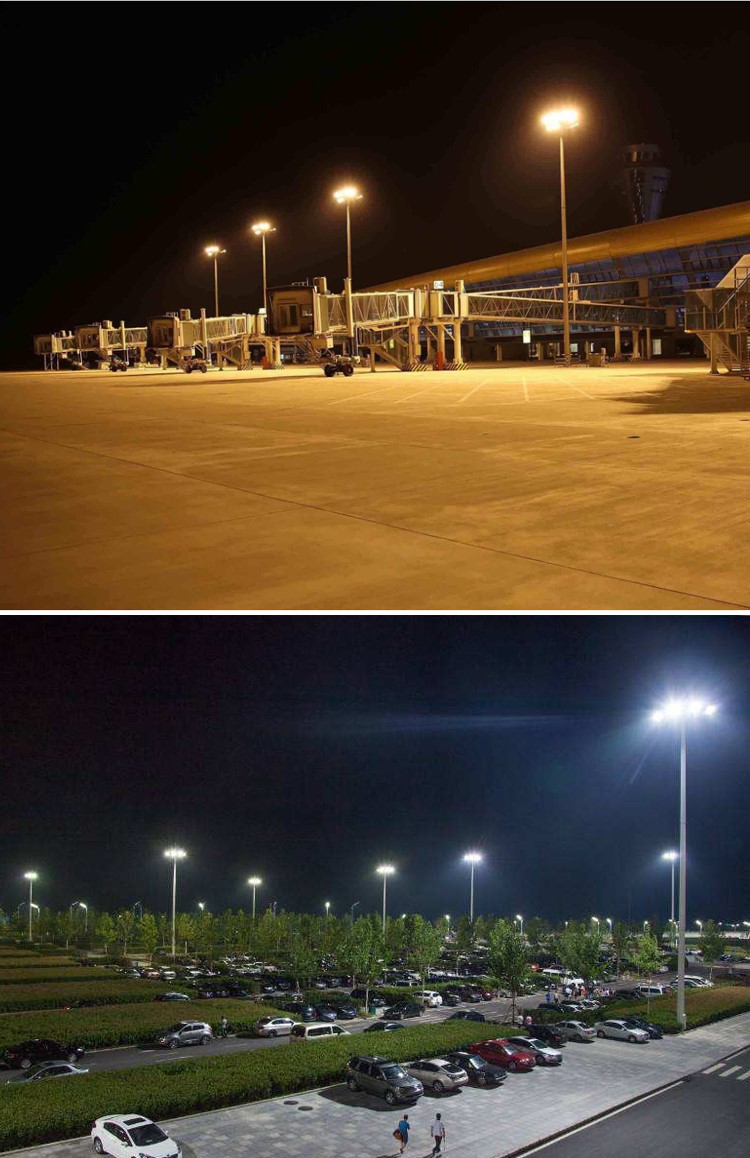
Baseball stadium lighting standards are rules and specifications that are established by regulatory agencies, sports leagues, and lighting specialists to guarantee that lighting conditions at stadiums fulfill a set of quality and safety requirements. In addition to guaranteeing everyone's safety, these requirements are intended to provide players, viewers, and broadcasters the best possible visibility. Although the specific requirements may differ based on the organization and skill level, the following broad principles are often observed:
Average Levels of Illumination: Lux, or lumens per square meter, is a unit of measurement used to describe how much light falls on a surface. The playing field's average amount of illumination in baseball stadiums is normally 500–1,500 lux. Players will have enough sight to monitor the ball and make precise plays at this range.
The uniformity of the light on the playing field is the measure of its distribution. Generally speaking, a uniformity ratio of 0.7 to 0.8 is advised. To reduce shadows and maintain constant visibility, the lowest illuminance level should be between 70 and 80 percent of the average illuminance level.
The Color Rendering Index, or CRI, gauges how faithfully colors are rendered by a light source in comparison to natural sunshine. To guarantee that players can distinguish the colors of the ball, jerseys, and other objects on the field with accuracy, a high CRI rating is necessary. Generally speaking, a CRI of 70 or above is advised.
Flicker Rate: Players may find it unpleasant and their performance may suffer as a result of flickering lights. To reduce this problem, a low flicker rate-typically less than 1%-is recommended.
Both vertical and horizontal lights are used to enhance player visibility of the ball and each other while reducing shadows. Sufficient amounts of both kinds of light are necessary.
Pole Position and Height: Lighting poles should be positioned and raised to avoid glare, shadows, and other impediments. They should also consider things like broadcast camera angles and seating configurations.
Dimming and adaptability: Lighting systems must to be able to change to suit various weather and daytime circumstances. It is flexible to achieve the required illuminance levels using dimmable systems.
Player safety: Lighting should make it possible for players to observe and respond to the game in an efficient manner, avoiding accidents and injuries.
Energy Efficiency: In order to lower energy consumption and maintenance costs, a number of contemporary regulations promote the adoption of energy-efficient lighting technology, such as LED lights.