

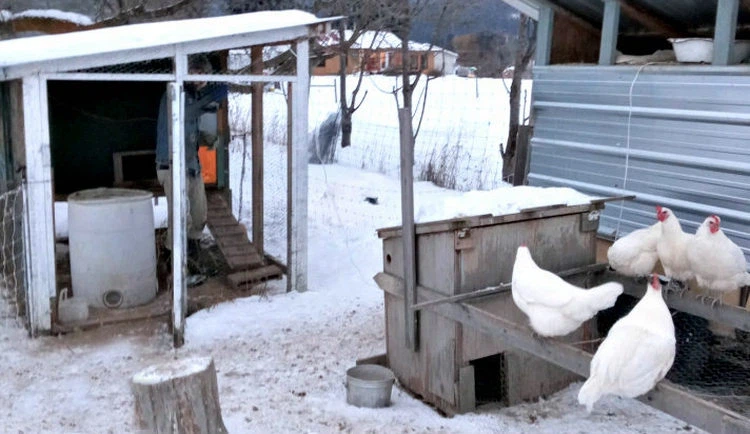
Lighting is essential to the health and vitality of your chickens, whether you keep them in a little coop in the city or a huge barn. Owners may suffer financial or production losses as a consequence of insufficient illumination during the brooding season or excessive lighting during the growth season. For hens, it's crucial to regulate the temperature, lumens, and color temperature. As a result, without enough illumination, hens could lay fewer eggs or fail to acquire weight as expected. Light is perceived differently by poultry than by humans. Due to their extreme sensitivity to UV radiation, chickens, for example, see red light where humans see a yellowish or white brightness from a lamp. Intriguingly, the larger wavelength of this red light penetrates the hens' skin and skull, causing them to produce eggs. Incandescent lamps were formerly a popular choice for lighting poultry, but they are becoming less popular because to their short lifespans, increased heat, and greater energy expenses. Let's examine a few different lighting alternatives for your broiler house in order to maintain the wellbeing and production of your chickens. Lamps with a high intensity discharge (HID)
Given that chickens dislike the dark, it is crucial to maintain poultry houses illuminated at the appropriate times for each stage of the life cycle. When designing the appropriate lighting for your poultry, HID lights like metal halide (MH) and high pressure sodium lamps (HPS) are solid choices. These lights can be dimmed, however in order to do so, specialized electrical or magnetic dimming ballasts must be used. Ballasts are necessary for the operation of all HID bulbs, dimmable or not. Although these lights are strong, they also have certain disadvantages. As an example, they must cool down before being switched back on, a procedure known as restriking. In contrast to incandescent bulbs, HID lamps need more time to warm up. This kind of lamp's warm-up time might range from 2 to 10 minutes. Additionally, HID lights can be producing too much high intensity light if your broiler house doesn't have very high ceilings. Furthermore, high-pressure sodium lights become more yellow when dimmed, whereas metal halide lamps transform to a more blue-green hue. The annoyance that color change and restriking may produce in the chickens can have an impact on how they feel and how productive they are.
CCFL (Cold Cathode) Light Bulbs
Cold Cathode Fluorescent Lamps (CCFLs) are dimmable from 0 to 100% and do not have filament heating. Despite having good dimming capabilities, these bulbs often don't have the same brightness as normal compact fluorescent lights (CFLs). This is a disadvantage for chickens, particularly while they are in the process of brooding. The digestive, neurological, immunological, and circulatory systems are all formed at this time. As previously said, chicks need to be exposed to a lot of constant light since it encourages them to eat. Later, less light is needed during grow-out, although sensitivity is still a problem. Unfortunately, CCFLs often flicker, making them less effective for poultry houses than HIDs and Incandescent lights.
LED (Light Emitting Diode) Lighting
Since a few years ago, LED lighting has become more and more popular because of the long bulb life, robust construction, and cheap energy costs. LEDs are less prone to burn out and have a lifespan of up to 50,000 hours. As we now know, dim lighting is a crucial component of poultry illumination. As opposed to conventional light sources, LEDs don't flicker, which is great since chickens are very sensitive to light fluctuations and wavelengths. The absence of flashing promotes chicken calmness. Additionally, LEDs are more adaptable than other light sources, which makes them simpler to employ in poultry houses and gives users greater control over each stage of the growth of poultry. Although the initial cost of an LED might be high, this is quickly reducing due to price reductions and utility subsidies.
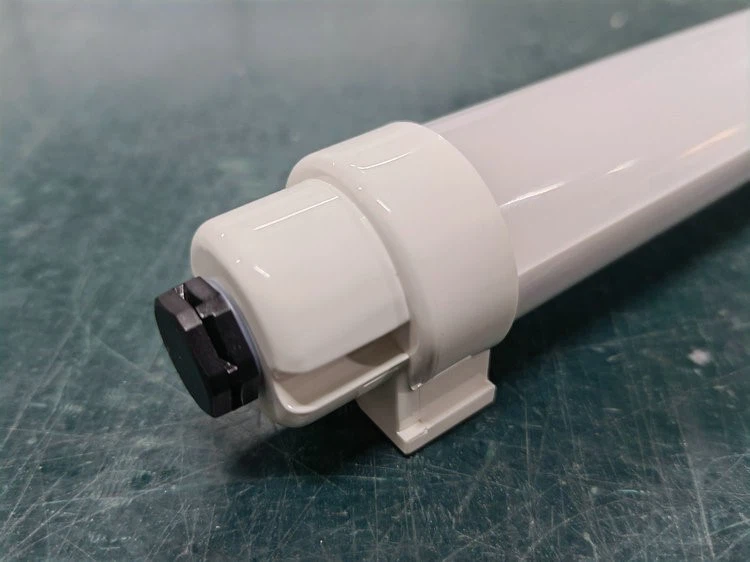

Benwei chicken coop led light tube:
|
Product name |
LED Tube Light led for chicken coop |
|
Rated voltage |
AC85-265V |
|
Power |
9W/13W/18W/24W/36W |
|
LED Type |
SMD2835 |
|
Color ratio |
3000K -5000K , Full specturm or customized spectrum |
|
Tube Type |
T5/T8/T10/T12 |
|
Material |
Aluminium profile+clear pc cover |
|
Length |
0.6m/0.9m/1.2m/1.5m/2.4mor customized length |
|
Guarantee |
3 -5 Years |





