

Introduction: The Optical Paradox of Modern Lighting
Lighting design has always operated at the intersection of two competing imperatives: the need to deliver sufficient luminous flux to perform a task, and the need to do so without overwhelming the visual system. For much of the twentieth century, this tension was managed through brute physical geometry-large luminous surfaces, indirect cove lighting, and opal glass diffusers that softened the harshness of incandescent filaments at the cost of substantial lumen loss.
The LED era intensified the tension. An LED emitter is a highly concentrated point source of light. Its luminance-the intensity of light per unit of apparent emitting area-can exceed that of a clear sky by orders of magnitude. Mounting an array of bare LEDs on a ceiling produces an environment that is simultaneously "bright" in total flux and "blinding" in peak luminance. The eye cannot reconcile the two. The pupil constricts against the high-luminance points, while the surrounding space remains underlit. The result is the familiar constellation of modern lighting complaints: eye strain, headaches, and the reflexive aversion to looking up.
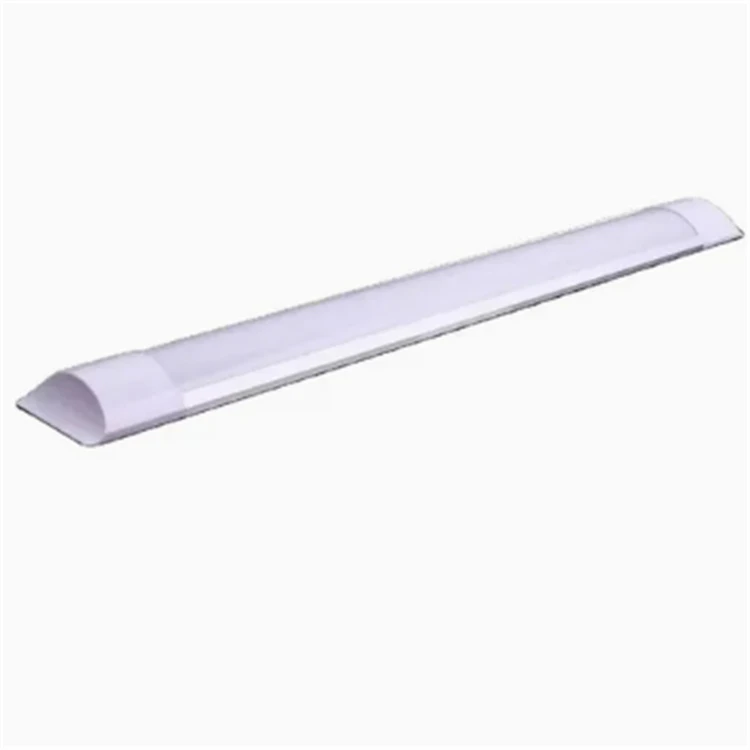
The high-transmittance, anti-glare soft mask is the optical component that resolves this paradox. It is a polycarbonate sheet engineered to perform two functions that appear mutually exclusive: to allow the maximum possible proportion of the LED's emitted light to pass through it (transmittance), and to eliminate the harsh, point-source luminance that causes glare (diffusion). The resolution lies in the distinction between how much light passes through and how that light is distributed when it emerges.
This article examines the science behind that resolution. Section 2 analyzes the physiological and physical nature of glare. Section 3 details the optical mechanisms-volumetric scattering and surface micro-structuring-that suppress glare while preserving transmittance. Section 4 examines the standards (UGR, EN 12464-1) that quantify the result. Section 5 addresses the thermal contingency of optical performance, and Section 6 concludes with the purchase logic that follows from the optics.
The Physics and Physiology of Glare
Defining the Two Faces of Glare
Glare is the sensation produced by luminance within the visual field that is sufficiently greater than the luminance to which the eyes are adapted, causing annoyance, discomfort, or loss in visual performance and visibility. It manifests in two distinct forms, each with its own physiological pathway.
Discomfort glare is the subjective sensation of annoyance or pain caused by high-luminance sources in the field of view. It does not necessarily impair the ability to see the task, but it produces a persistent aversive response: the occupant squints, turns away, or shields the eyes. In a study or office environment, discomfort glare from luminaires in normal sight lines is a primary cause of visual fatigue and reduced task performance.
Disability glare is more insidious. It reduces the contrast of the retinal image by scattering light within the eye's optical media, effectively superimposing a "veil" of stray light over the task. The occupant may not consciously perceive the glare source, but their ability to resolve detail is degraded. Disability glare is the mechanism by which a bright ceiling fixture makes a printed page harder to read even when the page itself is adequately illuminated.
The Luminance Threshold and the Point-Source Problem
The severity of glare is determined by the luminance of the source and its apparent size. A small, high-luminance source produces more discomfort than a large, low-luminance source emitting the same total flux. This is the foundational principle of glare control: distribute the light over a larger apparent area to reduce the peak luminance presented to the eye.
An LED batten without a diffuser violates this principle. It presents a row of small, intensely bright emitters. The eye perceives a series of discrete high-luminance points separated by darker intervals-the "hot spot" effect. The visual system is forced to process a high-contrast, spatially fragmented stimulus, and the discomfort glare produced by each point is not mitigated by the presence of the others. The total glare of the array is roughly the sum of the glare of its individual emitters.
The Cumulative Cost of Glare Exposure
Glare is not a momentary inconvenience. It imposes a continuous regulatory load on the visual system. The pupil constricts in response to the bright source, reducing the light reaching the retina and further degrading the contrast of the task area. The extraocular muscles that control gaze must work against the aversive reflex to maintain fixation on the task. The visual cortex processes the high-contrast edges of the glare source alongside the low-contrast details of the task.
Over hours of exposure, this load accumulates. The symptoms are not acute pain but chronic fatigue: headaches, dry eyes, difficulty concentrating, and the vague sense that the lighting is "wrong" without an identifiable cause. For children, whose visual systems are still developing, the cumulative burden is greater, and the consequences for myopia progression and visual comfort are more significant.
The Optical Engineering of the Soft Mask
Volumetric Scattering: Converting Points into a Plane
The soft mask's primary function is to transform a point-source array into a uniform luminous plane. It achieves this through volumetric scattering. Polycarbonate is compounded with light-diffusing particles-typically acrylic or silicone microspheres-whose refractive index differs from that of the PC resin. When light crosses the boundary between resin and particle, it undergoes refraction, reflection, and scattering.
The path of a single photon through the cover is a random walk. It enters the cover, encounters a particle, changes direction, encounters another particle, changes direction again. After many such events, the photon exits the cover from a random position on its surface, traveling in a random direction. The macro-scale result is that the discrete, directional emission of the LED array is redistributed into a broad, Lambertian-like output from the entire surface of the cover.
The eye no longer sees the individual emitters. It sees a continuous plane of light with a luminance that is a fraction of the bare LED's and a spatial uniformity that eliminates the hot-spot effect. The discomfort glare, which was a function of the point-source luminance, is correspondingly reduced.
The Transmittance–Haze Trade-Off and Its Resolution
Volumetric scattering introduces a trade-off. The same particles that scatter light into a uniform plane also absorb some of it and redirect some of it back toward the LED board. The cover's haze-the proportion of transmitted light that is scattered away from the incident direction-must be high to achieve uniform diffusion. The cover's transmittance-the proportion of incident light that passes through-must also be high to preserve the fixture's brightness.
A naïve model assumes these properties are inversely related: more haze means less transmittance. The modern soft mask breaks this assumption through material formulation and optical design. Commercial light-diffusion PC grades achieve visible light transmittance of 70–90% at 2.0 mm thickness with haze adjustable up to 99%. Other extruded grades reach 86–93% transmittance with haze ≥ 90%. The engineering target for linear lighting covers is a transmittance window of 85–92% combined with a haze that fully conceals the LED emitters.
The achievement lies in the particle distribution and the resin formulation. By controlling the particle size, loading concentration, and refractive index mismatch, the cover can achieve high scattering efficiency with minimal absorption. The light is redirected, not consumed. The result is a cover that is both "soft" (high haze, low peak luminance) and "bright" (high transmittance, minimal flux loss).
Surface Micro-Structure: Controlling the Angular Distribution
Volumetric scattering controls the uniformity of the luminous surface. Surface micro-structuring controls the angular distribution of the light that leaves it. This is a second, complementary layer of glare control, and it addresses a limitation of volumetric diffusion alone.
A purely volumetric diffuser may produce a beautiful, uniform surface that still emits significant intensity at high angles relative to the fixture's axis-precisely the directions in which an occupant's line of sight encounters the fixture. A ceiling-mounted batten viewed from a desk at an oblique angle presents a foreshortened surface with high luminance. The volumetric diffuser makes the surface uniform, but it does not necessarily reduce the luminance at that viewing angle.
Surface micro-structuring-micro-prisms, lenticular arrays, or fine matte textures-redirects light away from the direct glare angles and toward more downward, useful angles. The micro-structure acts as a secondary optical element that redistributes intensity in the angular domain, reducing the luminance presented to the eye at the viewing angles that matter in a room. The combination of volumetric scattering and surface micro-structuring addresses both the spatial and angular components of glare.
Material Choice: Why Polycarbonate
The substrate material is not incidental to the optical performance. Polycarbonate offers a combination of properties that make it uniquely suited to the soft mask role. Its heat deflection temperature (125°C) and Vicat softening point (145°C) allow it to withstand the thermal load of an operating LED fixture without deformation that would alter the optical path. Its impact strength exceeds that of glass or acrylic, removing the risk of shattering in residential and educational settings. Its optical clarity and compatibility with diffusion additives allow the formulation of covers that achieve the transmittance–haze target.
Crucially, PC's optical properties can be stabilized against the photo-degradation that would otherwise compromise its performance over time. Formulations for LED diffusers include UV stabilizers and antioxidants that resist the yellowing and transmittance loss that unmodified polycarbonate would experience under sustained blue-light exposure. The optical performance of the soft mask is therefore not a transient property; it is a material system designed for the fixture's service life.
Quantifying the Result: UGR, Transmittance, and Uniformity
The Unified Glare Rating Framework
The Unified Glare Rating (UGR) is the standard metric for quantifying discomfort glare from luminaires in indoor environments. It is calculated from the luminance of the luminaire in the observer's field of view, the apparent size of the luminous surface, the background luminance, and the position of the luminaire relative to the line of sight.
The soft mask influences the first two variables directly. Volumetric scattering reduces the peak luminance of the fixture. Surface micro-structuring increases the apparent area over which that luminance is distributed. Both effects reduce the numerator of the UGR calculation and produce a lower UGR value.
The EN 12464-1 standard sets UGR ≤ 19 as the threshold for offices and classrooms, and more stringent guidance recommends UGR ≤ 16 for VDU-heavy environments. Classroom lighting specifications commonly demand UGR ≤ 16 to protect developing visual systems. A soft mask that achieves these values is not merely "comfortable" in a subjective sense; it is compliant with the standards that define visual safety for sustained occupancy.
Transmittance as Delivered Flux
The transmittance of the soft mask determines how much of the LED's initial luminous flux reaches the room. A cover with 85% transmittance delivers 85% of the LED's output; the remaining 15% is absorbed, reflected, or scattered back toward the fixture. In a well-designed fixture, the LED array is specified with sufficient flux to compensate for this loss, and the cover's transmittance is a known quantity in the fixture's photometric performance.
The key point for the buyer is that transmittance and UGR are not opposing specifications in a well-engineered cover. A cover with 85% transmittance and UGR ≤ 19 delivers both the light the room needs and the comfort the occupant requires. A cover with 60% transmittance and UGR ≤ 19 has solved the glare problem by making the fixture too dim. A cover with 95% transmittance and UGR = 25 has solved the brightness problem by making the fixture too harsh. The soft mask is the component that satisfies both constraints simultaneously.
Spatial Uniformity and the Absence of Hot Spots
The soft mask's volumetric scattering also contributes to spatial uniformity on the work plane. A fixture with concentrated point sources produces pools of brightness and shadow, forcing the eye to adapt repeatedly as it moves across the space. EN 12464-1 requires a uniformity ratio (U₀) of at least 0.4 on the work plane-the darkest point must receive no less than 40% of the average illuminance. A soft mask that eliminates hot spots and distributes light evenly across its surface contributes to this uniformity, reducing the adaptive load on the eye.
The Thermal Imperative: Sustaining Optical Clarity
Photo-Thermal Degradation of Polycarbonate
The optical properties of the soft mask are not immutable. Polycarbonate is susceptible to photo-degradation under blue-light irradiation, particularly at elevated temperatures. Controlled studies of bisphenol-A polycarbonate exposed to blue light at 140°C for up to 1,920 hours show progressive discoloration, loss of optical properties, decreased light transmission, and increased yellowing index. The degradation proceeds in two stages: an induction period of roughly 500 hours during which the change is slow, followed by an accelerated regime in which the rate increases.
The practical implication is direct. A cover that yellows loses transmittance-the "bright" property degrades-and its scattering characteristics may shift as the polymer chemistry changes. The anti-glare performance that was specified at installation may not be the anti-glare performance the occupant experiences in year five.
The Iron Base as the Cover's Thermal Guardian
This is where the fixture's thermal architecture becomes an optical concern. The PC cover sits in close proximity to the LED board and the driver, both of which generate heat. The junction temperature of the LEDs and the ambient temperature within the fixture enclosure determine the cover's operating temperature, and that temperature governs the rate of photo-thermal yellowing.
An iron-clad base conducts heat away from the LED board and spreads it across a larger surface area for dissipation to the ambient air. By limiting the temperature rise within the fixture, the base keeps the cover within a thermal envelope in which the induction period of yellowing is extended and the accelerated degradation regime is delayed. The cover's optical protection is therefore conditional on the base's thermal performance.
The System-Level Optical Claim
A soft mask's performance is a system-level property, not a component specification. It requires:
A diffusion architecture that achieves high transmittance and high haze simultaneously.
A surface micro-structure that controls angular light distribution and reduces UGR below the applicable threshold.
A thermal pathway that preserves the cover's optical clarity across the fixture's service life.
The high-transmittance PC cover supplies the first two. The iron-clad base supplies the third. The combination is what makes "bright, but not blinding" a description of the product's behavior over time rather than a description of its performance on the day it was tested.
Conclusion: The Cover Is the Contract
The soft mask is often described as a diffuser, as if its only function were to make the light less visible. The analysis presented here supports a more precise characterization. The cover is the optical contract between the fixture and the visual system of the occupant. It promises that the light delivered will be spatially uniform rather than point-like (bright), that a specified proportion of the LED's luminous flux will survive the diffusing interface (high transmittance), and that the ocular stressors the eye cannot consciously monitor-peak luminance, glare, and the radiance that drives blue-light exposure-will be held within limits that sustained occupancy can tolerate (not blinding).
The numbers that support this contract are measurable. Transmittance in the 70–90% range at 2.0 mm, with haze adjustable to 99%, establishes the brightness baseline. A UGR at or below 19 for offices and classrooms-and below 16 where visual demands are highest-defines the threshold at which the light becomes safe for sustained occupancy. The combination of volumetric scattering and surface micro-structuring is the mechanism that allows these two specifications to coexist.
A lighting fixture that honors these conditions does not ask the occupant to notice it. That is the point. The best cover is the one the eye never has reason to negotiate with-bright enough to make the task effortless, diffused enough to disappear into the room, and stable enough that its protection does not expire while the fixture is still in service. That is what "bright, but not blinding" means when the phrase is treated as an optical specification rather than a marketing slogan. The high-transmittance, anti-glare soft mask is the component that makes the specification achievable, provided the fixture around it is built to keep its promise.

How To Cooperate With Us?
We are happy to have total control over the manufacturing process and the calibre of our products since we have our own facilities. Since we are producers rather than just brokers, we are dedicated to providing our customers with the best pricing. Since we are certain that the price and quality of our products are clear, we invite customers to see our samples first. Our commitment to quality and customer satisfaction drives us to continuously provide top-notch goods.
Our address
3rd Floor, 5th Building, Hebei Industrial Park, Hualian Community, Longhua District, Shenzhen, China





