

Fundamental Overview of Modern Architectural Track Lighting Systems
Structural Composition and Market Application of Standard Track Lights
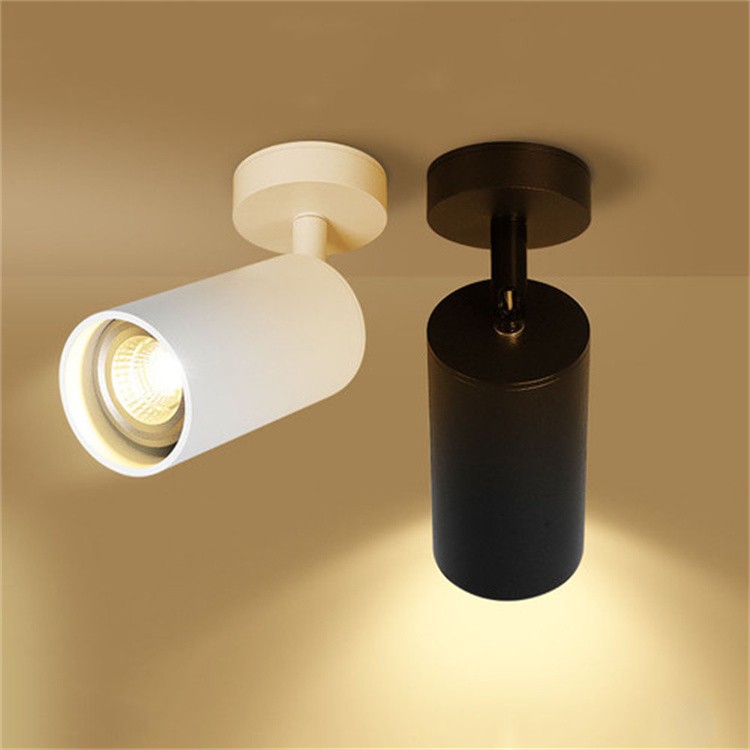
Track lighting systems are modular assembled directional lighting fixtures compliant with IEC 60598 decorative luminaire standards, consisting of fixed mounting track rails, conductive power supply modules, detachable lamp heads and locking fastening components. Featured with streamlined minimalist appearance, integrated concealed wiring structure and high space adaptability, track lights have become mainstream decorative and functional lighting fixtures for modern residential interiors, commercial retail stores, office exhibition halls, art gallery display areas and boutique business premises. Different from fixed-angle embedded ceiling downlights, track lights adopt separated track-lamp assembly design, which reserves mechanical adjustment space for beam orientation, realizing differentiated targeted lighting for indoor decorative ornaments, functional working areas and architectural spatial structures.
Definition and Evaluation Standard of Track Light Beam Adjustability
Light beam direction adjustability refers to the mechanical and structural adjustable performance that changes the outgoing light projection angle, irradiation azimuth and coverage area of track lamp luminous modules without modifying track wiring and ceiling fixed structures. In professional interior lighting engineering, qualified adjustable track lights are assessed by three core indicators: horizontal rotation angle range, vertical tilt angle range and track linear displacement flexibility. Full-adjustment track products support multi-dimensional beam steering to meet ambient atmosphere lighting, local accent lighting and fixed task lighting switching demands, which is the core functional advantage distinguishing track lights from conventional fixed ceiling luminaires.
Aesthetic and Functional Value of Adjustable Beam Track Lights
From spatial design dimension, adjustable beam track lights match minimalist, industrial, light luxury and modern integrated interior decoration styles without destroying unified indoor visual aesthetics. From practical usage dimension, steerable light beams eliminate lighting dead zones, realize focused spotlight effect for artwork, wall murals and display commodities, and provide concentrated auxiliary light for office desktop, kitchen operating counter and study working areas. Dynamic beam adjustment helps designers reconstruct indoor layered light atmosphere, improve space light uniformity, and optimize human visual comfort under artificial indoor lighting environment.
Verdict on Beam Adjustability of Standard Commercial Track Lights
Universal Adjustability of Conventional Integrated Track Lighting Products
Nearly all civilian-grade and commercial-grade modular track lights on the current lighting market support multi-angle light beam directional adjustment. Fixed non-adjustable track lamp heads are eliminated from mainstream civilian application scenarios due to poor practical flexibility. Relying on reserved mechanical rotating joints, sliding track grooves and adjustable connecting brackets, standardized track lighting systems realize omnidirectional beam steering without professional tool transformation or circuit modification. Ordinary household users and commercial space administrators can complete beam orientation adjustment independently without electrician operation assistance.
Structural Principle Supporting Track Light Beam Direction Adjustment
The adjustable performance originates from separated mechanical connection structure between track base and luminous lamp head. The fixed track rail is bolted firmly on ceiling vertical surfaces or wall side surfaces to stabilize overall bearing and conductive power supply; the lamp head connects to track conductive groove via movable conductive slider. The reserved gap of connecting joint realizes horizontal rotation and vertical tilting, while the slider structure supports linear displacement along track rail. The independent mechanical moving structure will not damage internal power transmission lines, ensuring adjustment process safe and circuit-stable.
Limitation of Special Custom Non-Adjustable Track Lamp Models
Only customized integrated fixed track lamps for special engineering landscape lighting cancel rotating and sliding structures, whose beam direction is fixed after installation. Such customized products are tailored for fixed scene decorative lighting, not applicable for daily adjustable household and commercial scenes. For universal conventional track lights used in daily indoor spaces, beam directional adjustment is a standard built-in functional configuration instead of optional additional function.
Three Standard Methods to Adjust Track Light Beam Direction
Independent Horizontal Swivel Adjustment of Lamp Head (Simplest Operation)
Free lamp head swiveling is the most convenient, tool-free beam adjustment method for daily use. Most mainstream track lamp heads adopt 360° free rotating universal joints at the connection position with track slider, realizing full-range horizontal azimuth steering. Standard operation specifications: turn off track light power supply firstly to avoid scratch and glare visual stimulation; hold the outer non-heat lamp housing steadily instead of squeezing luminous lens; rotate the lamp head clockwise or counterclockwise to target irradiation orientation freely.
This adjustment method applies to fine-tuning local beam direction, such as correcting spotlight angle for hanging paintings, decorative sculptures and display cabinets. The rotating joint owns built-in damping silicone gaskets, which can fix the angle automatically after manual rotation, preventing lamp head angle offset caused by gravity or slight vibration without extra locking steps.
3.2 Linear Sliding Displacement Adjustment Along Fixed Track Rail
Linear sliding adjustment changes the horizontal installation position of the whole lamp body to alter overall beam projection coverage, suitable for large-range irradiation position switching. This operation needs simple auxiliary manual locking adjustment: locate the miniature anti-loose locking screw reserved on the track slider bottom; use a cross screwdriver to rotate counterclockwise to loosen screw clamping force; push the whole lamp body to slide stably along track linear groove to target installation position; fasten the locking screw clockwise tightly to fix slider position and avoid lamp sliding displacement.
Sliding adjustment is widely used for space scene switching: for example, moving track lights to illuminate dining area during meals, and sliding back to highlight living room background wall during leisure time. It is applicable for long linear track systems installed in studio, aisle and open-concept integrated living spaces.
3.3 Multi-Dimensional Angle Tuning via Auxiliary Adjustable Connecting Brackets
High-end upgraded track lighting systems are equipped with multi-angle adjustable metal connecting brackets between slider and lamp head, adding vertical tilt adjustment function on the basis of horizontal rotation. Different from single horizontal swivel of basic models, bracket-equipped track lights support upward and downward vertical pitching angle adjustment, realizing ultra-precise beam focusing control. Users can loosen the bracket side fastening knob to tilt the lamp head to designated pitching angle, then lock the knob to fix irradiation height and projection distance.
This multi-dimensional adjustment mode meets high-precision lighting demands: low-angle tilting for close-range artwork accent lighting, flat horizontal angle for wide-range ambient supplementary lighting, and high-angle upward tilting for ceiling indirect ambient lighting, maximizing lighting scene flexibility.
Standard Operation Guidelines and Safety Notes for Beam Adjustment
Pre-Adjustment Standard Safety Preparation
Cut off local track loop power supply before large-angle adjustment and long-distance sliding operation to prevent electric shock risk caused by exposed slider conductive contact; wait 30 seconds for lamp surface heat dissipation to avoid high-temperature housing scald during manual holding adjustment; check track rail flatness and screw fastening status to prevent rail falling off during lamp displacement adjustment.
Operational Taboos to Protect Track Light Adjustable Structure
Do not apply violent forced torsion to the lamp rotating joint beyond 360° rotating range, which will fracture internal connecting wires and damage damping rotating components; do not loosen locking screw excessively to avoid slider falling from track groove; avoid frequent extreme angle adjustment for a long time to extend service life of built-in damping and fastening structures.
Post-Adjustment Effect Inspection
Restore power supply after adjustment completion, check beam projection effect, lamp operating status and whether there is abnormal flickering; fine-tune angle slightly if the light is offset; confirm all locking knobs and screws are fastened to ensure long-term stable beam orientation without angle deviation.
Conclusion
To conclude, universal household and commercial modular track lighting lights support convenient multi-dimensional light beam direction adjustment, which is a standard inherent functional feature rather than an optional extra function. Users can steer light beams via three mature methods: tool-free 360° horizontal lamp head swivel for fine angle tuning, screw-loosened linear sliding along track rails for position changing, and bracket-assisted vertical tilting for high-precision directional lighting. With dual advantages of minimalist modern appearance and adjustable functional performance, track lights can switch freely between accent lighting, task lighting and ambient lighting modes. Following standardized power-off adjustment specifications and structural protection rules, users can adjust beam directions effortlessly to customize indoor light atmosphere, adapting to personalized lighting demands of residential living spaces and commercial business spaces efficiently.
How To Cooperate With Us?
We take great satisfaction in having total control over the manufacturing process and the quality of our products thanks to our own facility. As producers rather than just brokers, we are dedicated to providing our customers with the best prices. Since we are certain that the price and quality of our products are clear, we encourage customers to assess our samples first. Our commitment to quality and customer satisfaction drives us to continuously provide top-notch goods.
Our address
3rd Floor, 5th Building, Hebei Industrial Park, Hualian Community, Longhua District, Shenzhen, China





