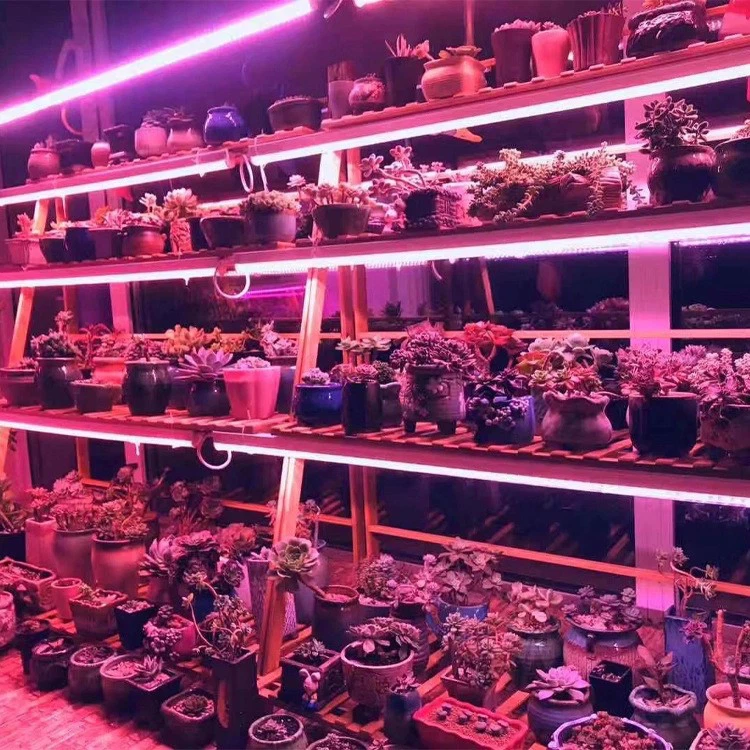
Many indoor gardeners and home planting enthusiasts want to make full use of indoor space and simplify wiring installation, so they often consider installing grow lights in existing ceiling light fixtures. This installation method seems convenient and neat on the surface, but many people are unsure about its feasibility, safety and actual planting effect. In fact, embedding grow lights into ceiling fixtures is technically achievable, yet it is not always an ideal planting lighting solution. To help you avoid installation risks and ineffective lighting problems, this article will comprehensively analyze the feasibility, key influencing factors, potential hidden dangers and practical installation suggestions of ceiling fixture grow light installation, providing reliable guidance for indoor planting lighting layout.
Basic Understanding: What Is a Grow Light?
A grow light is a professional artificial lighting source specially designed for plant growth. Different from ordinary household lighting, it can provide targeted light conditions required for plants to germinate, grow, bloom and fruit. In indoor gardening scenarios lacking sufficient natural sunlight, grow lights can be used as both auxiliary supplementary lighting and the main independent light source, effectively ensuring the normal and vigorous growth of indoor plants.
Core Factors to Judge Ceiling Fixture Grow Light Installation
Although installing grow lights in ceiling fixtures is feasible in theory, it cannot be installed blindly. The applicability depends on two core hardware conditions of the ceiling light fixture itself, which are the primary prerequisites for safe and effective installation.
Fixture Space Adaptability
Ceiling light fixtures on the market have diverse specifications, shapes and internal structures, with large differences in internal reserved space. Many embedded or compact ceiling fixtures have limited internal space, which cannot accommodate the volume of conventional grow lights. Only ceiling fixtures with sufficient internal installation space can meet the basic assembly requirements of grow lights.
Fixture Heat Resistance Performance
Heat resistance is the most critical safety factor for ceiling fixture installation. Most grow lights will generate heat during long-term working hours. If the ceiling light fixture is not designed to bear and dissipate heat, the accumulated high temperature cannot be discharged in time. This will not only accelerate the aging of lamps and fixtures, but also easily trigger potential fire hazards, bringing great safety risks to indoor environments.
Potential Risks & Practical Optimization Solutions
Aiming at the heat safety risk of ceiling fixture grow light installation, we can effectively avoid hidden dangers through reasonable product selection and configuration optimization, realizing safe long-term operation.
Choosing low-heat LED grow lights is the most effective solution. Compared with traditional grow light types, LED grow lights produce far less heat during operation, which greatly reduces the heat load on ceiling fixtures. In addition, you can preferentially select LED grow lights equipped with professional cooling fans or heat sink structures. These auxiliary heat dissipation configurations can quickly export accumulated heat, maintain a stable working temperature of the lamps, and fundamentally avoid safety problems caused by heat accumulation.
Installation Angle Impact on Plant Growth
Safety and installation adaptability are not the only considerations. The lighting angle after installation will directly affect the growth effect of plants. Professional grow lights are designed for vertical downward irradiation, which can evenly cover the plant canopy and ensure full light absorption.
However, limited by the installation structure of partial ceiling fixtures, the installed grow lights may produce oblique light irradiation. The uneven light coverage will lead to inconsistent light reception of plants, resulting in problems such as unbalanced growth and poor development. Therefore, it is necessary to adjust the installation position and angle to ensure vertical and uniform light irradiation on plants.
Final Installation Summary & Suggestions
To sum up, installing a grow light in a ceiling light fixture is technically achievable, but it is not a universal optimal solution. Before installation, it is necessary to strictly check the internal space and heat resistance of the ceiling fixture, and prioritize low-heat LED grow lights with excellent heat dissipation performance to eliminate safety hazards. Meanwhile, the lighting angle must be adjusted to ensure the normal photosynthesis and growth of plants.
For users who lack installation experience or are unsure about fixture matching and lighting layout, it is not recommended to install blindly. You can consult professional electricians or indoor planting lighting experts to avoid safety risks and poor planting effects caused by irregular installation.
If you are confused about ceiling fixture grow light matching, model selection and installation layout for your indoor garden, feel free to contact us for professional customized solutions. Our team will provide targeted product recommendations and technical guidance according to your planting space and plant types!