

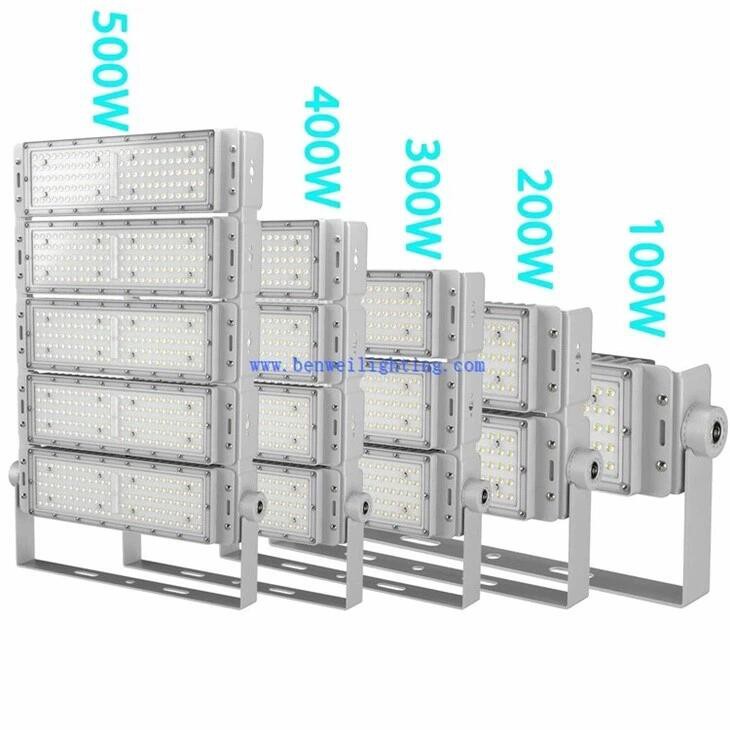
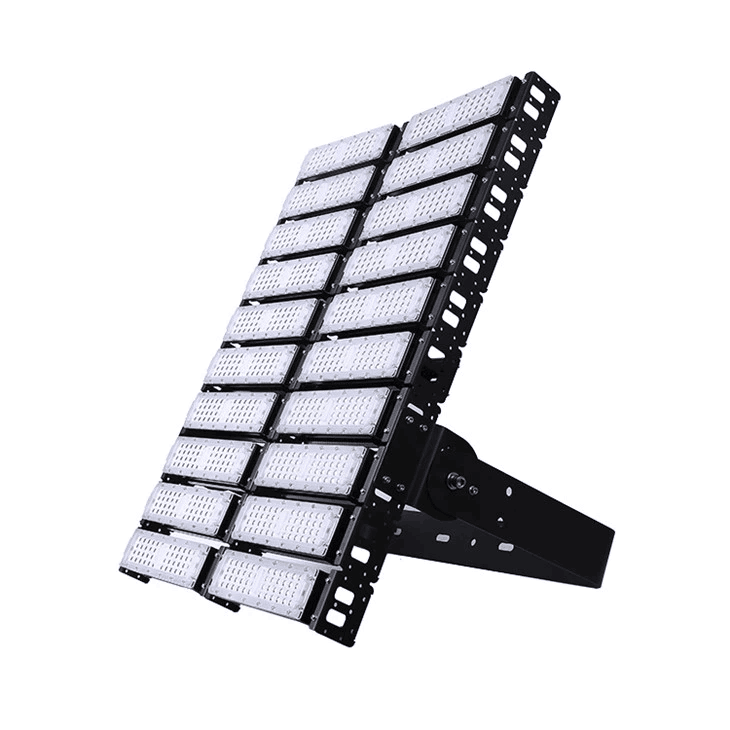
Traditional stadium floodlights must be replaced when light bulbs break or the technology is outdated, which is expensive and wasteful. By rethinking lighting system design, modular stadium floodlights have solved this problem. This concept turns the lamp's LED light source board, power supply, and optical lens into independent, easily changeable modules, moving from "total replacement" to "precise maintenance".
Efficiency and cost-control innovations
Modular design improves daily maintenance. Professional technicians must unscrew and reinstall traditional lights after they fail, which takes time and money. Site managers can repair a defective module in modular floodlights in minutes. This reduces stadium suspensions due to lighting failures and lowers maintenance costs. The modular structure also allows the venue owner to reserve essential modules as spare components instead of the full light fixture, minimizing inventory pressure and capital occupation.
Sustainable technological iteration and light efficiency improvement
Modular floodlights make stadium greening practical. More efficient lighting systems save the venue a lot of money on lamp replacement. They can replace the main optical modules to instantly increase lighting efficiency and uniformity. This "local upgrade" strategy lets the stadium lighting system keep up with technology, preventing premature equipment replacement. This saves engineering expenses from frequent light changes, material usage, and waste, harmonizing with sustainable development.
System ensures accurate illumination distribution and quality
In addition to maintenance and update, modular architecture optimizes light control. Professional sports fields must have uniform lighting and no glare. Modular floodlights have professional-grade optical lens modules and exact light distribution curves, allowing light to be properly controlled in the competition area. For consistent lighting, lenses can be cleaned or changed separately if they get dusty or old. This exact light management ensures athletes' visual comfort, event broadcasting, and light overflow reduction, lowering light pollution.
For more details about our offerings, please contact us at bwzm18@ledbenweilighting.com.
FAQ
Q: What is a modular stadium floodlight? How is it fundamentally different from traditional floodlights?
A: The modular stadium floodlight adopts a design with independent functional units, integrating LED light source modules, driving power supplies, and optical lenses, etc., into separate modules that can be quickly disassembled and replaced. The essential difference from traditional integrated floodlights lies in this: when a component fails, instead of replacing the entire lamp, only the faulty module needs to be replaced specifically, which completely changes the traditional maintenance mode of "replace the entire lamp when damaged".
Q: How does modular design actually reduce maintenance costs?
A: The reduction in maintenance costs is reflected in three aspects: Firstly, only faulty modules need to be replaced instead of the entire lamp, resulting in a significant decrease in material costs; Secondly, the module replacement operation is simple and can be completed by ordinary maintenance personnel, significantly saving labor costs; Thirdly, it shortens the downtime of the site caused by repairs, minimizing operational losses. Actual cases show that the annual maintenance costs of the modular solution can be reduced by more than 60% compared to the traditional solution.





