

Introduction: Why Engineering‑Grade LED Purification Batten Selection Matters
Unique Application Requirements of Large‑Scale Lighting Projects
Unlike small‑scale retail or household lighting purchases, large‑scale engineering lighting projects feature three core characteristics: large installation quantity, long service cycle, and strict standardized compliance. Facilities such as medical clean rooms, biochemical laboratories, campus teaching buildings, and enterprise office buildings require 24/7 long‑term continuous or high‑frequency intermittent lighting operation, with extremely high requirements for lighting stability, consistency, and safety. A single batch of unqualified LED purification batten lights will trigger chain problems: uneven illuminance affects working efficiency and visual health, rapid luminous decay leads to frequent lamp replacement, unqualified protection grades cause dust accumulation and circuit failure, and inferior driving systems induce stroboscopic hazards and electrical safety risks. For engineering projects, the hidden losses caused by improper product selection far exceed the initial procurement cost savings, becoming a key factor restricting project quality and long‑term operational stability.
Market Chaos of Low‑Grade Engineering Lighting Products
In the current lighting market, a large number of low‑cost, non‑standard LED purification batten lights flood the engineering procurement market. Many manufacturers cut costs by using unbranded low‑grade LED chips, non‑isolated inferior drivers, thin and unqualified heat dissipation housings, and low‑transmittance easy‑yellowing diffuser panels. These products have consistent appearance with high‑quality engineering‑grade fixtures, making it difficult for non‑professional procurement personnel to distinguish advantages and disadvantages in a short time. Most engineering selection mistakes stem from superficial judgment based on price and appearance, ignoring core technical parameters and structural performance that determine long‑term service life and stability. Therefore, mastering professional selection logic and avoiding typical procurement pitfalls is the core premise of standardized construction and high‑quality delivery of large‑scale lighting projects.

The Most Common Commercial & Budget Selection Pitfalls in Engineering Procurement
Pitfall 1: Prioritizing Low Unit Price Over Comprehensive Project Cost Performance
The most common and destructive mistake in large‑scale engineering procurement is taking the lowest unit price as the core selection standard. Most project bidders and procurement teams face short‑term budget assessment pressure, so they tend to eliminate high‑quality medium and high‑end products and choose ultra‑low‑priced imitation purification batten lights. On the surface, this operation reduces the initial one‑time procurement expenditure, but it brings extremely high long‑term hidden costs, which is the primary reason for low ROI of engineering lighting projects.
Low‑priced inferior LED purification battens generally adopt full‑cost reduction design: ultra‑thin iron or plastic housing with no effective heat dissipation structure, recycled plastic diffuser panels, non‑isolated low‑voltage drivers, and low‑bin LED chips with inconsistent color temperature. These products often fail within 1–2 years of installation, accompanied by severe light decay, lamp body yellowing, flicker failure, and circuit short circuit problems. For large‑scale projects with hundreds or thousands of lamps, frequent manual inspection, replacement, and maintenance will consume a lot of labor and time costs, and the suspended operation caused by lighting failure will bring indirect economic losses that are difficult to quantify. In contrast, high‑quality engineering‑grade LED purification batten lights adopt heavy‑duty iron‑clad heat dissipation housing, high‑transmittance anti‑aging diffuser panels, and isolated constant‑current drivers. Although the unit price is slightly higher, its 50,000‑hour long service life and ultra‑low luminous decay rate can reduce maintenance frequency by more than 80% throughout the project cycle, realizing real cost reduction and efficiency improvement.
Pitfall 2: Ignoring Batch Consistency for Large‑Volume Bulk Orders
Large‑scale engineering projects have strict requirements for batch consistency of lighting products, but many procurement personnel ignore this key indicator and mistakenly believe that products with the same model and parameter labeling can achieve unified lighting effect. In fact, small and medium‑sized informal manufacturers often have unstable production processes, inconsistent chip binning standards, and irregular driver debugging parameters, resulting in obvious differences in color temperature, brightness, and light uniformity between different batches of products.
After large‑area installation, inconsistent lighting performance will lead to patchy light and shadow in the overall space, some areas are too bright with glare, some areas are dim with insufficient illuminance, and even color deviation occurs, which seriously affects the overall decoration grade and functional lighting effect of the project, and cannot meet the acceptance standards of high‑standard clean rooms, laboratories and campus lighting projects. Professional engineering‑grade LED purification batten lights implement strict batch production management, adopt unified high‑precision chip binning technology, standardized driver parameter debugging, and aging testing process for each batch of products, ensuring zero color difference, zero brightness difference, and consistent lighting effect in full‑batch products, which is an essential guarantee for large‑area integrated lighting engineering.
Pitfall 3: Neglecting After‑Sales Warranty and Project Technical Support
Many engineering buyers only focus on product price and basic parameters when selecting products, and ignore the after‑sales warranty system and project matching technical support capabilities. Many low‑cost suppliers refuse to provide formal warranty agreements and professional test reports, and only provide verbal after‑sales commitments. Once product quality problems occur in the later stage, the suppliers will evade responsibilities, resulting in the project party having to bear all the maintenance and replacement costs alone.
Regular engineering‑grade LED purification batten light manufacturers provide formal 3–5 year long‑term warranty services, complete product test reports including luminous efficiency, light decay, protection grade, and electrical safety, and professional project docking technical support. For large‑scale engineering bulk orders, they can also provide customized color temperature, voltage adaptation, and installation scheme optimization services. This complete after‑sales and technical support system can effectively avoid project delivery risks and ensure the long‑term stable operation of lighting equipment, which is an indispensable core advantage of high‑quality engineering products.
Core Technical Parameter Pitfalls That Easily Lead to Engineering Failure
Pitfall 4: Confusing Nominal Power with Actual Luminous Efficacy
Power parameter is the most intuitive indicator for most procurement personnel to judge lamp brightness, which leads to the common misunderstanding that "the higher the power, the better the lighting effect". A large number of inferior products on the market falsely label power parameters, with nominal high power but actual low luminous efficacy. This kind of product has low light conversion rate, most of the electric energy is converted into heat energy rather than visible light, resulting in dim lighting effect and serious power waste, which cannot meet the illuminance standards of engineering scenarios.
High‑quality LED purification batten lights focus on luminous efficacy optimization rather than blind power improvement. Adopting high‑grade LED chips with high light conversion rate and optimized optical diffusion structure, the products achieve high brightness output under low power consumption. While meeting national engineering illuminance standards, they reduce energy consumption by more than 60% compared with traditional fluorescent lamps and low‑grade LED lamps. At the same time, the high‑efficiency light conversion system reduces heat generation, avoids overheating of the lamp body, and fundamentally suppresses light decay and chip aging, ensuring long‑term stable lighting output.
Pitfall 5: Ignoring Luminous Decay Rate and Service Life Authenticity
Service life and luminous decay rate are the two core indicators that determine the long‑term service value of engineering lighting products, but they are also the most easily falsified parameters by inferior manufacturers. Many low‑grade products falsely mark 50,000 hours long service life, but in actual engineering operation, severe light decay will occur after 10,000–20,000 hours of use, with lumen depreciation exceeding 50%, resulting in insufficient space illuminance and forced replacement of lamps in advance.
The root cause of excessive light decay is unreasonable heat dissipation structure and inferior chip quality. Low‑cost products adopt thin and light housings with no effective heat conduction and heat dissipation design. The heat generated by LED chips during long‑term operation cannot be dissipated in time, resulting in continuous high temperature of the lamp body, accelerated chip aging, and rapid attenuation of luminous performance. In contrast, professional engineering‑grade LED purification batten lights adopt heavy‑duty iron‑clad base heat dissipation structure, with excellent heat conduction and heat dissipation performance, which can quickly export the heat generated by the chip, keep the chip working at a low stable temperature, and effectively suppress light attenuation. The product realizes less than 30% lumen depreciation after 30,000 hours of continuous operation, and the rated service life is up to 50,000 hours, which fully meets the long‑term operation needs of large‑scale engineering projects and greatly reduces the maintenance cost of the whole life cycle.
Pitfall 6: Underestimating the Importance of Driver Configuration Stability
The driver is the core heart of LED purification batten lights, determining the electrical stability, anti‑interference ability, and service life of the whole lamp. Engineering data shows that more than 70% of LED lamp failure problems come from inferior driving systems, rather than LED chips. However, most procurement personnel ignore driver configuration when selecting products and only pay attention to appearance and power parameters, which leads to a large number of hidden dangers in engineering lighting systems.
Inferior non‑isolated drivers have simple circuit design, no over‑voltage, over‑current, short‑circuit protection functions, and poor voltage resistance stability. In the face of grid voltage fluctuation common in engineering sites, it is easy to cause current instability, resulting in lamp flicker, dark light, and even circuit burnout and safety accidents. At the same time, inferior drivers have poor anti‑aging ability and are prone to component failure after long‑term operation.
High‑quality engineering‑grade LED purification batten lights are equipped with high‑performance isolated constant‑current drivers, which support ultra‑wide voltage input of AC85‑265V, and can adapt to complex and unstable power grid environments in various engineering sites. The built‑in multiple protection modules of over‑voltage, over‑current, short‑circuit, and surge resistance effectively avoid electrical failure risks. The constant‑current output technology realizes zero stroboscopic lighting, eliminates visual fatigue caused by long‑term light viewing, and protects the visual health of staff and students in office, medical, and teaching scenarios. The stable driver system ensures the synchronous long‑term stable operation of the whole lamp, which is the key to ensure the reliable performance of engineering lighting equipment.
Scenario Matching & Protection Grade Selection Pitfalls for Engineering Projects
Pitfall 7: Blindly Pursuing High IP Rating or Ignoring Protection Grade Matching
Protection grade is a key parameter for engineering lighting product scenario adaptation, and there are two extreme selection mistakes in actual procurement: blindly pursuing ultra‑high IP protection grade or ignoring protection grade indicators completely. Many procurement personnel mistakenly believe that the higher the IP grade, the better the product quality, so they blindly purchase high‑IP waterproof lamps for indoor dry engineering scenarios such as offices, classrooms, and clean rooms. In fact, ultra‑high IP waterproof products adopt fully sealed structure, which will block heat dissipation channels, resulting in poor heat dissipation effect, accelerated chip aging, and increased light decay rate. At the same time, high‑IP products have higher material and manufacturing costs, which causes unnecessary waste of project budget.
On the contrary, some buyers ignore protection grade selection and purchase ordinary unprotected lamps for dust‑prone indoor engineering scenarios. Such products have poor dust resistance, and dust impurities easily enter the lamp body, adhere to the circuit board and chip surface, affect heat dissipation and light output, and even cause circuit short circuit and lamp damage.
Professional engineering matching logic fully conforms to scenario characteristics: indoor dry clean rooms, offices, laboratories, and teaching buildings are most suitable for IP40 protection grade LED purification batten lights. The IP40 grade can effectively block solid dust and foreign matter from entering the lamp body, meet the dust‑proof and clean lighting requirements of purification scenarios, and retain excellent heat dissipation performance, balancing product stability, service life, and cost‑effectiveness, which is the most scientific and applicable protection grade configuration for indoor engineering purification lighting.
Pitfall 8: Ignoring Optical Performance & Human Comfort Indicators
Most engineering procurement focuses on hardware parameters such as power, service life, and protection grade, but ignores optical comfort indicators such as light uniformity, glare value (UGR), color rendering index (CRI), and blue light protection, resulting in qualified product parameters but poor actual lighting experience, failing to meet the high‑standard lighting needs of medical, teaching, and office scenarios.
Low‑grade LED purification batten lights use low‑quality diffuser panels with low light transmittance and uneven light transmission, resulting in obvious light and shadow dark areas on the lighting surface, serious local glare, and harsh light. Long‑term exposure to this lighting environment will easily cause eye fatigue, dry eyes, and decreased attention, affecting the work efficiency of office staff and the learning effect of students, and failing to meet the humanized lighting standards of modern engineering projects. In addition, inferior products have low color rendering index, which cannot truly restore the color of objects, affecting the visual judgment of laboratory experiments and medical diagnosis scenarios.
High‑quality engineering‑grade LED purification batten lights adopt high‑transmittance anti‑aging soft diffuser panels, which can evenly scatter light, eliminate glare and shadow areas, and realize 100% uniform soft light output. The product has low blue light and flicker‑free performance, effectively protecting human visual health. High color rendering index restores real object colors, meeting the high‑precision lighting requirements of medical treatment, scientific research, teaching and other professional scenarios, realizing the organic unity of lighting functionality and comfort.
Pitfall 9: Disregarding Installation Adaptability & On‑Site Construction Efficiency
Large‑scale engineering projects have tight construction cycles and standardized installation requirements, but many buyers ignore the installation adaptability of products and select lamps with complex installation procedures and poor site adaptability, resulting in delayed construction progress, increased labor costs, and irregular installation effects.
Inferior purification batten lights have unreasonable structural design, no reserved standardized wiring terminals, complex wiring steps, and require a variety of auxiliary accessories for installation, which increases the difficulty of on‑site construction and prolongs the construction cycle. At the same time, the lamp body has poor flatness and low matching with the ceiling, resulting in uneven installation gaps and messy overall visual effect, affecting the project acceptance quality.
Professional engineering‑grade LED purification batten lights adopt integrated streamlined structural design, with reserved standardized internal wiring terminals, supporting quick surface mounting. The installation process is simple and efficient, no redundant auxiliary accessories are needed, which greatly saves construction time and labor costs. The slim and neat lamp body fits closely with the ceiling, realizing a flat and beautiful overall installation effect, meeting the standardized and high‑grade construction requirements of large‑scale engineering projects.
Professional Selection Strategies: High‑Value Procurement Solutions for Engineering Projects
Establish Scientific Parameter Evaluation Standards, Abandon Single Price Judgment
Engineering procurement teams need to establish a multi‑dimensional comprehensive evaluation system covering price, performance, quality, and after‑sales service, and completely abandon the single low‑price selection standard. Focus on core hard indicators including actual luminous efficacy, 50,000‑hour long service life, <30% light decay within 30,000 hours, IP40 professional dust‑proof protection grade, isolated constant‑current flicker‑free driver, and high‑uniformity soft light optical performance. On the premise of meeting all engineering technical standards, compare product cost performance and supplier strength to select high‑quality and stable engineering‑grade products.
Prioritize Batch Stability and Formal Qualification Certification
For large‑volume bulk orders, batch product consistency test and qualification document verification must be carried out. Require suppliers to provide complete formal test reports, product qualification certificates, and warranty agreements to ensure that product parameters are true and effective, and batch production processes are standardized. Choose manufacturers with mature large‑scale production experience and perfect quality control system to avoid color difference, brightness difference, and performance instability in batch products, ensuring unified and standardized lighting effect of the whole project.
Match Product Performance with Scenario Requirements Precisely
Adhere to the scenario‑based matching principle for targeted selection. For indoor purification scenarios such as hospital clean rooms, biochemical laboratories, office buildings, and campus classrooms, select IP40 dust‑proof, flicker‑free, high‑uniformity, low‑light‑decay engineering‑grade LED purification batten lights. Avoid blind pursuit of high protection grade and high power, take long‑term stability, energy saving and durability as the core demands, and realize the precise matching of product performance and project scenario requirements, so as to maximize the long‑term operational value of lighting equipment.
Focus on Full Life Cycle Cost and After‑Sales Guarantee
Engineering procurement should take the full life cycle cost as the core assessment standard, not the initial procurement cost. High‑quality LED purification batten lights have slightly higher initial investment, but their ultra‑low light decay, long service life, and low failure rate can greatly reduce later maintenance, replacement, and energy consumption costs, with far higher comprehensive cost performance than low‑priced inferior products. At the same time, prioritize suppliers with long‑term formal warranty and professional technical support to ensure that the project has reliable after‑sales guarantee and avoid later operational risks.
Conclusion
The selection of LED purification batten lights for large‑scale engineering projects is a systematic professional work involving budget control, technical parameter matching, scenario adaptation, and long‑term operational risk control. The common procurement pitfalls such as blind low‑price competition, ignoring core technical performance, mismatched protection grade, and neglecting batch stability are the main causes of unqualified engineering lighting quality and excessive long‑term costs. This paper systematically sorts out nine typical selection pitfalls, clarifies the professional identification standards of core performance such as product light decay, heat dissipation, driving system, and protection grade, and puts forward targeted engineering procurement strategies.
High‑quality engineering‑grade LED purification batten lights with 50,000‑hour long service life, ultra‑low luminous decay, IP40 professional dust‑proof performance, isolated constant‑current flicker‑free driver, and high‑uniformity soft light output are the optimal solutions for large‑scale medical, educational, office, and laboratory lighting projects. Engineering procurement teams should abandon superficial selection logic, establish professional full‑life‑cycle value judgment standards, avoid all kinds of procurement pitfalls, select high‑performance and high‑stability products, effectively reduce project operational risks and comprehensive costs, and create high‑quality, energy‑saving, stable and durable professional lighting systems for large‑scale engineering projects.
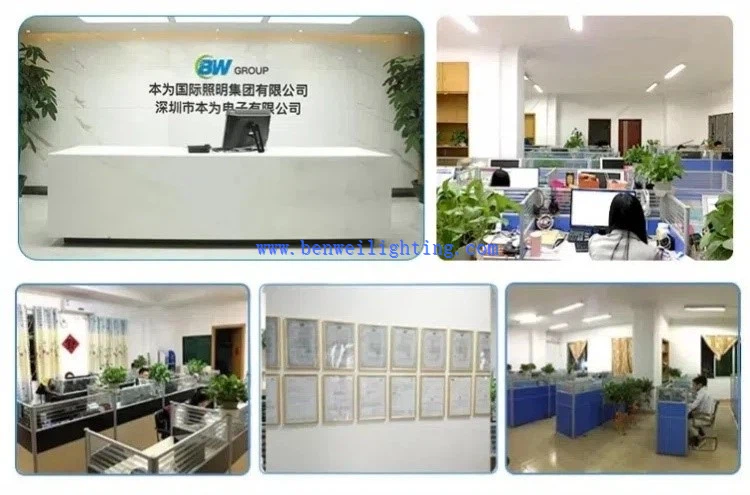
How To Cooperate With Us?
Because we have our own facilities, we are pleased to have complete control over the production process and the quality of our goods. We are committed to giving our clients the finest prices since we are manufacturers rather than just brokers. We encourage clients to look at our samples first since we are certain that the cost and quality of our items are transparent. Our dedication to excellence and client happiness motivates us to consistently provide superior products.
Our address
3rd Floor, 5th Building, Hebei Industrial Park, Hualian Community, Longhua District, Shenzhen, China





