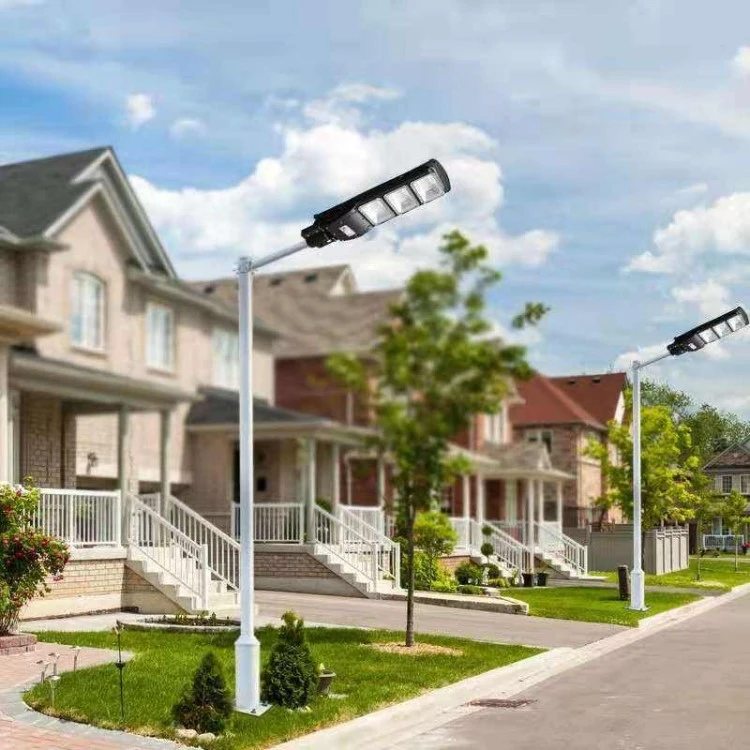
The LED light source is powered by low-voltage DC and combines efficient white light from GaN-based power blue LED and yellow light, which has the qualities of high efficiency, safety, and energy conservation. This is how LED solar lights vary from traditional street lights. It has a long lifetime, a good color rendering index, a quick reaction time, and is ecologically safe. It has special benefits that allow it to be used extensively on highways. It is possible to create an exterior shell that can withstand temperatures as high as 135 degrees and as low as -45 degrees.
We must focus more on the proper usage and installation techniques of LED solar lights during use since they should be able to better satisfy the criteria for nighttime use as well as people's lighting demands and everyday use.
LED solar light use
Installing high-power LED solar lights for the first time requires modifying the lamps' height and location while also taking into account the site's real illumination needs.
Second, decide which light installation technique is best. The maker of LED solar lights first modifies the installation bracket before preparing the appropriate three-core cable length based on the distance between the bulb and the power source connection.
Using your hand, unlock the lamp's front latch, lift off the top cover, and insert the cable into the light chamber via the wire hole on the rear of the lamp. Attach the cable in accordance with the polarity indicated on the lamp's internal socket.
It should be mentioned that a wire press is required to crimp the connection once the LED solar light is attached.
To securely attach the lamp post to the lamp, insert it into the installation bracket's introduction hole, choose the best location to insert it into the bracket tube based on the angle needed for illumination, and tighten the tightening bolt.
LED solar light installation
Select the installation site sensibly
Before installing dim street lights, make sure there is enough sunshine at the installation site. The solar panel may not be able to regularly power the battery if there is not enough light.
Examine the source of the LED light
In addition to the quality of the light bulbs, if the street lights are not lighted, it is more probable that there is a problem with the connection and welding of the lamp holder, which has to be changed. Solar street lights often utilize LED solar street lights. Switch off the dim LED solar light or examine the lights that aren't illuminated and fix any issues you find.
The line is having issues
Long-term usage may result in poor circuit contact, particularly from the battery leaking power, which would reduce the amount of stored energy and make the LED solar street light flash constantly. Currently, the line has to be checked and replaced promptly.
The battery is having issues
You should examine the battery to determine whether its energy storage has diminished when the LED solar light starts to become dim and less bright than before. Replace the replacement battery as soon as possible if such an issue arises.
The whole illumination is dim
First, see whether there are any electrical or water leaks in this circumstance. The controller could be having issues. Try testing the voltage if you can. There is no issue with the power supply or battery leak if the voltage is less than 10.8V. Next, check whether there is enough voltage in the solar panel. Replace the solar panel as soon as possible if there is no voltage. Regarding the potential issue of street light brightness, the LED solar light manufacturer is unable to comment. In actuality, high-brightness street lights aren't always a good product. LED solar lights are five times brighter than conventional lighting. An excessive amount of brightness will waste energy and make it more susceptible to glare from street lights.