

Introduction: The Hidden Threat to LED Performance
In the modern era of architectural design, LED lighting is the undisputed standard. It offers unparalleled energy efficiency, color accuracy, and design flexibility. However, not all LED fixtures are created equal. While the LED chip itself is a marvel of modern engineering, the housing that contains it often determines whether the fixture will last a decade or fail in a year.
The Promise and the Pitfall of Modern LED Lighting
Consumers and contractors are often drawn to the low upfront cost of budget LED downlights. These fixtures frequently utilize plastic (PC or PVC) housings to minimize manufacturing expenses. On a specification sheet, a cheap plastic downlight and a premium aluminum downlight might appear to have similar lumen outputs and color temperatures. However, the fundamental difference lies in their ability to manage heat-a factor that dictates their entire lifecycle.
Why Heat is the Silent Killer of LEDs
Unlike traditional incandescent bulbs that emit most of their energy as heat (and only a fraction as light), LEDs convert the vast majority of electricity into light. However, they are not 100% efficient. Approximately 20% to 30% of the energy is still converted into heat, concentrated in a very tiny area: the LED junction. If this heat is not efficiently extracted and dissipated into the surrounding environment, it creates a cascading series of failures.
Thesis Statement: Material Science Determines Longevity
The secret to a long-lasting LED downlight is not the chip itself, but the vessel that protects it. This paper will argue that Die-Cast Aluminum is vastly superior to plastic for heat dissipation, directly impacting the fixture's lifespan, light quality, and overall return on investment (ROI). We will analyze how this material choice is the foundational pillar supporting the 40,000-hour lifespan and 5-year warranty of our premium Surface Downlight.
The Science of Thermal Management in LED Fixtures
To understand why material choice matters, one must grasp the basic physics of LED thermal dynamics. The performance of an LED is inextricably linked to its operating temperature.
Understanding Junction Temperature (Tj)
The "junction" is the microscopic layer where light is generated within the LED chip. Even a slight increase in junction temperature (Tj) can have a catastrophic effect on the LED's performance. An excessive Tj leads to:
Lumen Depreciation: The LED gradually produces less light over time, becoming dimmer.
Color Shift: The color temperature (e.g., warm white) may shift to a sickly green or blue hue.
Catastrophic Failure: In extreme cases, the chip or the driver electronics will simply burn out.
The Lumen Depreciation Curve (L70)
In the lighting industry, lifespan is often defined by the "L70" metric. This refers to the point at which the LED emits 70% of its initial light output. A high-quality fixture with excellent thermal management might reach L70 at 40,000 to 50,000 hours. A poorly designed plastic fixture might reach L70 in less than 10,000 hours, meaning the user will notice a significant dimming of their space within just a few years.
The Three Methods of Heat Transfer
To keep the junction temperature low, heat must move away from the chip using three principles:
Conduction: Heat moving through a solid object (from the LED chip to the housing).
Convection: Heat transferring to the surrounding air (the housing to the room).
Radiation: Heat emitting as infrared waves.
The housing material is the critical bridge for conduction and convection. If the material resists heat transfer, the heat remains trapped inside the fixture.
Die-Cast Aluminum vs. Plastic: A Comparative Analysis
The debate between die-cast aluminum and plastic is the central battleground of LED fixture quality. The physical properties of these two materials are diametrically opposed when it comes to thermal management.
The Flaw of Plastic Housings: Insulation and Degradation
Plastic is cheap, lightweight, and easy to mold. However, these benefits are outweighed by severe thermal drawbacks.
Poor Thermal Conductivity
Plastic is inherently an insulator. It is designed to trap heat, not release it. The thermal conductivity of standard PC or PVC plastics is incredibly low (around 0.2 W/m·K). When a plastic downlight is turned on, the heat generated by the LED chip has nowhere to go. It bounces back, creating a "thermos effect" inside the fixture. This trapped heat drastically accelerates the degradation of the LED driver and the chip.
Structural Melting and Yellowing
Over prolonged exposure to high internal temperatures, plastic housings degrade. They can become brittle, warp, or even melt near the light source. Furthermore, UV radiation and heat cause plastic to yellow over time. A white plastic downlight will often look aged and discolored within a few years, ruining the aesthetic of a modern ceiling.
Fire and Safety Hazards
In commercial applications, using plastic fixtures can present a fire hazard if the internal driver fails and overheats. Building codes and safety standards increasingly mandate non-combustible materials for commercial lighting, making plastic a liability.
The Supremacy of Die-Cast Aluminum
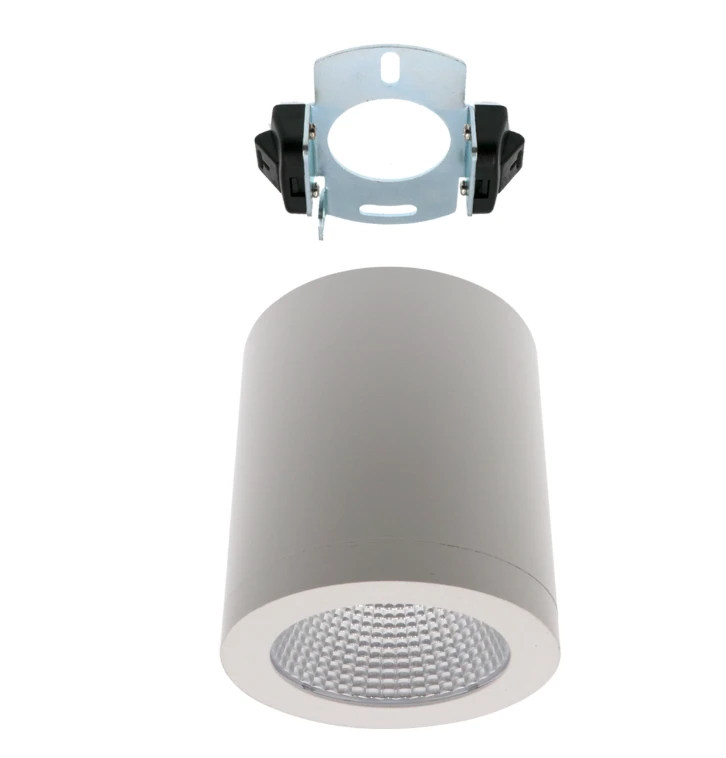
To solve the thermal challenge, our Surface Downlight relies on premium Die-Cast Aluminum. This material is the industry gold standard for thermal management.
High Thermal Conductivity (The Heat Sink Effect)
Aluminum has an exceptionally high thermal conductivity (approximately 205 W/m·K). This means heat travels through aluminum over 1,000 times faster than it does through plastic. The entire cylindrical body of our downlight acts as a massive heat sink. Heat is rapidly conducted away from the delicate LED chip and spread across the exterior surface area.
Structural Integrity and Die-Casting Precision
Die-casting involves injecting molten aluminum into a precision mold under high pressure. This creates a dense, seamless, and incredibly robust housing. The precision of die-casting allows for the inclusion of internal heat fins and optimized wall thicknesses, maximizing the surface area available for convection. The fixture is impact-resistant, vibration-resistant, and structurally sound.
Corrosion Resistance and Longevity
Unlike plastic, which degrades, or steel, which rusts, aluminum forms a natural, microscopic layer of aluminum oxide when exposed to air. This protective layer prevents further oxidation. When combined with our premium matte finish (available in White and Black), the die-cast aluminum body is highly resistant to rust, corrosion, and fading, maintaining its architectural elegance for decades.
How Our Surface Downlight Maximizes Heat Dissipation
Understanding the material is only half the equation. The structural design of our Surface Downlight is meticulously engineered to apply the principles of thermodynamics.
Optimized Cylindrical Body Design
The sleek, modern cylindrical shape is not just an aesthetic choice; it is a thermal strategy. The rounded surface creates a continuous, unobstructed path for airflow. As the aluminum body heats up, the surrounding air naturally rises (natural convection), pulling cool air in from below. The extended surface area of the cylinder ensures that heat is dissipated quickly and efficiently, preventing any localized hot spots.
COB LED Technology: Even Heat Distribution
At the heart of the fixture is a high-output Chip-on-Board (COB) LED array. Unlike older SMD LEDs, which place individual diodes across a board, a COB mounts multiple LED dies directly onto a single substrate. This design offers two thermal benefits:
Even Heat Spreading: The heat is evenly distributed across the substrate before transferring to the aluminum housing, preventing thermal bottlenecks.
Single Source Optical Control: The COB array acts as a single, intensely bright light source, which is perfectly captured by the optical lens.
The Prismatic Lens: Optical Protection and Thermal Isolation
Directly over the COB chip lies a high-grade prismatic lens. While its primary function is optical (reducing glare and maximizing high lumens output), it also serves a thermal purpose. It seals the LED chip from external environments. In combination with the IP65 waterproof rating, this hermetic seal ensures that dust and moisture cannot enter the fixture and interfere with thermal conduction. Moisture ingress is a common cause of short circuits and thermal failure in cheaper fixtures.
The Financial and Operational Impact of Thermal Management
For architects, contractors, and savvy homeowners, the choice between aluminum and plastic is not just about engineering; it is about economics.
Extending Lifespan: The 40,000-Hour Reality
Because our Die-Cast Aluminum downlight effectively manages heat, the LED chip and driver operate at optimal temperatures. This is the secret behind our 40,000-hour lifespan. If used for an average of 8 hours a day, this fixture will provide flawless illumination for over 13.6 years. A plastic fixture might require replacement every 2 to 3 years. The difference in lifecycle is monumental.
The 5-Year Warranty as a Proof of Quality
We are so confident in our thermal engineering that we back this fixture with an industry-leading 5-year warranty. Most budget plastic fixtures only offer a 1-year or 2-year warranty. A 5-year warranty is not just a marketing gimmick; it is a direct reflection of our material science. It shifts the financial risk of failure away from the buyer and onto the manufacturer. If the light fails due to heat degradation within five years, we replace it.
Reducing Maintenance and Callback Costs
For commercial contractors and facility managers, the cost of the fixture is often secondary to the cost of labor. In a hotel or office building, replacing a failed downlight requires a maintenance crew, scaffolding or ladders, and time. A plastic fixture that fails prematurely incurs massive hidden costs (callbacks). By installing a die-cast aluminum downlight, contractors eliminate callbacks, protect their reputation, and ensure their clients enjoy uninterrupted lighting.
Uncompromised Performance: Features that Complement Superior Engineering
While Die-Cast Aluminum is the core of this downlight, it is supported by a suite of features that make it an elite product in any architectural application.
IP65 Waterproof Rating: Combining Thermal and Moisture Resistance
The robust die-cast aluminum housing provides a perfect, seamless seal that achieves an IP65 waterproof rating. This means total protection against dust and protection against low-pressure water jets from all directions. (Note: Certain variants may be rated IP54 for splash zones, but the IP65 configuration is the ultimate in weather defense).
Bathrooms and Spas: Ideal for high-humidity environments where steam would destroy standard fixtures.
Commercial Kitchens: Capable of surviving deep cleaning and grease exposure.
Covered Outdoor Areas: Perfect for patios and balconies exposed to rain and coastal salt air.
0-100% Smooth Dimming: Thermal Relief at Lower Outputs
The fixture features advanced 0-100% smooth dimming capabilities. While this allows users to set the perfect ambiance-from brilliant task lighting to a soft, intimate glow-it also has a thermal benefit. When an LED is dimmed, the electrical current is reduced, which directly lowers the operating temperature of the chip. Operating the light at 50% brightness can significantly extend the lifespan of the fixture even beyond the 40,000-hour baseline, while also saving substantial energy.
High Lumens Output and Glare Reduction
The combination of the COB LED and the prismatic lens ensures high lumens output. The light is directed downward efficiently, and the prismatic pattern breaks up the light to prevent harsh glare (UGR). This is critical for visual comfort in workspaces and living areas.
Conclusion: The Ultimate Lighting Investment
The comparison between Die-Cast Aluminum and Plastic is not a matter of marginal preference; it is a matter of fundamental engineering. Plastic insulates and traps heat, leading to lumen depreciation, color shift, and premature failure. Die-Cast Aluminum conducts and dissipates heat, protecting the LED chip and ensuring maximum longevity.
Our IP65 Waterproof, 0-100% Dimmable Surface Downlight represents the pinnacle of this material science. By integrating a premium die-cast aluminum body, advanced COB technology, and a robust mounting system, we have created a fixture that is built to last.
Backed by a 5-year warranty and a 40,000-hour lifespan, it is not just a light; it is a commitment to quality. Whether you are designing a luxury residential space, upgrading a commercial facility, or executing a large-scale architectural project, this downlight offers the ultimate combination of modern aesthetics, weather-proof durability, and unparalleled thermal performance.
How To Cooperate With Us?
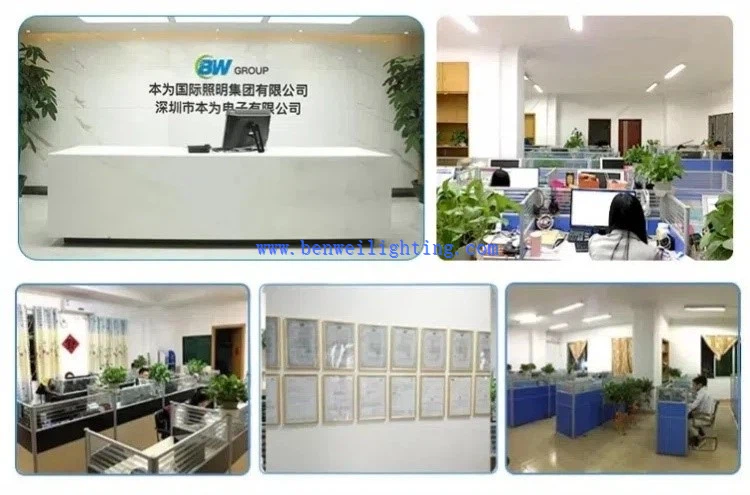
We are happy to have total control over the manufacturing process and the calibre of our products since we have our own facilities. Since we are producers rather than just brokers, we are dedicated to providing our customers with the best pricing. Since we are certain that the price and quality of our products are clear, we invite customers to see our samples first. Our commitment to quality and customer satisfaction drives us to continuously provide top-notch goods.
Our address
3rd Floor, 5th Building, Hebei Industrial Park, Hualian Community, Longhua District, Shenzhen, China





