Difference Between Flameproof and Explosion Proof
Comparing Explosion-Proof and Fireproof Materials
Enclosures that are flameproof and explosion proof are those that are created out of metal and are able to withstand the internal forces that are generated by an explosion. The joints in the enclosures cool the gases that are departing, preventing those gases from igniting the volatile vapours that are present in the hazardous area.
Flameproof
As a kind of protection for projects complying with IEC requirements, flameproof enclosures are utilised. Each one of them, one at a time, is subjected to factory testing at pressures that are 1.5 times higher than the highest pressures that can be generated by an explosion. Enclosures designed to be flameproof are fastened in place with specialised hardware, making it impossible to remove them without the utilisation of some kind of specialised equipment, or in certain circumstances, a number of specialised tools.
Proof against Explosions
Explosion-proof enclosures are a common form of safety equipment in North America, particularly in the United States and Canada. Individually tested at the factory to pressures that are four times higher than the highest pressures that may be generated by an explosion, explosion-proof enclosures are designed to keep hazardous materials safe. As a direct consequence of this, explosion-proof enclosures feature a significantly more robust build than flameproof enclosures do. Explosion-proof enclosures can also be drilled on site, which is a perfectly permissible practise.
The Difference Between Explosion-Proof and Flameproof Materials
In many respects, explosion proof enclosures and flameproof enclosures are comparable, but in others, there is a significant gap between the two types of enclosures. Both flameproof and explosion proof have covers that are threaded on or bolted on for a secure attachment. Explosion proof also has covers that are threaded on. On the other hand, flameproof enclosures come equipped with specialised hardware that can only be removed using the appropriate firefighting equipment. It is not possible to drill holes out of flameproof enclosures in the field. Explosion-proof enclosures, on the other hand, can have holes drilled into them while they are being used in the field, which makes it much simpler for original equipment manufacturers to put them to use.
Enclosures that are resistant to flame and enclosures that can withstand explosions each have their own set of benefits and drawbacks. It is entirely up to the user to decide which type of enclosure they prefer, and this preference is heavily influenced by the tasks for which the enclosure is required.
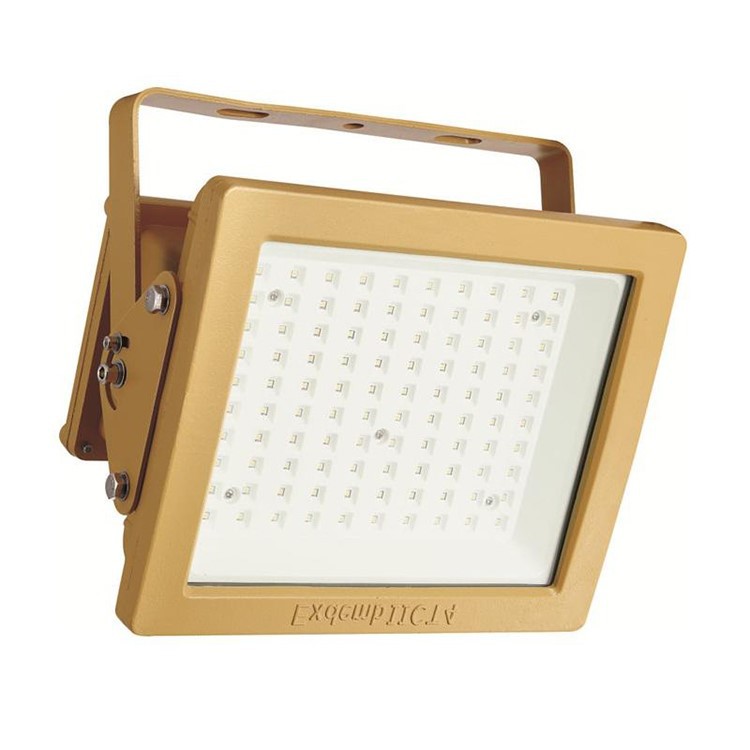
IP66 Explosion-proof LED Floodlights
Feature:
◆ Widely used for the illumination on various marine platforms, chemical tankers, LNG ships and hazardous cargo wharfs, etc..
◆ Can reliably work in severe environment exposed in moisture, vibration or corrosion;
◆ Explosive hazardous atmosphere Zone 1, Zone 2, Zone 21, Zone 22.
Specification:
| Product Name | IP66 Explosion-proof LED Floodlights |
| Degree of protection | IP66 |
| Ambient temperature | -60℃~+40/60℃ |
| Lamp Body Material | Aluminum |
| Power | 10W/20W/30W/50W/100W/150W/200W |
| Color Temperature(CCT) | 2700-6500k |
| Certification | EMC, RoHS, ce |