

Clients who work with COB LED strips are almost always asked the same question: Is an aluminum profile (channel) necessary? Some argue that the strips "work fine without one," while others claim that "without it, they'll burn out sooner or later." Both perspectives have merit; it really depends on your specific use case. COB (Chip on Board) LED strips feature a large number of LED chips mounted directly onto a flexible circuit board, creating a continuous, seamless line of light without any visible "dots." While this design offers uniform light output and flexibility, the dense arrangement of chips results in a higher concentration of heat per unit of length compared to standard SMD LED strips. If this heat cannot dissipate, it will directly compromise the lifespan and luminous efficiency of the strips-making this an issue that deserves serious attention.
Why do COB LED strips generate heat?
When an LED is powered, only a portion of the electrical energy is converted into light; the rest is primarily converted into heat. COB LED strips contain a high number of chips-typically between 320 and 528 per meter-resulting in a power density significantly higher than that of standard SMD LED strips.
The flexible PCB itself is very thin with limited copper foil thickness, offering only modest heat dissipation capabilities. If heat accumulates on the board, it can lead to several problems: accelerated light degradation (lumen depreciation), color temperature shifts, and, in more severe cases, the failure of the adhesive backing or discoloration of the PCB.
How do aluminum profiles help with heat dissipation?
Aluminum has high thermal conductivity-typically exceeding 200 W/m·K. When an LED strip is adhered to the base of an aluminum profile, the heat generated by the chips is transferred to the aluminum, which then dissipates it into the surrounding air through its surface area.
In simple terms, an aluminum profile acts as a "heatsink" for the LED strip. Generally, a thicker profile with a larger surface area provides better heat dissipation. Furthermore, an aluminum profile helps keep the LED strip straight, preventing it from curling, lifting, or bubbling over long-term use.
When Is an Aluminum Channel Mandatory?
In the following scenarios, using an aluminum channel is highly recommended-do not take the risk of skipping it:
High-wattage LED strips: COB LED strips with a power rating exceeding 12W/m generate significant heat during continuous operation.
Extended, continuous use: Settings such as shopping malls, hotels, or exhibition halls where lights remain on for over a dozen hours a day.
Poorly thermally conductive mounting surfaces: Materials like wood, gypsum board, or acrylic, which tend to trap heat.
Enclosed or semi-enclosed spaces: Areas with limited airflow, such as recessed coves, ceiling coffers, or the interiors of cabinets.
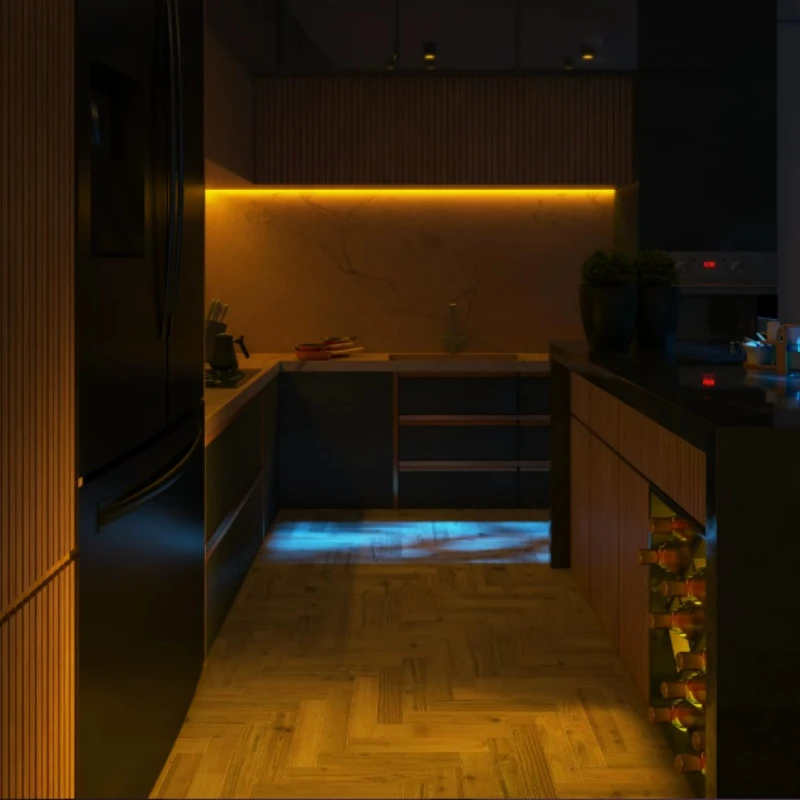
High ambient temperatures: Locations like kitchens, areas exposed to direct sunlight, or spaces near other heat-generating equipment.
When Can You Skip the Aluminum Channel?
An aluminum channel is not strictly necessary for every project; you may consider omitting it in the following cases:
Low-wattage LED strips: Strips with a power rating below 8W/m that are used for short durations.
Mounting on metal surfaces: Attaching the strip directly to iron or aluminum surfaces, as the metal itself acts as a heat sink.
Temporary or decorative use: Short-term installations, such as holiday decorations or temporary displays, intended to be removed after a few days.
Open, well-ventilated spaces: Environments where heat can dissipate naturally.
Please note: "Not strictly necessary" does not mean "better off without it." If your budget allows, using an aluminum channel is generally the safer, more reliable choice.
Key Details to Consider When Choosing an Aluminum Channel
Don't base your purchase solely on price; the following factors have a greater impact on actual performance:
Material: Opt for 6063 aluminum alloy, which offers excellent thermal conductivity and ease of fabrication. Avoid low-quality recycled aluminum, as it has poor thermal conductivity.
Wall thickness: Channels that are too thin have limited heat-dissipation capacity; it is generally recommended that the base plate be at least 1mm thick.
Channel width: The channel should be 1–2mm wider than the LED strip to allow for easy installation while ensuring the base of the strip makes full, direct contact with the channel.
Surface finish: Anodized aluminum channels are more resistant to oxidation and discoloration, and they generally offer a more attractive, durable appearance.
Diffuser Covers: A milky-white diffuser can further soften the light, though it will slightly reduce brightness; choose based on your specific lighting requirements.
Heat Dissipation: A Commonly Overlooked Aspect of Installation
Even when using an aluminum profile, improper installation can compromise heat dissipation:
Adhesive Quality: Poor-quality adhesive can create gaps between the LED strip and the aluminum profile, preventing effective heat transfer. We recommend using 3M adhesive, or securing the strip with additional mounting clips.
Surface Preparation: Oil or dust on the surface of the aluminum profile can reduce both adhesion and thermal conductivity; wipe the surface with alcohol before application.
Profile Ventilation: Installing an aluminum profile in a completely enclosed space can lead to heat buildup; ensure there is adequate space for ventilation.
Power Supply Headroom: Running a power supply at full capacity for extended periods generates excess heat and can negatively impact the entire system. It is advisable to maintain a power margin of approximately 20%.
Summary
Whether a COB LED strip requires an aluminum profile can be summarized as follows: the higher the power, the longer the operating time, and the more confined the environment, the greater the need for an aluminum profile.
High power, long operating hours, or enclosed spaces: An aluminum profile is essential.
Low power, short-duration use, or installation on a metal surface: An aluminum profile may not be necessary.
When selecting a profile, consider the material, wall thickness, and width; during installation, pay close attention to the adhesive and surface cleanliness.
If your budget allows, an aluminum profile is a cost-effective investment that extends the lifespan of your LED strips and ensures consistent lighting performance.
Looking for more information or a customized solution?
We offer a wide range of COB LED strips, along with compatible aluminum profiles, diffusers, and power supplies. We can help you put together the perfect configuration based on your project's power requirements, installation environment, and budget. If you are working on a lighting project, procurement, or wholesale order, please share your requirements, intended application, and estimated quantities. We will respond promptly with samples and a formal quotation.
Our address
No. 5-3 Niujiao Road, Yanchuan Community, Yanluo Subdistrict, Bao'an District, Shenzhen
bwzm18@ledbenweilighting.com






