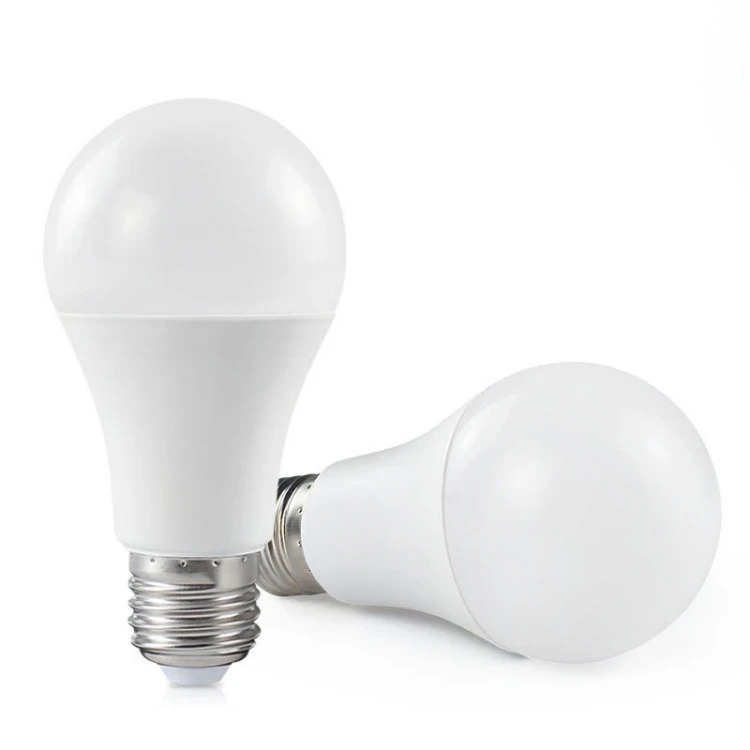
If you are sourcing light bulbs for a lighting project or planning to sell such products in different countries, you will sooner or later encounter two terms: E27 and B22. These are both common lamp base standards; while they may look somewhat similar, they differ in terms of safety and installation methods. Choosing the wrong one can lead to issues-ranging from the bulb simply not fitting, to creating complications with after-sales support. This article clarifies the differences between the two.
Understanding the Basics: What are E27 and B22?
E27 refers to the "Edison Screw" base. The "E" stands for Edison, and the "27" indicates a diameter of approximately 27 millimeters. The base features threads, requiring it to be screwed into the socket.
B22 refers to the "Bayonet Cap" base. The "B" stands for Bayonet, and the "22" indicates a diameter of approximately 22 millimeters. This base has two small pins on its sides; it is secured into the socket by pushing it in and giving it a slight twist.
Because they differ in diameter, structure, and contact mechanism, E27 and B22 bulbs are not interchangeable-unless an adapter is used.
Differences in Installation
E27 (Screw-in): Align the bulb with the socket and rotate it clockwise until it is fully seated. To remove it, rotate it counter-clockwise.
B22 (Bayonet/Push-and-twist): Align the pins on the base with the slots in the socket, push the bulb inward, and then rotate it clockwise by about a quarter-turn. You will hear or feel a "click" when it locks into place.
In short, E27 bulbs are secured via threads, while B22 bulbs are secured via a bayonet-style locking mechanism. 3. Comparison of Installation Difficulty
Characteristics of E27:
The operation is intuitive; most people have been familiar with the action of "screwing in a light bulb" since childhood.
It is beginner-friendly and requires virtually no learning curve.
If screwed in too tightly or too loosely, the electrical contact may be affected, so it requires a bit of a "feel" for the right amount of pressure.
Characteristics of B22:
It requires aligning the pins with the slots, which might take a few extra tries for someone installing it for the first time.
Once locked into place, it remains fixed and is unlikely to come loose on its own.
Alignment can be slightly more challenging in low-light conditions or when the fixture is located in a high position.
Overall, E27 is quicker to get the hang of, while B22 may require a little familiarity-though neither is particularly complex. The difference lies primarily in user habits rather than any technical barrier.
Comparison of Safety
To be perfectly honest: as long as both types of lamp bases meet relevant standards and are of qualified quality, they are both safe under normal use. The differences mainly relate to a few specific details.
Advantages of B22:
The bayonet-style locking mechanism is resistant to loosening caused by vibration, making it more stable in environments prone to vibration (such as areas near doors, windows, or high-traffic zones).
The pin-based fixation ensures more consistent contact, reducing the risk of overheating or flickering caused by poor electrical connection.
The design of the socket is more recessed, which helps prevent fingers from accidentally touching live metal parts during installation.
Characteristics of E27:
The threaded design provides a large contact area, ensuring excellent electrical conductivity.
If the bulb is not tightened securely, poor contact can lead to flickering or localized overheating.
Over long-term use, the threads may oxidize or rust-especially in humid environments-which increases contact resistance.
Key Considerations for Selection
First, verify the socket standards of your target market; this is more important than comparing the relative merits of the base types themselves.
Check the dimensions of the lamp base. Even for the same model of bulb, there may be subtle differences between E27 and B22 versions; it is advisable to obtain samples for a test fit before placing a bulk order.
Consider the material of the lamp base-common options include aluminum, nickel-plated copper, and galvanized iron. The material affects both electrical conductivity and corrosion resistance; for humid environments, prioritize corrosion-resistant materials.
Pay attention to the compatibility between the socket and the bulb. The quality of the light fixture itself also influences the ease of installation and overall safety.
If you need to serve both markets, consider offering the same bulb model with both types of bases to streamline inventory management and stocking.
Summary
Basis for selection: Prioritize the prevailing standards of your target market, followed by the specific usage environment and personal preference.
Ultimately, the type of lamp base is just one of many factors. Product quality, official certifications, and proper installation practices have a much greater impact on safety.
If you are currently selecting products, or if you would like information regarding bulk pricing and certifications, please leave a comment or send an inquiry-we will get back to you promptly.