Many indoor growers face a common dilemma: plants grow lush green leaves but fail to bloom fully, or produce small, sparse flowers. The biggest culprit is incomplete light spectrum from ordinary grow lights. Full spectrum tubes are widely popular in indoor planting, but most beginners wonder: do full spectrum tubes really boost flowering, or are they just overhyped general growth lights?
The short answer is yes. Professional full spectrum tubes effectively stimulate bud differentiation, accelerate flowering, and improve flower quality. Different from single-band grow lights that only support vegetative growth, full spectrum tubes cover all light wavelengths plants need in both growth and flowering stages. This article breaks down how they work for flowering, their core advantages, key usage tips and realistic effects.
How Full Spectrum Tubes Support Flowering
Plant flowering is mainly triggered and regulated by specific light wavelengths, not just light brightness. Ordinary white light tubes or single blue light tubes only support leaf and stem growth, lacking sufficient effective wavelengths for flower formation.
High-quality full spectrum tubes simulate natural sunlight, covering blue light, red light, orange light, partial UV and near-infrared light. Each band targets different flowering links:
Red light (core flowering band): Stimulates plant flowering hormone secretion, promotes bud differentiation, increases flower quantity, and accelerates blooming speed. It also boosts sugar accumulation in plants to make flowers fuller and brighter.
Blue light: Controls excessive leggy growth, keeps plant stems sturdy, ensures sufficient nutrient supply for flower buds, and prevents bud drop caused by weak plants.
Auxiliary spectrum (UV/near-infrared): Improves flower color saturation, enhances plant stress resistance, and effectively extends the flowering period.
Key Flower-Boosting Advantages of Full Spectrum Tubes
One-tube fits all growth stages
Unlike professional flowering lights that only suit the bloom stage, full spectrum tubes work for seedling, vegetative growth and flowering fruiting stages. Growers don't need to replace lights frequently. It ensures stable light supply during the critical flower bud differentiation period and avoids stunted flowering caused by light switching.
Improve flowering rate and flower quality
Practical planting tests show that stable full spectrum supplementation can significantly increase the budding rate of indoor flowering plants. Compared with ordinary lights, it effectively reduces blind buds and fallen buds, makes flower clusters denser, flower shapes fuller, and colors more vivid.
Avoid light deficiency-induced non-blooming
Indoor environments have insufficient natural light and limited light duration. Single-band lights cannot meet the energy and signal requirements for plant flowering. Full spectrum tubes make up for missing natural light wavelengths, completely solving the problem of lush leaves but no flowers in indoor planting.
Common Misunderstandings About Full Spectrum Lights for Flowering
Misunderstanding 1: Full spectrum = professional flowering-specific light
Full spectrum tubes can boost flowering, but their red-light ratio is balanced for full-cycle growth, not ultra-high red-light ratio like dedicated flowering lights. For large-scale commercial flowering planting, full spectrum tubes are suitable for full-stage planting, while matching high-red supplementary light achieves better extreme flowering effects.
Misunderstanding 2: Brighter light means better flowering
Flowering promotion depends on spectrum matching, not brightness. Excessively high light intensity will burn flower buds and leaves, inhibiting blooming. Qualified full spectrum tubes with standard PAR values can meet daily flowering needs.
Practical Tips to Maximize Flowering Effects
Fixed light duration: For most flowering plants, maintain 10–12 hours of light per day during the flowering stage to stabilize flower bud differentiation.
Reasonable light distance: Keep 20–40cm between the tube and plant canopy (adjust according to power) to avoid light attenuation or light burn.
Continuous supplementation in critical period: Start filling light 1–2 weeks before the budding period to lay a foundation for dense budding and early flowering.
Summary
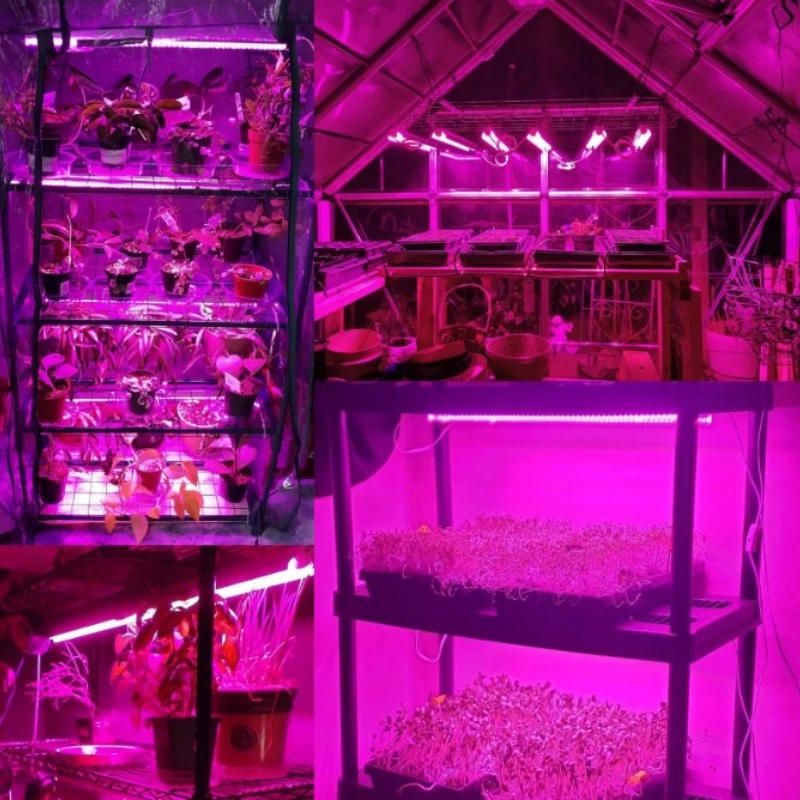
Full spectrum tubes definitely boost flowering. Thanks to their complete wavelength coverage, they not only support healthy vegetative growth but also effectively stimulate bud differentiation, increase flower quantity, optimize flower quality and extend the flowering period. They are the most cost-effective and beginner-friendly choice for household indoor planting, small greenhouses and full-cycle crop planting.
It's worth noting that full spectrum tubes focus on balanced full-cycle growth. If you pursue higher flower yield and denser buds for commercial planting, combining full spectrum main lights with red-light supplementary lights will achieve optimal results.
Confused about choosing the right power and quantity of full spectrum tubes for your planting area, or need a professional light matching plan for specific flowering plants? Contact our team now. We provide customized grow light solutions for different planting scenarios to help you boost flowering rate and harvest better planting results!
Our address
No. 5-3 Niujiao Road, Yanchuan Community, Yanluo Subdistrict, Bao'an District, Shenzhen
bwzm18@ledbenweilighting.com