

LED downlights have become increasingly popular due to their efficiency, cost-effectiveness, and long lifespan. In modern home decoration, commercial space design, office renovation and indoor engineering construction, LED downlights have become one of the most indispensable mainstream lighting fixtures. Compared with traditional incandescent lamps, fluorescent lamps and ordinary panel lights, LED downlights have outstanding comprehensive advantages. They adopt embedded installation design, which is beautiful and concise, does not occupy indoor space, and can create a neat and uniform indoor lighting atmosphere. At the same time, they feature low power consumption, high luminous efficiency, no stroboscopic flicker, and strong stability, which can effectively reduce long-term lighting energy consumption and meet the energy-saving and environmental protection needs of modern buildings. Moreover, their ultra-long service life and low failure rate make them highly cost-effective, favored by countless families, property management teams and commercial venue operators. But do these lighting fixtures require any special maintenance? Many users have a common misunderstanding that LED downlights are durable and low-failure products, so they can be used for a long time without manual maintenance, and daily inspection and care are completely unnecessary. In fact, although LED downlights have far higher stability and durability than traditional lighting equipment, they are still precision electronic and optical fixtures that are affected by dust, temperature, collision, circuit aging and other factors during long-term operation. The answer is yes, LED downlights require some maintenance to ensure they continue to function at their best. Scientific and regular targeted maintenance can effectively delay light attenuation, avoid sudden failure, extend the overall service life of the lamps, and ensure that the downlights always maintain optimal brightness, uniform light emission and stable working performance in long-term use.
Here are some tips on how to maintain your LED downlights:
1. Clean the fixtures regularly: Dust and dirt can build up on the surface of the light, affecting its brightness and performance. LED downlights are mostly embedded in ceilings, and the ceiling area is easy to accumulate floating dust, fine debris, hair and tiny particles in the air for a long time. In daily household environments, indoor floating dust will slowly settle on the lamp panel and light-transmitting cover of downlights; in commercial environments such as shopping malls, offices and restaurants, oil fume, fine dust and suspended particles are more likely to adhere to the lamp surface, forming a layer of dirty covering layer that is difficult to find in a short time. These accumulated dust and dirt will block the light source, reduce the light transmittance, resulting in darker indoor lighting, uneven light emission and weakened lighting effect. At the same time, long-term dust accumulation will also block the heat dissipation holes of the downlights, affect the internal heat dissipation efficiency of the lamps, accelerate the aging of internal circuits and lamp beads, and induce hidden faults. Cleaning the fixtures with a soft cloth or a vacuum cleaner will ensure they remain free from dust and debris. In the actual cleaning process, users need to pay attention to standardized operation. It is necessary to cut off the power supply of the lamps in advance to avoid electric leakage and electric shock risks. For the flat light-transmitting surface of downlights, you can use a clean dry soft cotton cloth to gently wipe the dust; for the gaps around the embedded lamps and the tiny heat dissipation gaps, you can use a small vacuum cleaner with a soft brush head to clean the accumulated dust thoroughly. It is not recommended to use wet cloth to wipe or spray cleaning liquid directly to prevent water vapor from penetrating into the lamp body, causing circuit short circuit and internal component corrosion. Regular cleaning every 1 to 2 months can always maintain the good light transmission and heat dissipation performance of LED downlights.
2. Check for damage: LEDs are generally more robust than traditional lighting technologies but they are not indestructible. Different from the fragile glass structure and filament structure of traditional lamps, LED downlights adopt solid-state lamp bead structure and high-strength shell materials, which have stronger compression resistance, drop resistance and impact resistance, and are not easy to be damaged in conventional use. However, in the long-term use process, there are still many uncertain external risk factors that will cause damage to the downlights. For example, ceiling vibration caused by indoor decoration construction, accidental collision during ceiling maintenance, extrusion deformation caused by external force, and aging and cracking of the lamp shell after years of use will all damage the structure of LED downlights. Inspect the fixtures for any cracks or damage that may have been caused by accidental impacts or wear and tear. Users need to conduct a comprehensive appearance inspection of all downlights every quarter, focusing on checking whether the lamp surface has cracks, scratches and deformation, whether the embedded bayonet is loose and falling off, and whether the lamp shell is aging and yellowing severely. For the downlights installed in corridors, shopping malls and other public areas with large pedestrian flow, the inspection frequency should be appropriately increased, because these scenarios are more prone to accidental collision and extrusion damage. Ensure you replace any damaged parts immediately. Once local damage is found, even if the lamp can light up normally at present, it cannot be ignored. Cracked lamp shells will lead to dust and water vapor penetration, loose bayonets will cause the lamp body to fall off risks, and aging deformation will affect heat dissipation and safety performance. Timely replacement of damaged accessories and overall faulty lamps can completely eliminate potential safety hazards and avoid small damage evolving into larger faults or safety accidents.
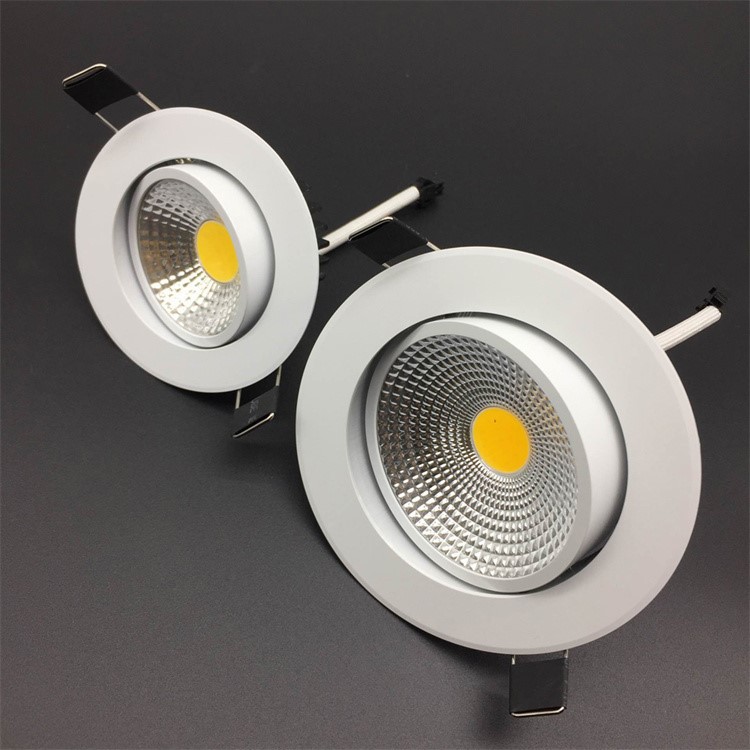
3. Keep the fixtures cool: LEDs generate less heat than other types of lighting fixtures, but they still need to be kept cool to avoid damage and extend their lifespan. Heat is one of the biggest invisible killers of LED lighting fixtures. Traditional incandescent lamps and halogen lamps rely on high-temperature luminescence, with extremely high heat generation, while LED downlights convert electric energy into light energy efficiently, with only a small amount of heat loss, which greatly reduces the overall operating temperature. Nevertheless, the internal lamp beads, drive power supply and circuit components of LED downlights are very sensitive to temperature. If the heat generated during long-term operation cannot be discharged in time, high temperature will accumulate inside the lamp body, which will accelerate the aging of lamp beads, cause rapid light attenuation, reduce brightness, and even burn out the internal drive power supply in severe cases, resulting in permanent lamp failure. Ensure there is adequate ventilation around the fixtures to allow heat to escape. When installing and using LED downlights, it is necessary to ensure that the ceiling where the lamps are located has good air circulation and heat dissipation space. Do not wrap the lamp body with heat-insulating materials, do not block the heat dissipation gaps of the lamps, and avoid installing downlights in fully closed and airtight narrow ceiling spaces. For the downlights used in high-temperature environments such as kitchens and top-floor ceilings, it is more necessary to reserve sufficient heat dissipation channels to ensure that the heat generated during lamp operation can be discharged in time, maintain a stable low-temperature operating state of the lamp body, and effectively protect internal precision components, so as to maximize the service life of the downlights.
4. Replace bulbs as needed: LED downlights have a long lifespan, but eventually, the bulbs will need to be replaced. Compared with traditional lamps with a service life of only thousands of hours, the service life of high-quality LED downlight bulbs can reach 30,000 to 50,000 hours, which has absolute advantages in durability. However, any electronic lighting product has a service limit. After long-term continuous power-on operation, the LED lamp beads will inevitably have aging attenuation, luminous efficiency decline, partial lamp bead damage and other problems, which is an inevitable normal loss in the use cycle. Check the manufacturer's guidelines for the recommended replacement cycle and replace any bulbs that have reached the end of their lifespan. Different brands, power and models of LED downlights have different factory-recommended service cycles. Users can check the product manual and official guidelines to clarify the standard replacement time of the bulbs and internal components. In daily use, if it is found that the downlight has obvious brightness darkening, local dark areas, intermittent flashing and other phenomena under normal power supply, it means that the bulb lamp beads have aged and failed, and need to be replaced in time. Timely replacement of aging bulbs can restore the optimal lighting effect of the downlight, avoid the problem of inconsistent brightness of indoor lamps, and also prevent the aging lamp beads from causing excessive heat generation and circuit failure, ensuring the stable operation of the entire lighting system.
5. Check for dimming issues:
If you notice that your LED downlights are not as bright as they used to be, it could be a sign of a dimming issue. In the daily use of LED downlights, brightness attenuation and abnormal dimming are common faults that are easily ignored by users. Many people simply attribute the dimming of lamps to natural aging, but in fact, most of the sudden or abnormal dimming problems are caused by mismatched supporting equipment and circuit faults, rather than normal loss. Check the dimmer switch and ensure it is compatible with LED lighting. Many old houses and early renovated spaces are equipped with traditional incandescent lamp dimmer switches, which are only suitable for resistive load lighting equipment and cannot adapt to the working mode of LED lamps. If LED downlights are forcibly matched with incompatible dimmer switches, problems such as uneven dimming, light flicker, brightness drop and unstable light emission will occur for a long time. LED-compatible dimmer switches are specifically designed to work with LED lights without causing them to flicker or dim. Professional LED special dimmers can adapt to the low-power working characteristics of LED downlights, accurately adjust the current and voltage, realize stepless stable dimming, ensure uniform and stable light emission of the lamps, and completely solve the problems of flicker, dimming and unstable brightness caused by mismatched switches. Regular inspection of dimmer switch compatibility and working status can effectively eliminate abnormal dimming faults and maintain the stable lighting performance of downlights.
In conclusion, while LED downlights require minimal maintenance, regular cleaning, and inspection are crucial to ensure they remain in good condition and continue to provide optimal lighting. Compared with traditional lighting equipment that requires frequent maintenance and replacement, LED downlights belong to low-maintenance lighting fixtures with stable performance and low failure rate. They do not need complex and tedious daily maintenance operations, but simple and regular cleaning, appearance inspection, heat dissipation check, component replacement and fault troubleshooting are indispensable key links to maintain their long-term optimal performance. These simple maintenance measures can effectively avoid most common faults, delay lamp aging, reduce light attenuation, and ensure that the downlights always maintain uniform brightness, stable light emission and safe operation state. By following the above maintenance tips, you can enjoy long-lasting, efficient lighting that will save you money in the long run. Scientific standardized maintenance can give full play to the advantages of energy saving, high efficiency and long service life of LED downlights, reduce the frequency of lamp failure and replacement, save a lot of later maintenance costs and energy consumption costs for families and commercial venues, and let LED downlights provide stable, comfortable and high-quality indoor lighting for a long time.
How To Cooperate With Us?
We are happy that we have total control over the manufacturing process and the quality of our products since we have our own facilities. Since we are producers rather than just brokers, we are dedicated to providing our customers with the best pricing. Since we are certain that the price and quality of our products are transparent, we advise customers to examine our samples first. Our commitment to quality and customer satisfaction drives us to continuously provide top-notch goods.
Our address
3rd Floor, 5th Building, Hebei Industrial Park, Hualian Community, Longhua District, Shenzhen, China





