

What benefits can solar-powered street lighting offer?
1. Cost Savings: Because solar-powered street lights don't need energy or wiring, they are far less expensive than conventional street lights.
2. Eco-Friendly: Since solar-powered street lights run on renewable energy, they are a green choice.
3. Low Maintenance: Because solar-powered street lights don't need any wiring or energy, they require very little upkeep.
4. Durability: Solar-powered street lights are a dependable and long-lasting choice since they are made to endure severe weather.
5. Safety: Solar-powered street lighting give cars and pedestrians a secure and safe environment.
What is the solar street light's voltage?
The size of the solar panel and the kind of light can affect the voltage of solar street lighting. Solar street lamps typically have voltages between 6 and 24 volts; the most common ones are 3.2 volts, 12.8 volts for solar-powered street lights using LiFoPo4 batteries, and 11.1 volts for Li-batteries.
What kinds of solar street lighting are there?
1. Standalone Solar Street Lights: These street lights don't need an external power source and are not connected to the grid. They are usually utilized in isolated locations without grid electricity and are powered by a solar panel and battery combo.
2. Grid-Connected Solar Street Lights: These solar street lights need an external power source and are connected to the grid. They are usually utilized in cities with grid electricity and are powered by a mix of solar panels and batteries.
3. Hybrid Solar Street Lights: These street lights combine grid-connected and freestanding solar street lights. They are usually utilized in places where grid electricity is accessible but erratic, and they are powered by a mix of solar panels and batteries.
4. All-in-one street lights: Also known as integrated solar street lights, these lights come with a Li-battery, a solar panel, a solar controller, and a street light head. The installation is the simplest.
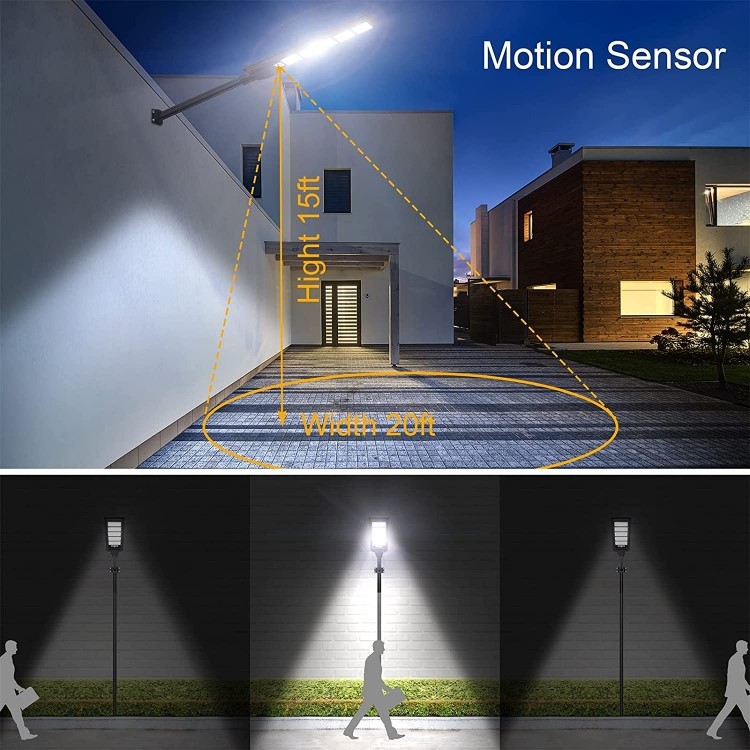
When purchasing solar street lights, what qualities should I look for?
1. Solar panel quality: Verify that the solar panel is high-quality and capable of producing sufficient power to charge the battery.
2. Battery capacity: Verify that there is sufficient battery capacity to run the lights for the required duration. Check out this blog: "What kinds of batteries work best for solar street lights." to gain further knowledge about batteries.
3. Lumens: Verify that there is sufficient lighting from the lights.
4. Durability: Verify if the lights are composed of weather-resistant materials.
5. guarantee: To protect against any flaws, make sure the lights have a solid guarantee. A reputable supplier or manufacturer of solar street lights will offer a minimum three-year guarantee.
What kind of sensor does a solar street light use?
To detect the presence of light, solar street lighting usually employ a light-dependent resistor (LDR). The street light is turned on or off according on the quantity of light detected by the LDR.
What is a solar street light's wattage?
Depending on the size and kind of light, a solar street light's wattage might vary significantly. A solar street light's typical power range is between 10 and 150 watts.
What drawbacks do solar street lighting have?
1. High Initial Cost: The initial outlay for solar street lighting is substantial. Depending on its size and style, a single solar street light might cost anywhere from $2,000 to $5,000.
2. Maintenance: To keep solar street lights operating correctly, they need to have routine maintenance. This include inspecting the wiring, changing the batteries, and cleaning the panels.
3. Weather Dependent: Because solar street lights rely on the weather, they might not be able to cast enough light on overcast or wet days.
4. Vandalism: Because solar street lights are frequently found in isolated locations, they are susceptible to vandalism.
How much time does it take to charge a solar street light?
The size of the battery, the quantity of sunshine available, and the type of solar panel used all affect how long it takes for a solar street light to charge. A solar street light will typically take 6 to 12 hours to completely charge.
Which solar street light battery is best?
Lithium-ion batteries work best for solar street lighting. Lithium-ion batteries are incredibly effective, lightweight, and long-lasting. Additionally, they are corrosion-resistant and can tolerate high temperatures.
What prevents solar street lights from functioning at night?
Solar energy is gathered during the day and used to power solar street lighting. The solar street lights are unable to gather energy at night when there is no sunshine, which prevents them from functioning.
What is the lifespan of solar street lights?
Depending on the product's quality and the area in which it is used, solar street lights usually have a lifespan of three to five years.
Our address
3rd Floor, 5th Building, Hebei Industrial Park, Hualian Community, Longhua District, Shenzhen, China
Phone Number
+8618878216759
bwzm6@ledbenweilighting.com






