

Introduction
The retrofit problem that never quite went away
Walk into a warehouse, a cold store, a supermarket aisle, or an older office block, and the odds are still high that the ceiling is filled with T8 or T12 fluorescent battens. These fixtures are simple, cheap, and universally understood - which is precisely why they have survived so long. The problem is that they are also the least efficient lighting still in mainstream use. A conventional 36 W magnetic‑ballast fluorescent tube delivers roughly 2,500–3,000 lumens in real service, and that figure decays quickly: electrodes sputter, phosphor ages, and output can fall by 30–40% long before the tube finally fails to strike.
Owners rarely replace the whole fixture. They replace the tube. That is the retrofit market, and it is enormous, fragmented, and highly price‑sensitive. Into this market have poured hundreds of "fluorescent replacement" LED tubes, most of them built on a PC (polycarbonate) sleeve, a constant‑voltage driver, and a generic bin of LEDs. They work. They also create a set of predictable problems: yellowing diffusers after two summers under a hot roof, flicker on unstable supplies, hot spots where the LEDs sit too close to a thin plastic wall, and inconsistent colour from batch to batch.
Why this configuration is different
The product discussed here starts from three different premises, and each of them is a deliberate engineering answer to one of those problems.
First, the envelope. Instead of PC, the tube uses powdered glass. Glass does not yellow, does not scratch to a haze, and transmits 99.7% of the light that reaches it - a figure that matters enormously once you understand how much light a diffuser normally swallows. Combined with a 320° beam angle, this produces a tube that lights the reflector above it as well as the floor below, restoring the indirect component that fluorescent battens were designed around.
Second, the LED platform. The tube is offered on either SMD2835 or SMD5630, at the buyer's choice. These are not interchangeable commodities; they represent two different trade‑offs between lumen density, thermal spread, and cost, and the correct choice depends on whether the project prioritises maximum output per metre or longest service life at moderate drive current.
Third, the driver. A constant current driver - available in wide‑voltage and narrow‑voltage variants - replaces the constant‑voltage driver that most budget tubes use. Constant current is the topology LED arrays are actually designed for: it fixes the drive current regardless of forward‑voltage drift, so output stays stable as the array heats up, and it removes the current‑sharing imbalance that causes premature failure in parallel strings.
Fourth, the base. The FA8 single‑pin cap is specified for conductivity and anti‑flaming performance - a detail that sounds minor until you have seen a failed retrofit cap discolour and brittle at the contact.
The remainder of this paper treats each of these in turn, then converts them into specification guidance and a cost‑of‑ownership model.
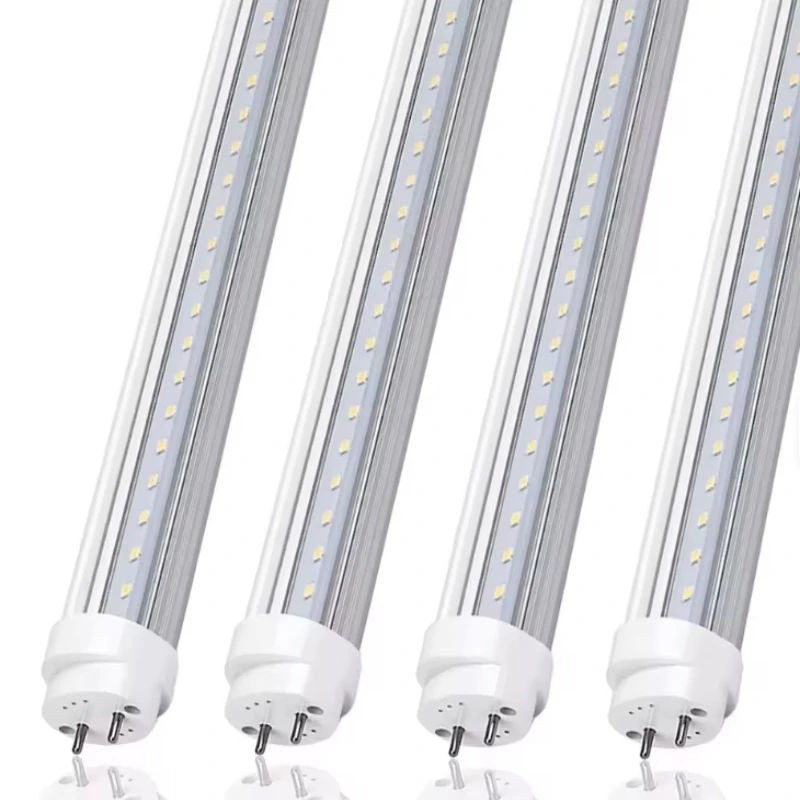
Product Architecture: Three Engineering Decisions
The powdered glass envelope and 99.7% light transmittance
Light transmittance is the single most under‑reported number in tube specification. A diffuser that transmits 85% of incident light silently discards 15% of the lumens the LEDs actually produced, and the buyer pays for those lumens in the form of extra wattage. Powdered glass at 99.7% transmittance essentially removes that penalty: what the diodes emit is what leaves the tube.
The practical consequences go beyond the raw percentage.
Optical stability over time. Polycarbonate diffusers degrade under UV and heat. In a closed batten under a warm roof, a PC sleeve can shift visibly yellow within two to three years, and a yellowed diffuser costs both output and colour fidelity - the light drifts green. Glass has no such failure mode. The tube at year five looks and measures like the tube at year one, which is why glass is the default choice in specifications where relamping cycles are long and access is expensive.
Scratch and chemical resistance. Industrial environments are full of airborne grit, cleaning solvents, and in food plants, wash‑down chemicals. PC hazes; glass does not. For a tube mounted three or four metres up in a production hall, this is the difference between a maintained appearance and a scuffed one.
Frosted and clear options. The range is offered with both clear and frosted covers. Clear glass maximises raw output and is the right choice for high‑bay and reflector‑equipped fixtures where glare control is handled by the luminaire. Frosted glass trades a small amount of output for a softer, more evenly distributed field, and suits low‑mount offices, retail, and any space where the LED array itself should not be visible.
Mechanical reality, stated honestly. Glass is more fragile than PC in handling and transport, and this is the reason packaging design matters as much as optical design. Any supplier offering a glass tube without a properly engineered inner carton and end‑cap protection is selling you breakage. This is covered in Section 6.3.
SMD2835 and SMD5630: two LED platforms, one tube
The choice between SMD2835 and SMD5630 is the most consequential decision most buyers will make, and it is frequently made badly - usually by taking whichever is cheaper on the day.
SMD2835 is the workhorse of linear lighting: a 2.8 × 3.5 mm package with a relatively large thermal pad relative to its output, which spreads heat efficiently along the aluminium substrate. Its strengths are cost efficiency, excellent thermal behaviour at moderate drive currents, and very consistent colour binning across large production runs. For general warehouse, office, and retail replacement - where the target is simply to match or slightly exceed the old fluorescent output - SMD2835 is the rational default. It is the platform that delivers the longest life at a given wattage, because the junction temperature stays lower.
SMD5630 is a larger 5.6 × 3.0 mm package designed for higher drive currents and higher lumen density per diode. Its advantage is output: fewer diodes are needed to reach a given lumen target, which reduces component count and, in high‑output tubes, cost per lumen. Its trade‑off is thermal concentration - the same heat from a smaller emitter area - which is why 5630 tubes live or die by the quality of their aluminium substrate and the driver's accuracy.
The tube is specified with low light‑decline LEDs on either platform, meaning the phosphor and packaging are selected for slow lumen depreciation rather than for peak initial brightness. In practice:
Choose SMD2835 when the priority is service life, thermal margin, and colour consistency - most retrofit projects, most cold‑chain and enclosed fixtures.
Choose SMD5630 when the priority is maximum output per tube in a high‑bay or a space constrained by fixture count.
Because both platforms share the same glass envelope, driver family, and base, a distributor can hold a single mechanical SKU family and cover both profiles - a genuine inventory advantage over suppliers who force a different housing per output tier.
The FA8 single‑pin base: conductivity and anti‑flaming
FA8 is a single‑pin cap: one contact per end, rather than the two‑pin bi‑pin arrangement of a standard fluorescent tube. That geometry has one immediate consequence - the tube cannot be wired as a drop‑in replacement for a bi‑pin ballast circuit. It is a ballast‑bypass (direct‑wire) product. This is not a limitation to be glossed over; it is a design decision that should be disclosed plainly at the quotation stage, and Section 4.3 explains the wiring implications.
What the FA8 cap buys in return is contact integrity. A single, well‑sized pin with a properly tensioned socket gives a lower and more consistent contact resistance than two small pins, and lower contact resistance means less heat exactly where heat does the most damage - at the cap, where the driver board sits inches away. The cap is specified for perfect conductivity and anti‑flaming performance, which addresses the failure mode most common in cheap retrofit tubes: sustained arcing at a loose or oxidised contact, followed by charring of the plastic cap and, in the worst case, ignition of the cap itself.
In practice the anti‑flaming requirement is not a marketing embellishment. It is the difference between a tube that fails safely and a tube that becomes an insurance claim. Buyers specifying for schools, hospitals, warehouses, or any space with combustible storage should treat the cap's flame rating as a mandatory line item, not an optional upgrade.
The constant current driver: wide and narrow voltage
LED arrays are current‑driven devices. Their forward voltage shifts with junction temperature and with binning variation, so a constant‑voltage driver must rely on series resistors or on the LEDs' own internal resistance to set current - a method that produces current drift, thermal runaway risk, and brightness variation between tubes on the same circuit.
A constant current driver closes the loop on current instead. The result is:
Stable output as the tube warms up - no visible dimming in the first twenty minutes of operation.
Consistent brightness across a batch, because each tube receives the same drive current regardless of its array's forward‑voltage bin.
Protected LEDs, since over‑current - the dominant cause of premature lumen depreciation - is structurally prevented rather than merely discouraged.
Flicker control, because a well‑designed constant current stage with adequate smoothing produces far less ripple than a comparable constant‑voltage design.
The driver is offered in two variants, and the distinction is genuinely useful rather than a catalogue padding:
Wide voltage (typically covering 100–240 V or 100–277 V class input) is the export and multi‑market choice. It tolerates the voltage sag and surge common on generator‑backed sites, in older buildings, and in regions with unstable supply, and it allows a distributor to hold one SKU across several destination markets - a meaningful reduction in stock complexity.
Narrow voltage suits projects on stable, well‑regulated supply where the priority is cost and where the specification is locked to a single market voltage. Narrow‑input designs can be marginally more efficient and marginally cheaper, and there is no reason to pay for tolerance you will never use.
Both are constant current. The wide/narrow distinction is about input tolerance, not about drive topology - a point worth making, because some suppliers market a cheap constant‑voltage driver as "wide voltage" and let the two attributes blur together.
Optical and Thermal Performance
The 320° beam angle and why it matters
A fluorescent tube emits in roughly 360° around its axis. That is why fluorescent battens have reflectors: a substantial share of the light goes upward, hits the reflector, and is redirected down. The reflector is not decoration - it is part of the optical system.
Many LED tubes emit only 120–160°, downward. They appear bright when you look at the floor, but the fixture's reflector is now doing nothing, and the indirect component that softened shadows and reduced contrast is gone. The result is a visibly harsher installation with more glare and darker walls and rack faces.
A 320° beam angle restores that geometry. Light reaches the reflector, is redirected downward and outward, and the space regains the wide, low‑contrast distribution that the original fixture was designed to produce. In a warehouse aisle this matters directly: rack faces are visible, label reading is easier, and the perceived brightness of the aisle improves without adding wattage. In a retail environment, the softer wrap reduces harsh shadowing on shelving and merchandise.
The combination of 320° emission and 99.7% transmittance is the core optical argument for this product. Either one alone is a partial fix; together they let an LED tube behave like the linear source it replaces rather than like a spotlight in a tube‑shaped box.
Low lumen depreciation and the thermal path
Lumen maintenance is a thermal problem before it is an optical one. Every degree of junction temperature costs life, and the path from diode to ambient runs through the LED package, the solder joint, the aluminium substrate, the tube wall, and finally the air in the fixture. Glass conducts heat poorly compared with metal, so a glass tube's thermal design must live or die by the internal substrate - the aluminium extrusion on which the LED strips are mounted - and by the driver's ability to hold current steady as temperature rises.
Three design choices in this product support that path:
Low light‑decline LED binning. LEDs are selected for slow depreciation rather than peak initial output. A tube that starts at 3% above nominal and is at nominal by hour 5,000 is a worse purchase than one that starts at nominal and is 95% of nominal at hour 20,000.
Constant current drive. Because current is regulated, the array cannot enter the thermal‑runaway spiral in which rising temperature increases current, which raises temperature further.
Spread emission along the full length. LED strips running the length of the tube distribute heat far more evenly than a short, densely packed array. Even distribution means no local hot band, no localised yellowing, and no single point of accelerated failure.
The honest way to present lifetime is as a range tied to drive conditions. Depending on the platform and wattage selected, well‑built tubes of this class are specified in the 25,000–50,000 hour bracket, with L70 or L80 maintenance figures quoted against a defined ambient. Buyers should insist on the test condition, not just the headline number - a lifetime figure without an ambient temperature and drive current is a slogan, not a specification.
Glass versus PC: the fair comparison
It is worth stating the trade‑off plainly, because an article that pretends glass has no downside is not useful to a buyer.
Glass wins on: transmittance (99.7% versus roughly 85–90% for typical PC diffusers), non‑yellowing, scratch resistance, chemical resistance, and long‑term optical stability. It also handles higher internal temperatures without deformation.
PC wins on: impact resistance during transport and installation, weight, and unit cost. A PC tube dropped from a ladder usually survives; a glass tube usually does not.
The correct conclusion is not "glass always wins" but "glass wins wherever the tube will be installed once and left for years, and where the freight and handling are competently managed." That describes most industrial, warehouse, and commercial retrofit work. It also explains why packaging quality is a specification item in Section 6 rather than an afterthought.
Electrical Behaviour and Installation Reality
Constant current versus constant voltage, in commercial terms
The technical difference has a commercial translation that buyers should hear clearly.
A constant‑voltage tube forces the LEDs to self‑regulate current through resistive loss. As the array heats, forward voltage drops, current rises, output rises briefly, and junction temperature climbs further - a mild positive feedback loop that accelerates depreciation. Over a batch, tubes with different forward‑voltage bins run at visibly different brightness on the same supply.
A constant‑current tube fixes the current. Output is stable, batch consistency is tight, and the LEDs operate at the current they were characterised at. The visible symptoms of a constant‑voltage design - brightness that "settles" over the first minutes, slight flicker on marginal supplies, tubes in the same row that are noticeably different in output, early failures clustered in the hottest fixtures - simply do not appear.
For a project buyer, this is the difference between specifying a lumen figure that holds and one that exists only on the datasheet.
Narrow versus wide voltage in practice
The selection logic is straightforward once the destination market is known.
Single stable market, cost‑sensitive tender: narrow voltage. Lock the input to the local nominal and save on driver cost.
Export distribution covering several countries: wide voltage. One SKU, fewer stock splits, fewer wrong‑country shipments.
Sites with generators, voltage sag, or long cable runs: wide voltage. Tolerance is what you are buying.
Retrofit of older buildings with aged wiring: wide voltage, for the same reason.
A subtle but real benefit of wide‑voltage constant current designs is that a single SKU can serve both 230 V and 277 V class markets, which is precisely the kind of inventory simplification that reduces dead stock for an exporter.
Ballast bypass: the wiring truth
FA8 tubes are direct‑wire products. In a conventional fluorescent batten, that means the ballast and starter must be removed or bypassed, and mains is connected directly to the tube socket according to the manufacturer's wiring diagram. This is a job for a qualified electrician, not for a maintenance assistant with a screwdriver.
Three points must be communicated at the point of sale:
Label the fixture. After bypass, the fixture will destroy a fluorescent tube if one is ever fitted. A visible warning sticker is a safety requirement, not a nicety.
Confirm the wiring diagram per market. Socket wiring conventions vary, and a diagram that is correct for one region can be actively dangerous in another.
Check the socket. FA8 single‑pin sockets must be in good condition and correctly tensioned. A worn socket with a loose pin is exactly the arcing scenario that the anti‑flaming cap is designed to survive - but surviving it is not the same as being immune to it.
A supplier who will not provide a clear wiring diagram, a warning label, and installation guidance is not a supplier to build a project on. This is one of the cheapest possible value‑adds and one of the most reliable indicators of how seriously a factory takes its product.
Application Fit
Warehouse and industrial halls
This is the natural home of the product. High mounting heights, long operating hours, and expensive access equipment make maintenance cost dominate the purchasing decision. The 320° distribution lights rack faces and the reflector, reducing the shadow pockets that make aisles feel dim even at adequate illuminance. Glass survives the dust, the cleaning, and the temperature swings. Constant current drive prevents the brightness sag that shows up as "the lights look tired" after two years.
Retail, hospitality, and office linear lighting
In lower‑mounted commercial fixtures the priorities shift: colour consistency and glare control matter more than raw output. Here the frosted cover and SMD2835 platform are the sensible pairing - softer distribution, tight binning, and long life at moderate drive current. For brand‑critical retail, insist on a single colour bin and a documented CRI figure before placing a bulk order.
Cold chain and low‑temperature spaces
Cold stores and refrigerated display backrooms are hostile to both fluorescent tubes and cheap LED drivers. Fluorescent output collapses in the cold; electrolytic capacitors in low‑grade drivers lose capacitance and fail to start. A glass envelope avoids the brittleness that PC develops at low temperature, and a properly specified constant current driver with cold‑rated components is the correct choice. Buyers should request the low‑temperature start specification explicitly rather than assuming it.
Linear signage and light boxes
Clear glass at high transmittance is attractive for light boxes and linear signage, where every lost lumen is a visible reduction in uniformity. The 320° emission also suits double‑sided boxes. In this application, the mechanical fragility point returns: signage panels are usually serviced in place, so handling discipline matters.
Selection and Procurement Guide
Specification matrix
| Decision | Option A | Option B | Choose A when | Choose B when |
|---|---|---|---|---|
| LED platform | SMD2835 | SMD5630 | Life and thermal margin are priorities | Maximum output per tube is the priority |
| Cover | Clear glass | Frosted glass | High bay, reflector fixtures, signage | Low mount, retail, glare‑sensitive spaces |
| Driver input | Narrow voltage | Wide voltage | Single stable market, cost tender | Export distribution, unstable supply |
| Cap | FA8 single pin | - | Ballast‑bypass retrofit | Not a drop‑in for bi‑pin ballast circuits |
Colour temperature, CRI, and cover
Standard commercial practice is 3000 K for hospitality and residential‑adjacent retail, 4000 K for office and general commercial, and 5000–6500 K for industrial and cold storage where perceived brightness and alertness matter. CRI should be specified as a minimum, not a typical: ≥80 for general commercial work, ≥90 where merchandise colour or food appearance is being sold. Always request the colour bin code, not just the CCT.
Cover choice should follow mounting height and glare tolerance, as set out in 6.1. A common error is to specify clear glass throughout a mixed project; the low‑mounted fixtures will glare.
Compliance, packaging, and OEM terms
Four commercial items decide whether a container arrives intact and saleable.
Certification. Confirm the certification set required by the destination market and require certificates naming the actual model, not a generic factory listing. CE/UKCA and RoHS for Europe, relevant national marks elsewhere.
Packaging. Glass tubes need an engineered inner carton: end‑cap protection, sleeve support along the length, and a carton strength adequate for container stacking. Ask for the drop‑test report and, for a first order, an inspection before shipment.
OEM and labelling. Confirm whether custom printing on the tube, custom carton artwork, and private‑label driver markings are available, along with the artwork approval cycle and the minimum quantity attached to each.
Commercial terms. Establish MOQ per SKU combination - note that wattage, CCT, cover, and driver variant each multiply the SKU count - plus lead time, sample policy, warranty terms and their claim procedure, and the spare‑parts ratio for project shipments.
A distributor who negotiates these four items before the first order avoids the two failures that cost the most: a container of broken tubes and a certification gap at customs.
Total Cost of Ownership
Energy
The comparison that matters is delivered lumens per watt at the fixture, not at the diode. Because 99.7% transmittance and 320° emission both increase the useful light leaving the tube, the effective efficacy of this product is higher than its nameplate figure suggests - the fixture is no longer losing 10–15% of output to a hazy diffuser, nor discarding the upward component entirely. For a twenty‑four hour operation, energy is the dominant line in the cost model, and a few percentage points of delivered efficiency compound over a decade.
Maintenance
Two cost drivers sit here: relamping frequency and access cost. In a high‑bay warehouse, the labour and equipment cost of changing one tube can exceed the tube's own price several times over. Extending the replacement interval is therefore worth more than a marginal unit‑price saving. Glass that does not yellow and constant current drive that prevents over‑current both extend the interval, and both are invisible in a price comparison - which is precisely why they need to be argued explicitly in a tender.
Payback framing
A defensible payback calculation uses four inputs: actual operating hours, local electricity tariff, the wattage difference between the existing fluorescent circuit (including ballast loss) and the LED tube, and the maintenance cost avoided per avoided relamp. Ballast loss is frequently omitted and is worth roughly 5–10 W per fixture - enough to shift payback by months across a large site. Present the calculation with those four inputs stated openly; buyers discount payback claims that arrive without them.
Conclusion
The FA8 base T8 LED tube described here is best understood not as a commodity tube with a longer feature list, but as three engineering answers to three specific weaknesses in the retrofit market: a glass envelope at 99.7% transmittance to stop the diffuser from taxing the LEDs and to stop the tube from yellowing; SMD2835 and SMD5630 platforms offered side by side so that thermal margin and raw output can each be chosen deliberately; and a constant current driver in wide and narrow voltage versions so that electrical stability is a standard feature rather than a premium upgrade. The FA8 single‑pin cap, specified for conductivity and anti‑flaming, closes the loop on the failure mode that matters most at the contact.
For a distributor, the commercial logic is straightforward: one mechanical family, two LED platforms, two driver variants and two cover options cover the great majority of retrofit demand without multiplying inventory into unmanageable SKU counts. For a project buyer, the same logic becomes a specification checklist - platform, cover, driver input, cap rating, certification, packaging - that can be written into a tender and verified on delivery.
The remaining step is the one that decides the outcome: select the configuration against the actual application, not against the lowest quotation. Request the sample set in the intended combination - SMD2835 frosted with wide voltage for a retail retrofit, SMD5630 clear with narrow voltage for a high‑bay hall - and compare them in the fixture, at the mounting height, on the supply that will actually feed them. That comparison, not the datasheet, is what tells you whether the tube will still look right in year five.
Ready to specify? Request a configuration sheet and sample kit for your project - platform, cover, CCT, CRI, driver input and certification set quoted as one matched package, with wiring diagram, warning labels and carton specification included.
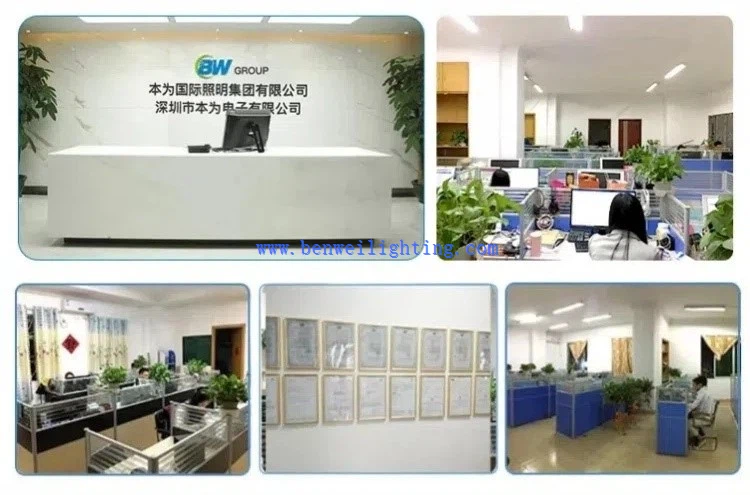
How To Cooperate With Us?
We are happy to have total control over the manufacturing process and the calibre of our products since we have our own facilities. Since we are producers rather than just brokers, we are dedicated to providing our customers with the best pricing. Since we are certain that the price and quality of our products are clear, we invite customers to see our samples first. Our commitment to quality and customer satisfaction drives us to continuously provide top-notch goods.
Our address
3rd Floor, 5th Building, Hebei Industrial Park, Hualian Community, Longhua District, Shenzhen, China





