

Global Core Values: The Three Pillars of Energy Transformation
The global consensus on zero-carbon transformation
The carbon emissions of solar street lamps throughout their entire lifecycle are as low as 17% of those of traditional street lamps. Each lamp can reduce carbon emissions by 2.1 tons annually, making them a key carrier for global decarbonization. The European Union has passed CE certification (covering EN 55015 electromagnetic compatibility and EN 61000 safety protection standards) to enforce higher environmental protection standards, while countries with abundant sunlight resources such as the Philippines and Saudi Arabia are fully promoting the photovoltaic transformation of street lamps and accelerating the process of replacing with clean energy.
Disruptive Reconfiguration of Economic Models
The global economic returns show a gradient distribution: the investment recovery cycle in the Nordic region is approximately 5-7 years, and the maintenance cost drops by 60%; in Southeast Asia, benefiting from high irradiation conditions, it takes 3-4 years to recover the investment and the annual maintenance cost is reduced by 80%; the off-grid areas in Africa perform the most outstandingly, recovering the investment in 2-3 years and achieving zero maintenance cost operation. In typical cases, the construction efficiency of the 4800-meter-high plateau project in Tibet has increased by 75%, completely avoiding the damage to the permafrost ecosystem; the Ruhr industrial area in Germany has successfully reduced the load of the municipal power grid by 30%, confirming its dual benefits of economic and ecological gains.
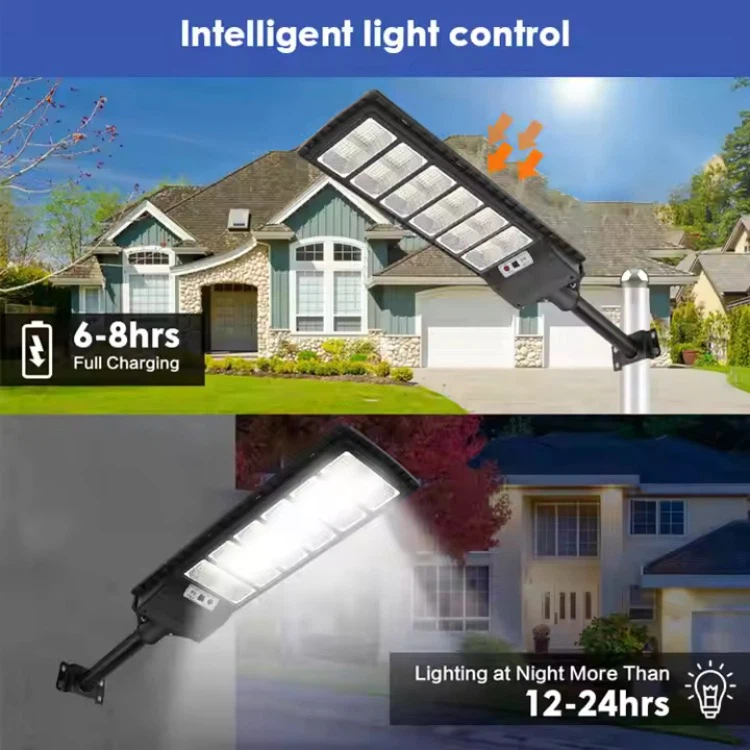
Strategic breakthrough in energy sovereignty
Technology empowerment reshapes the energy landscape: In sub-Saharan Africa, the off-grid system has increased the lighting coverage rate from 18% to 63%. In the Yucatan Peninsula of Mexico, the amber spectral technology was adopted to protect Mayan ruins from light erosion. In the earthquake-stricken areas of Turkey, a modular design enabled the rapid establishment of a 50-kilometer lighting lifeline for emergency use within 72 hours, demonstrating the revolutionary value of energy autonomy.
Technological Revolution: Global Collaborative Innovation Map
Hardware evolution dual engine
In the field of efficient power generation, the experimental double-sided photovoltaic panels in Xiong'an New Area in China have achieved an 18% increase in power generation efficiency through ground reflection light capture. In France, the innovative wave-shaped photovoltaic pavement at the Marseille Port enhances the utilization rate of diffuse reflection. In the extreme cold energy storage aspect, the lithium iron phosphate battery, certified by TCSA039-2019, maintains a capacity of 85% in an environment of -30℃. In Norway, the Tromsø City has overcome the lighting bottleneck in the Arctic Circle's polar night by combining phase change material insulation technology.

Migration of the intelligent control paradigm
The city of Eindhoven in the Netherlands has built the world's first "light-neural city", with 5,000 Internet of Things street lights collecting real-time data such as PM2.5, noise, and traffic flow; in the Mongolian grasslands, the STM32 chip is used to drive the Beidou dual-mode timing system, achieving adaptive dimming within milliseconds for sunrise and sunset, and redefining the precision of smart lighting.
The international standard system has taken shape.
The ISO 22975 standard, which was led by China, became the world's first international standard for vacuum tube solar energy. The IEC 60598-2-3 and IEC 62031 jointly formed the core framework of the CB certification. The European Union was the first to implement the system of publicly disclosing component warranty grades, clearly distinguishing the life cycles of photovoltaic panels (25 years), controllers (5 years), and batteries (3 years).
Global Application Map and Challenge Breakthrough
Deepening scenarios in mature markets
In Singapore's Marina Bay, a combined photovoltaic, storage and charging pole has been deployed, integrating functions of electric vehicle charging, 5G micro base stations and emergency calls. In the Amazon rainforest, an animal-activated lighting system was pioneered, switching to a 100W intense light when people and vehicles pass by, while maintaining a 20W eco-friendly dim light in normal conditions, achieving a balance between lighting and environmental protection.
Emerging market innovation model
India has reduced its procurement costs by 40% through farmers' photovoltaic cooperatives. Kenya has increased its coverage rate by 200% annually by leveraging the mobile payment and time-sharing rental model. Brazil has innovated a carbon credit swap program, generating an annual revenue of $12 per lamp from carbon sink benefits, thus opening up a sustainable commercialization path.
The technological breakthroughs enabling urban infiltration
For the areas in Manhattan, New York, where tall buildings block sunlight, the Technical University of Berlin has developed suspended photovoltaic arrays, which utilize the secondary concentration of light on the building facade to enhance energy efficiency. In Toronto, Canada, a hydrogen fuel cell hybrid energy storage solution has been adopted, breaking through the 30-day ultra-long range limit during continuous rainy days and solving the problem of climate adaptability.
Future Trends: From Lighting Tools to Urban Organs
The International Energy Agency predicts that by 2030, solar street lamps will evolve into "environmental sensing terminals", capable of collecting over 200 parameters such as soil moisture, seismic waves, and air conductivity in real time. The Congo River Basin project has already achieved tracking poachers through the heat source of the street lamps. In Cape Town, South Africa, an early warning network for wildfires has been established. At the foot of Mount Kilimanjaro in Tanzania, coffee farmers are optimizing the transportation routes for their crops by relying on the solar street lamp network - these "steel sunflowers" not only illuminate the darkness but also ignite the civilized spark of energy equity, reshaping the symbiotic relationship between humans and solar energy.
About our company
Shenzhen Benwei Lighting Technology Co., Ltd is a well-known company that designs, develops, makes, and sells high-tech goods, including LED lighting products. The plant where we work opened in 2010 and is in Shenzhen.
Our address
3rd Floor, 5th Building, Hebei Industrial Park, Hualian Community, Longhua District, Shenzhen, China






