

Stadium lights are an essential element of a stadium that can make or break the sporting event being held. As the core infrastructure of all sports venues, stadium lighting is not only responsible for providing sufficient brightness for day and night competitions, training sessions and public viewing, but also directly affects the fairness of sports events, the athletic performance of athletes and the viewing experience of audiences. High-standard stadium lighting can eliminate visual blind spots, ensure clear field of vision, and create a professional competition atmosphere, while unqualified and non-compliant lighting will lead to insufficient brightness, uneven illumination, stroboscopic flicker and other problems, which may interfere with athletes' judgment and even trigger sports injuries. However, installing and maintaining stadium lights is not an easy task. Different from ordinary civilian and commercial lighting, stadium lighting covers large areas, involves high-altitude installation, bears long-term high-power operation, and faces complex outdoor environmental tests such as strong wind, rain erosion and temperature changes. Stadium lights are subject to various safety regulations and standards that must be adhered to for the safety of the players and spectators. These standardized regulations cover the whole process of lighting design, material selection, construction installation, daily operation and later maintenance, forming a complete safety supervision system. Any link that fails to meet the standards may bury potential safety hazards. Here are some ways to ensure that your stadium lights comply with safety regulations and standards.
1. Hire a professional lighting consultant
A person with experience in stadium lighting can guide you better on safety regulations and standards that need to be followed. Stadium lighting safety standards involve professional knowledge such as optical design, electrical engineering, structural mechanics and venue operation specifications, which are difficult for ordinary venue managers and construction personnel to fully master. Professional stadium lighting consultants have long-term industry experience, in-depth understanding of international and domestic stadium lighting safety codes, and are familiar with the safety requirements of different types of sports venues such as football fields, basketball courts, track and field stadiums and comprehensive sports halls. They can accurately judge the safety loopholes in venue lighting design and construction. They can help you with lighting design, installation and maintenance of the stadium lights. In the early stage of venue construction or lighting renovation, consultants can carry out targeted lighting scheme design according to the venue scale, competition level and safety standards, reasonably plan the lamp layout, installation height, irradiation angle and circuit layout, and avoid safety risks such as excessive local load and unreasonable lamp spacing. In the installation and maintenance stage, they can also provide professional technical guidance to standardize the operation process. It is important to hire a licensed expert to avoid any potential risk of accidents. Licensed professional consultants have formal industry qualifications and standardized service processes, which can effectively avoid irregular design and construction caused by unprofessional operation, fundamentally reduce the hidden dangers of lamp falling, electric leakage and lighting failure, and ensure that the entire stadium lighting system meets official safety specifications.
2. Check guidelines and regulations
Check with the local authorities and governing bodies that manage the safety of sporting events. Stadium lighting safety is a key part of venue public safety management, and all regions and sports industry associations have formulated clear and mandatory safety management guidelines. These official regulations are formulated based on local climatic conditions, venue construction standards and public safety management requirements, with strong pertinence and enforceability. Ensure that the design, installation and maintenance of stadium lights comply with all the safety regulations and standards set by the authorities. It is worth noting that the safety standards of stadium lights are not static. With the upgrading of industry safety requirements and lighting technology, relevant regulations will be updated and revised irregularly. Venue managers need to take the initiative to consult local emergency management departments, sports venue supervision agencies and industry associations regularly, obtain the latest official guidelines, and check whether the existing lighting system meets the updated standards. Whether it is the lightning protection and grounding specifications of outdoor stadium lights, electrical safety standards of circuit operation, or brightness and anti-glare safety indicators for competition lighting, all items must be implemented in strict accordance with official regulations to avoid safety accidents and venue qualification failures caused by non-compliant equipment and operation.
3. Use quality material
Use only high-quality electrical wiring, fixtures and bulbs for the stadium lights. The stadium lighting system belongs to long-term high-load operating equipment, which needs to withstand harsh outdoor environments such as wind, rain, ultraviolet radiation and temperature difference changes all year round, and also needs to adapt to long-time uninterrupted operation during events and daily training. The quality of materials directly determines the safety stability and service life of the entire lighting system. High-quality lamp housings, die-cast aluminum fixtures, waterproof and dustproof lamp bodies, and standard thickened electrical wires have excellent corrosion resistance, pressure resistance and electrical conductivity, which can maintain stable working performance in complex environments. Cheap and low-quality products might save money, but they pose a threat of electrocution, fires and malfunctioning that can put the safety of players and spectators in danger. Inferior wires are prone to aging, cracking and leakage after long-term use, which will trigger electric leakage accidents; low-quality lamp fixtures have poor structural stability, which may rust and loosen in windy and rainy weather, leading to high-altitude falling accidents; unqualified bulbs and light sources are easy to burn out, flicker and overheat, which not only affects the lighting effect, but also easily causes short-circuit and fire hazards. Therefore, in the process of stadium lighting construction and replacement, we must adhere to the principle of quality first, select formal brand products with safety certification, and completely eliminate unqualified low-quality materials.
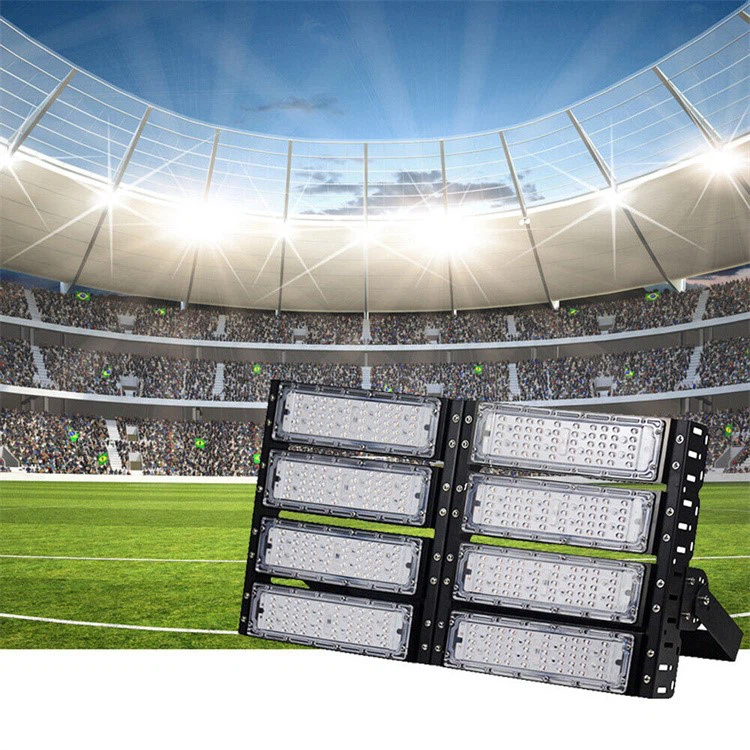
4. Regular inspections and maintenance
Regular inspections and maintenance of stadium lights can keep them in good condition, reduce energy consumption and prolong their lifespan. As high-altitude outdoor equipment, stadium lights are easily affected by external environmental factors, and subtle aging and damage are difficult to detect in daily use. Long-term lack of maintenance will lead to the accumulation of small faults, which will eventually evolve into major safety hazards. Scientific and regular inspection and maintenance can eliminate hidden dangers in advance, ensure the stable operation of the lighting system, and also optimize the energy-saving performance of the equipment. Inspect the wiring, support structures, and light fixtures to detect any signs of damage or wear and tear. Maintenance personnel need to conduct comprehensive inspections on a regular basis, focusing on checking whether the circuit wiring is aging, loose or damp, whether the high-altitude support brackets and fixed structures are rusted, deformed or loose, and whether the lamp housings are cracked, waterlogged or damaged. For the worn and aging parts found, repair and replace them in a timely manner to avoid safety accidents. Also, ensure that the stadium lights are cleaned regularly to avoid buildup of debris or dust. Long-term accumulation of dust, fallen leaves, bird droppings and sundries on the lamp surface will block the light outlet, affect the heat dissipation of the lamp body, lead to increased operating temperature of the light source, accelerate equipment aging, and even cause local overheating and short circuit. Regular cleaning can ensure the heat dissipation and lighting performance of the stadium lights, and maintain the long-term safe and efficient operation of the equipment.
5. Best practices for operation
Ensure staff is adequately trained to operate the stadium lights safely. The safe operation of stadium lighting equipment cannot be separated from standardized manual operation. Many safety accidents are caused by irregular operation of staff. Stadium lighting involves high-power electrical equipment and professional control systems, and casual operation is likely to trigger electrical faults and safety hazards. Adequate training should incorporate safety protocols, including emergency procedures and proper use of equipment. Professional training needs to cover the correct startup and shutdown sequence of lighting equipment, brightness adjustment operation, daily inspection standards, and professional emergency response methods for sudden faults such as circuit tripping, lamp failure and electric leakage. At the same time, it is necessary to clarify the post safety responsibility system, so that every operator can master professional operation skills and safety specifications. Make sure staff adheres to these protocols and uses protective gear when needed. In the process of daily operation, equipment inspection and fault maintenance, staff must wear professional insulating gloves, safety helmets and other protective equipment in accordance with the regulations, strictly abide by the operation specifications, avoid illegal operation such as live-line maintenance and overload operation, and standardize every operation link to ensure the safety of personnel and equipment.
6. Conduct safety drills
Conduct safety drills to ensure that staff knows how to respond in case of a disaster. Stadiums are high-density public places. Once lighting system failures, power outages, fires and other emergencies occur during events, improper response will easily cause on-site order chaos and even group safety accidents. Daily safety drills are an important guarantee to improve the emergency response capability of staff and ensure the safe operation of the venue. This way, they can respond promptly in case of power failure or other hazardous scenarios. Regular targeted safety drills can help staff be familiar with the emergency disposal process of various lighting safety faults, master the rapid power-off operation, fault investigation, on-site evacuation guidance and other disposal methods. When facing sudden power failure, lamp falling, circuit fire and other dangerous situations, staff can respond quickly and correctly, control the risk in the first time, avoid the expansion of safety accidents, effectively protect the life safety of on-site athletes and spectators, and ensure the orderly operation of venue emergencies.
7. Periodic Upgrades
Technology is constantly evolving and stadium lights are no exception. The lighting industry is developing rapidly, and new energy-saving, safe and high-performance lighting technologies and products are constantly emerging. At the same time, national and industry safety standards for stadium lighting are also continuously upgraded and improved, putting forward higher requirements for the safety performance, environmental protection performance and lighting effect of stadium lights. Traditional old lighting equipment often has problems such as high energy consumption, poor safety performance and failure to meet new industry standards after years of operation. Keep up with the latest technologies and upgrade your lights to ensure they meet current safety regulations and standards. Venue managers need to regularly evaluate the performance of existing lighting systems, eliminate outdated old equipment that does not meet the latest safety standards, and upgrade to new LED stadium lights with higher safety factors, better stability and more energy-saving performance. Timely technical upgrades can not only make the lighting system fully compliant with the latest safety regulations, eliminate potential safety hazards caused by backward equipment, but also improve the overall lighting quality of the stadium, reduce long-term operation and maintenance costs, and realize safe, efficient and green operation of venue lighting.
In conclusion, ensuring that stadium lights comply with safety regulations and standards is essential to guarantee the safety and well-being of players and spectators. Stadium lighting safety compliance is a long-term and systematic project, which runs through the whole life cycle of lighting design, construction, operation, maintenance and upgrading, and is related to the public safety of the entire venue and the standard development of sports events. Making use of professional lighting consultants, installing quality material, conducting regular inspections and maintenance, training staff, and periodical upgrades of the technology can all contribute to delivering a safe and efficient lighting experience for all involved. By comprehensively implementing the above safety compliance measures, stadium managers can effectively eliminate various potential safety hazards of lighting equipment, ensure that the lighting system always meets official safety standards, provide stable, safe and high-quality lighting support for sports competitions, daily training and public viewing, and create a secure, professional and reliable sports venue environment for athletes and spectators.

How To Cooperate With Us?
Because of our own facilities, we have complete control over the production process and the quality of our goods, which makes us very pleased. We are committed to giving our clients the greatest price since we are manufacturers rather than just brokers. We encourage clients to evaluate our samples first since we are certain that the cost and quality of our items are transparent. Our dedication to excellence and client happiness motivates us to consistently provide superior products.
Our address
3rd Floor, 5th Building, Hebei Industrial Park, Hualian Community, Longhua District, Shenzhen, China





