

Overview of Construction Site Lighting System Operation and Fault Characteristics
Functional Importance of Construction Lighting in Full-Cycle Engineering Operations
Construction site lighting is a fundamental auxiliary system that guarantees standardized operation, personnel safety and continuous progress of engineering projects. It covers the whole construction cycle including foundation excavation, steel bar binding, concrete pouring, structural construction and final equipment installation. Different from conventional indoor lighting systems, construction lighting needs to adapt to complex and harsh outdoor working environments, including variable meteorological conditions, frequent mechanical vibration, dust pollution and temporary circuit switching. Stable and reliable lighting output directly affects operational accuracy, construction efficiency and on-site safety management level, serving as an indispensable part of construction safety production management.
Environmental Inducements for High Fault Rate of On-Site Lighting Equipment
Construction sites feature open operational space, severe dust accumulation, humid and variable weather conditions, as well as frequent mechanical collision and vibration interference. Such harsh operating environments bring continuous aging impact and structural damage to temporary lighting systems. Long-term outdoor exposure easily leads to line aging, lamp shell contamination, water vapor infiltration and component parameter drift. Meanwhile, temporary wiring, frequent switching operation and unstable on-site power supply further increase the failure probability of lighting equipment, resulting in various abnormal operating states and hidden electrical safety hazards.
Research Significance of Fault Diagnosis and Troubleshooting Technology
Timely and accurate diagnosis of common lighting system faults can effectively avoid insufficient on-site illuminance, unqualified operating conditions and secondary electrical accidents caused by equipment failure. Scientific troubleshooting and standardized maintenance can reduce equipment replacement cost, extend the service life of temporary lighting facilities, ensure continuous and stable lighting output during nighttime and enclosed space construction, and provide technical support for safe, efficient and low-cost operation of construction site lighting systems.
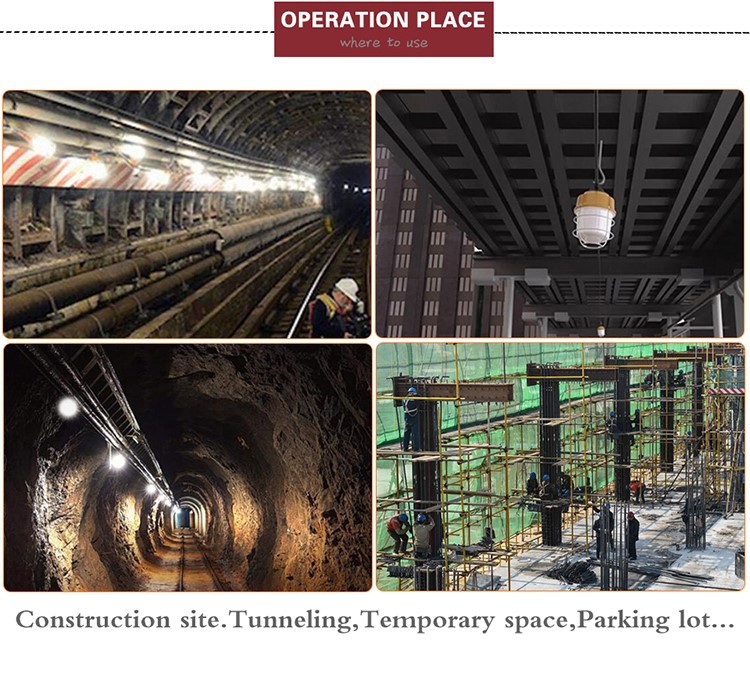
Typical Fault Mechanism and Professional Troubleshooting Scheme of Construction Lighting System
Continuous Light Flickering Fault and Systematic Diagnosis Strategy
Light flickering is one of the most frequent abnormal phenomena of construction site lighting systems. Intermittent and occasional light flicker belongs to normal instantaneous fluctuation caused by power grid voltage difference, while continuous periodic flickering indicates systematic equipment failure, which will seriously affect workers' visual judgment, cause visual fatigue and interfere with normal construction operation.
Voltage instability is the primary cause of continuous flickering faults. Construction sites have large power load fluctuation, and the simultaneous operation of high-power mechanical equipment easily causes instantaneous grid voltage drop and voltage fluctuation. When the input working voltage of lighting fixtures exceeds the standard operating voltage tolerance range, the light source will produce periodic brightness changes and continuous flickering. During troubleshooting, professional voltage measuring instruments shall be used to monitor real-time input voltage of the lighting circuit. It is necessary to adjust the power load distribution reasonably, avoid high-power electrical equipment working in parallel with lighting circuits, and configure voltage stabilizer equipment for key lighting loops to ensure stable voltage input.
Non-standard wiring and poor line connection are key artificial inducements of flickering failure. Long-term outdoor vibration and artificial line pulling easily lead to loose wire terminals, oxidized contact points and incomplete circuit conduction. Dirty and oxidized wiring interfaces will produce unstable contact resistance, resulting in discontinuous current transmission and periodic light flickering. The troubleshooting process requires comprehensive inspection of all wiring terminals, removal of oxide layers at contacts, re-fastening of loose connectors, and adoption of waterproof and dustproof terminal blocks for sealing protection to ensure stable and continuous circuit conduction.
Damaged and aging ballast components are the core structural cause of light flickering. As a key current-stabilizing component of traditional fluorescent and high-power halogen lamps, the ballast can buffer current fluctuation and maintain stable light source operation. Long-term vibration, high temperature aging and damp erosion will cause ballast parameter drift, internal coil short circuit and magnetic performance attenuation, losing current stabilization capacity. Once abnormal noise and continuous light flicker occur, the aging ballast shall be replaced in a timely manner with matched standard accessories to restore the stable operating performance of the lighting system.
Lighting Failure Fault and Multi-Dimensional Fault Exclusion Method
The complete or partial failure of construction lighting equipment to turn on is a critical fault that directly affects on-site construction conditions, which may lead to forced shutdown of nighttime construction and bring potential safety risks to personnel walking and mechanical operation. This fault is mainly caused by power supply interruption, circuit failure and component mismatch, requiring hierarchical investigation from the whole system to local components.
Power supply interruption and loop protection tripping are the primary investigation directions. Construction temporary power supply is prone to overload operation, electric leakage and short-circuit faults, which will trigger automatic tripping of distribution box protection switches and cut off lighting loop power supply. Maintenance personnel shall first check the total power distribution system and branch circuit switches, confirm whether the power supply is normal, and eliminate loop overload and electric leakage faults to restore power supply access.
Hidden wiring faults are the main difficult points of lighting failure troubleshooting. Long-term buried and exposed temporary wiring on construction sites is easily worn by external force, corroded by humid environment and aged by high temperature, resulting in internal wire breakage and circuit disconnection. Loose wiring joints and fallen terminal lines will also cause open circuit of lighting loops. It is necessary to segment the circuit for power-on detection, mark and repair broken lines and faulty joints, and reinforce the protection of exposed lines to avoid secondary damage.
Bulb and lamp source mismatch is a common neglected cause of lighting failure. In the process of frequent replacement of construction lighting accessories, mismatched bulbs with inconsistent power, voltage interface and driving parameters are often adopted. The mismatch between light source parameters and the original lighting system circuit leads to failure of normal startup and lighting. During maintenance, it is necessary to verify the rated parameters of the lighting driving system, replace the matched standard light source accessories, and eliminate startup failure caused by parameter mismatch.
Light Source Overheating Fault and Safety Prevention Mechanism
Long-term abnormal overheating of construction lighting fixtures is a high-risk electrical fault, which may cause lamp shell deformation, light source burnout, line insulation aging, and even trigger short-circuit fire accidents in severe cases. Construction lighting equipment works in high-load and long-time continuous operation mode, and environmental dust pollution aggravates heat dissipation obstruction, leading to frequent overheating faults.
Dust accumulation and heat dissipation blockage are the most common environmental causes of overheating faults. Construction sites produce a large amount of construction dust, mortar debris and floating particles, which are easily adsorbed on the lamp surface, heat dissipation gaps and lamp shell heat dissipation holes. Long-term accumulation forms a dense dust layer, blocking the heat dissipation channel of the lamp body, resulting in continuous heat accumulation and excessive surface temperature of the light source. Daily maintenance requires regular cleaning of lamp surface and heat dissipation gaps with soft brushes and dry cleaning tools to ensure unobstructed heat dissipation and reduce operating temperature.
System power overload operation will cause overall overheating of the lighting loop. Unreasonable layout of construction lighting circuits and excessive number of lamps in a single loop will lead to overload current operation. Long-term over-current operation will increase circuit load and lamp operating power, resulting in continuous overheating of lamps and lines. Troubleshooting requires rechecking the load capacity of each lighting loop, optimizing the number of lamps in a single circuit, avoiding overload operation, and reasonably distributing power load to ensure that the system operates within the rated power range.
Loose wiring connections form local high-temperature hot spots. Unfastened wire terminals and poor contact interfaces will produce contact resistance heat during current transmission, forming local high-temperature hot spots at the connection parts. Long-term heat accumulation will burn the insulating layer, accelerate line aging, and cause lamp body overheating. It is necessary to regularly check the tightness of all wiring joints, eliminate virtual connection and poor contact phenomena, and ensure stable current transmission without redundant heat generation.
Inconsistent Light Brightness Fault and Comprehensive Calibration Scheme
Unstable and inconsistent brightness of construction lighting will cause uneven on-site illuminance distribution, form alternating light and dark operation areas, affect workers' visual judgment accuracy, and reduce construction operation quality and efficiency. This fault is mainly affected by environmental meteorological conditions, light source aging and lamp structural damage.
Variable meteorological conditions cause real-time brightness fluctuation of outdoor lighting. Extreme weather such as heavy fog, heavy rain, strong wind and dust weather will reduce air light transmittance and weaken the effective irradiation brightness of lighting fixtures. Ordinary non-weatherproof lamps are prone to internal water vapor condensation and dust infiltration in humid and harsh environments, resulting in reduced luminous efficiency. It is necessary to deploy professional waterproof, dustproof and weather-resistant lighting equipment for open construction sites, and take protective measures in bad weather to stabilize lighting output effect.
Light source aging and service life attenuation lead to continuous brightness decline. All lighting bulbs have limited service life. With the increase of operating time, the luminous efficiency of light sources decays gradually, resulting in insufficient luminous flux and reduced brightness. Long-term overloaded operation and harsh environmental acceleration will aggravate light decay speed. Maintenance personnel shall establish bulb replacement ledgers, regularly check the luminous state of light sources, and replace aging and expired bulbs in a timely manner to ensure stable illuminance output.
Contaminated and damaged lamp lenses affect light reflection and transmission performance. The transparent lens of construction lighting fixtures is the key component to ensure light output. Surface dust coverage, oil stain adhesion and lens scratch damage will reduce light transmittance and change light refraction angles, resulting in uneven light brightness and local dark areas. Regular cleaning of lens surface dirt and timely replacement of cracked and damaged lenses can effectively restore the luminous efficiency of lighting equipment and ensure uniform and stable on-site illuminance.
Whole-Cycle Maintenance Specification and Professional Safety Guidelines
Daily Inspection and Preventive Maintenance Mechanism
Establish a daily special inspection system for construction lighting systems, focusing on checking lamp operating temperature, luminous stability, wiring firmness and power supply stability. Clean lamp body dust and dirt regularly, eliminate potential faults such as line aging and loose joints in advance, and realize preventive maintenance to reduce the incidence of major faults.
Standardized Operation Specifications for Fault Maintenance
All lighting fault detection and maintenance operations must be carried out under power-off state to avoid electric shock and electrical injury accidents. Professional testing instruments and standard maintenance tools shall be adopted for fault investigation and repair. Blind disassembly and random wiring modification are prohibited to prevent secondary damage to the lighting system.
Professional Assistance Judgment Criteria for Complex Faults
For complex faults involving circuit system debugging, line overhaul and electrical parameter calibration that cannot be solved by conventional maintenance means, professional certified electricians and electrical engineering technicians shall be invited for processing. Unprofessional personnel are prohibited from operating high-voltage and complex circuit systems to ensure on-site electrical safety.
Conclusion
Research Summary
Construction site lighting systems are prone to various typical faults including light flickering, lighting failure, equipment overheating and inconsistent brightness due to harsh outdoor operating environments and irregular temporary operation. The occurrence of each fault is affected by multiple factors such as power supply parameters, wiring quality, component performance and environmental conditions. Systematic hierarchical troubleshooting, targeted component replacement and standardized environmental protection maintenance can effectively solve common lighting system faults and restore stable operating performance of on-site lighting equipment.
Engineering Application Value
Standardized fault diagnosis and scientific maintenance strategies can effectively guarantee the safe and stable operation of construction site lighting systems, improve on-site construction operating conditions, reduce electrical safety hazards, and extend the service cycle of lighting equipment. Construction management personnel should establish a full-cycle lighting operation and maintenance mechanism, combine daily preventive maintenance with targeted fault troubleshooting, ensure long-term stable output of on-site lighting, and provide solid safety and technical guarantee for high-quality and efficient construction of engineering projects.

How To Cooperate With Us?
Our firm prides itself on owning its own factory, guaranteeing complete control over the production process and the quality of our goods. We are not only agents; we are manufacturers committed to offering our clients the most competitive rates available. We invite consumers to evaluate our samples first, as we are assured that the quality and pricing of our items are self-evident. Our dedication to excellence and client satisfaction compels us to consistently perform at our best and provide superior quality products.
Our address
3rd Floor, 5th Building, Hebei Industrial Park, Hualian Community, Longhua District, Shenzhen, China





