

We advise our kids to "reduce screen time" and "keep a proper sitting posture" to protect their eyesight, but have we considered that the classroom lights they see for hours each day are the most important visual environment? LED eye-protecting lights that fulfill "no flicker, UGR < 15" requirements are replacing traditional fluorescent lights on stage, quietly revolutionizing classroom illumination.
These supposedly professional specifications signify what?
"Free from Glare": Eliminate visual fatigue's invisible cause.
Has reading under certain lights ever made your eyes tired? That could be from the lights "flickering". Although the human eye cannot detect it, this quick alternation of light and darkness causes the pupils and ciliary muscles to constantly adjust, like high-intensity workout. This causes eye fatigue and concentration loss.
A high-quality power source powers the "flame-free" LED bulb, which delivers reliable direct current illumination. It provides a steady and solid visual basis for the eyes, like a calm lake surface, reducing eye strain from kids' lengthy root reading.
"UGR < 15": Conquering Glare Distractions
Professionals utilize UGR (Unified Glare Rating) to determine "blinding" light. Lower values mean more comfort. UGR values of classroom lights should not exceed 19, and less than 15 is much better, according to national guidelines.
Think of it: Will the lamp tubes throw a blinding burst of light at a toddler looking at the blackboard? This is interference from high UGR. UGR < 15 lamps direct light to the desk through grilles and micro-etched plates, blocking harsh direct and reflected light. It protects the child's vision by making light soft and non-irritating at all angles.
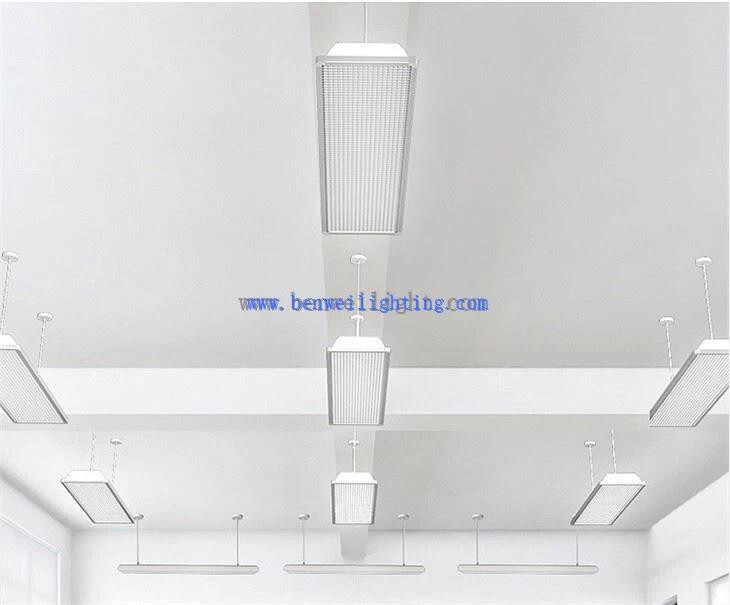
What changes will result from combining them?
Visual health: Significantly decreases student eye fatigue and myopia risk.
Learning efficiency: Stable lighting improves concentration, reading speed, and memory.
Classroom atmosphere: Soft, uniform lighting makes learning more comfortable and safe.
Conclusion: This improvement improves both equipment and concept
Choosing a classroom LED eye-friendly lamp with minimal flicker and a UGR score under 15 is more than just replacing a light fixture. We may invest in pupils' bright futures in the best and gentlest way by actively improving their visual health. Healthy classroom lighting protects young eyes and their boundless world exploration.

For more details about our offerings, please contact us at bwzm18@ledbenweilighting.com.
FAQ
Q: What is "flashing-free"? Is it vital to students?
A: "Free from flicker" signifies the lamp's light is exceptionally stable, with no visible brightness or blackness variations. Important: Very important! The flicker of traditional fluorescent lamps or inferior LED lamps keeps students' pupils and ocular muscles strained and in adjustment, resulting in: Visual tiredness causes dry eyes, painful eyes, and blurred vision. Distraction: It unconsciously strains the brain and impairs concentration. Damage over time: One of the main causes of student myopia. True "flame-free" LED lights deliver consistent, natural-looking lighting that reduces eye strain.
Q: What does the parameter UGR < 15 mean? Why is it necessary for the classroom?
A: An international standard indication of "blinding" light is UGR (Unified Glare Rating). Lower values improve glare control and visual comfort. The fixture provides "excellent" glare control if its UGR is less than 15. In class, this means: The light won't blind kids when they look at the blackboard. The light reflecting on the book paper won't interfere with reading at the desk. A distraction-free visual environment improves concentration and learning.





