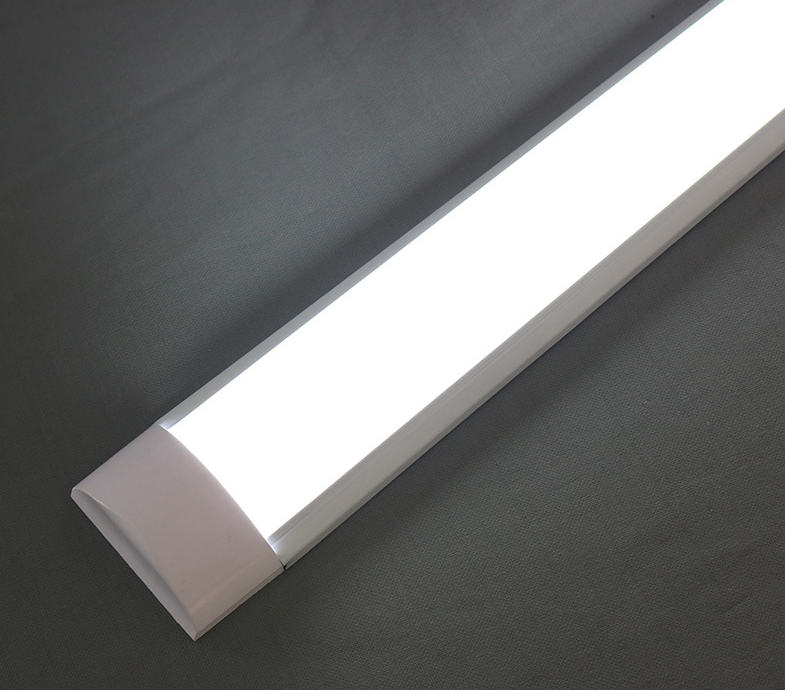
LEDs (Light Emitting Diodes) have become the backbone of modern lighting-from the tiny indicator lights on your phone to the bright floodlights illuminating stadiums, and everything in between. Their rise in popularity isn't just due to their energy efficiency or long lifespan; their incredible brightness is a key factor that has made them replace traditional light sources like incandescent bulbs and fluorescent tubes. But if you've ever wondered how LEDs went from dim, red indicator lights to the ultra-bright fixtures we use today, you're not alone. In this guide, we'll trace the evolution of LED brightness, explain the science behind how LEDs produce light, and break down why they've become the go-to choice for lighting applications of all kinds. Whether you're a homeowner looking to upgrade your lights or a business owner sourcing lighting solutions, this article will help you understand the "why" behind LED brightness.
Why LED Brightness Matters for Modern Lighting
In the past decade, LEDs have completely transformed the lighting industry-and their brightness is a big reason why. Traditional incandescent bulbs wasted most of their energy as heat, producing only a small amount of light. Fluorescent tubes were better, but they still couldn't match the brightness, efficiency, or versatility of modern LEDs. Today, LEDs are used in every corner of our lives: residential lighting, commercial spaces, industrial facilities, outdoor stadiums, and even automotive headlamps. Their ability to produce intense, consistent light while using less energy has made them indispensable. But how did we get here? Let's start at the beginning of the LED's journey.
The Humble Beginnings: The First LED (1962)
The story of LED brightness starts in 1962, when the first practical LED was created. This early LED produced a dim, low-intensity red light-nothing like the bright LEDs we know today. At the time, it was primarily used as an indicator light in electronic devices, such as radios and calculators. While it was a groundbreaking invention, its low brightness made it unsuitable for general lighting. But this first LED laid the foundation for decades of innovation, as scientists and researchers set out to improve its efficiency and brightness.
A Game-Changing Breakthrough: Blue and Green LEDs
For decades after the first red LED, researchers struggled to create LEDs that produced other colors-specifically blue and green. This was a critical hurdle because red, green, and blue are the primary colors of light; combining them allows for the production of white light. The breakthrough came in the 1990s, when researchers finally figured out how to create high-brightness blue and green LEDs. This discovery was a game-changer.
With blue LEDs in hand, manufacturers could combine red, green, and blue (RGB) LEDs to produce white light-opening the door for LEDs to be used in general lighting applications. Suddenly, LEDs were no longer just indicator lights; they could be used for street lamps, traffic lights, home lighting, and more. As technology continued to advance, the brightness of these RGB LEDs increased, making them even more versatile.
How LEDs Produce Light (And Brightness)
To understand how LEDs get bright, it helps to know the basic science behind how they work. LEDs are made of semiconductor materials, which emit light when an electric current passes through them. Here's a simple breakdown:
An LED consists of two layers of semiconductor material: a positive layer (p-type) and a negative layer (n-type), separated by a thin junction.
When a voltage is applied to the LED, electrons move from the negative layer to the positive layer. As these electrons move across the junction, they release energy in the form of light.
The amount of light (brightness) an LED produces is directly proportional to the amount of energy supplied to it-more energy means more electrons moving, and more light emitted.
Unlike traditional incandescent bulbs, which produce light by heating a filament (wasting most energy as heat), LEDs convert most of their electrical energy into light-making them far more efficient and capable of producing brighter light with less power.
Measuring LED Brightness: Lumens Explained
You've probably heard the term "lumens" when shopping for LEDs-and for good reason: lumens are the standard unit used to measure the brightness of a light source. Simply put, lumens measure how much light a bulb emits, regardless of how much energy it uses.
Today's LEDs are incredibly efficient, capable of producing up to 200 lumens per watt of electricity. To put that in perspective: a traditional incandescent bulb produces only about 10-15 lumens per watt, while a fluorescent tube produces around 50-70 lumens per watt. This means LEDs can produce the same (or brighter) light as traditional bulbs while using a fraction of the energy-a win-win for both cost savings and brightness.
Ultra-Bright LEDs: From Home Use to Industrial Applications
Thanks to improvements in manufacturing processes-such as better semiconductor materials, more efficient designs, and advanced heat management-we now have ultra-bright LEDs that can produce up to 10,000 lumens. These high-powered LEDs have expanded the range of applications for LEDs, making them suitable for even the most demanding lighting needs.
For example: Stadium lighting: Ultra-bright LEDs can illuminate large outdoor spaces, ensuring clear visibility for athletes and spectators.Professional searchlights: LEDs can produce a focused beam of light that reaches up to 1 kilometer, making them ideal for security and emergency applications.Outdoor floodlights: High-brightness LEDs are used to light up parking lots, construction sites, and public spaces, providing safety and visibility.Automotive headlamps: Modern cars use bright LEDs for headlamps, offering better visibility for drivers while using less energy than traditional halogen bulbs.
Why LED Brightness Beats Traditional Light Sources
LEDs don't just produce more brightness-they do it more efficiently and reliably than traditional light sources. Here's why they're superior: Higher efficiency: As mentioned, LEDs produce up to 200 lumens per watt, compared to 10-15 for incandescents and 50-70 for fluorescents. This means brighter light with lower energy bills.Consistent brightness: LEDs maintain their brightness throughout their lifespan, while incandescent bulbs dim over time and fluorescent tubes can flicker.Longer lifespan: LEDs last 50,000+ hours, compared to 1,000 hours for incandescents and 10,000 hours for fluorescents. This means fewer replacements and less maintenance.Versatility: LEDs can be designed to produce any brightness level, from dim accent lights to ultra-bright floodlights, making them suitable for any application.
Conclusion & Inquiry Guide
From the dim red indicator light of 1962 to the ultra-bright 10,000-lumen fixtures of today, LEDs have come a long way in terms of brightness. Advances in semiconductor technology, manufacturing processes, and color mixing have turned LEDs into the most versatile, efficient, and bright lighting solution available. Their ability to produce intense light while using less energy has made them the future of lighting-and we can only expect even brighter, more efficient LEDs in the years to come.
Have questions about which LED is right for your needs? Need help choosing an LED with the perfect brightness (lumens) for your space? Contact us today. Our team of lighting experts can provide personalized recommendations, detailed product specs, competitive pricing, and guidance to help you find the ideal LED solution. Let's help you harness the power of bright, efficient LED lighting for your project.