

Numerous core industrial sectors including oil and gas exploitation, chemical manufacturing, mineral mining and petrochemical processing are accompanied by inherently hazardous operating environments. Such working scenarios are typically filled with flammable and explosive substances such as combustible gas vapor, volatile liquid mist and combustible dust. Under the coupling effect of temperature change, mechanical friction and equipment operation, these hazardous materials are extremely susceptible to ignition, which may trigger combustion, explosion and other serious safety accidents, causing irreversible damage to on-site staff, production equipment and ecological environment. Traditional ordinary lighting equipment is prone to produce electric sparks, mechanical impact sparks and high-temperature heat accumulation during operation, becoming a key potential ignition source in hazardous industrial environments. As a special safety-level lighting device, explosion-proof lights are professionally designed and manufactured for high-risk hazardous scenarios. With unique structural sealing performance, anti-spark characteristics and harsh environment resistance, they can effectively eliminate lighting-induced safety hazards and build a reliable safety barrier for industrial production. This paper systematically analyzes the core mechanisms of explosion-proof lights in improving the safety level of hazardous environments, and elaborates their practical application values in industrial safety management, so as to provide theoretical support for the standardized configuration and popularization of explosion-proof lighting equipment in high-risk industries.
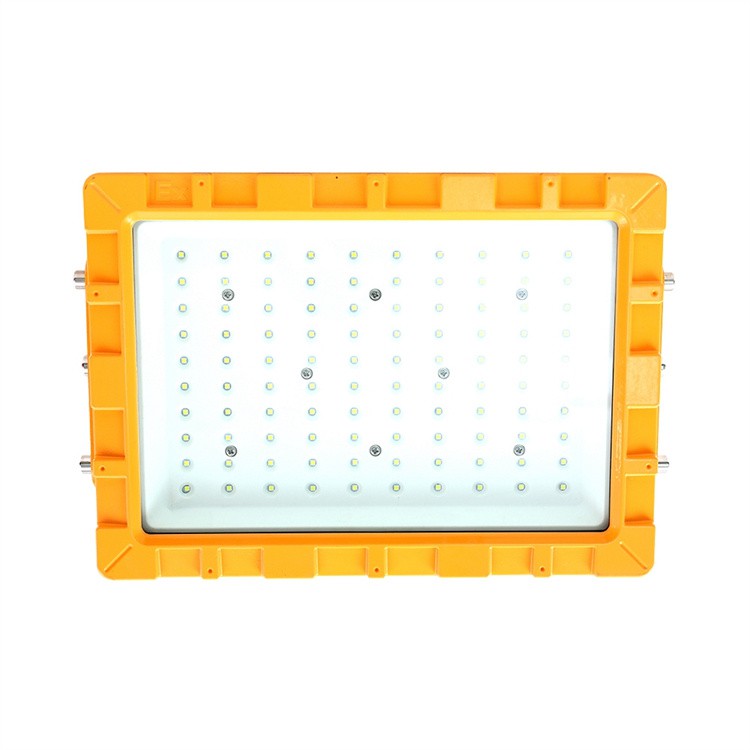
Hazard Characteristics of Industrial Hazardous Environments and Lighting Risks
Classification and Basic Hazards of Typical Industrial Hazardous Environments
Hazardous industrial environments are mainly defined by the continuous or intermittent existence of flammable and explosive dangerous media. In oil and gas fields and petrochemical plants, natural gas, crude oil volatile gas and various chemical raw material vapors will diffuse in the operating space; in mining operation scenarios, coal dust and mineral combustible dust will form suspended dust clouds in the air; in chemical production workshops, a variety of flammable liquid mist and gaseous chemical mixtures are prone to accumulate in local closed areas. When the concentration of these dangerous media reaches the explosive limit, any tiny ignition source will instantly trigger violent explosion and combustion accidents, posing an extreme threat to on-site production safety.
In addition to flammable and explosive risks, industrial hazardous environments also have typical harsh environmental characteristics, including high humidity, strong corrosion, dust accumulation, mechanical vibration and extreme temperature fluctuation. These complex environmental factors will cause aging, corrosion and structural damage to ordinary industrial equipment in a short time. Ordinary lighting equipment with low structural strength and poor sealing performance is easy to fail prematurely in such scenarios, and the failure process is often accompanied by electric leakage, spark discharge and local high temperature, which further increases the probability of safety accidents in hazardous environments.
Potential Safety Hazards of Traditional Ordinary Lighting Equipment
Traditional ordinary lights adopt open structural design and common electronic components. During long-term operation, circuit aging, wire friction and component burnout will produce electric sparks; accidental collision and vibration in the working process will cause mechanical friction sparks on the lamp shell; meanwhile, the photoelectric conversion process of ordinary lights will produce a large amount of heat accumulation, resulting in high surface temperature of the lamp. Sparks and high-temperature surfaces formed by these factors can directly ignite flammable gas, dust and other media in hazardous environments, inducing major safety accidents.
Ordinary lighting equipment lacks corrosion resistance, dust resistance and impact resistance. In corrosive and dusty hazardous environments, the lamp shell is easy to crack and fall off, and the internal circuit system is directly exposed to dangerous media. Long-term erosion will lead to short circuit and equipment failure, forming continuous unstable ignition sources, which greatly improves the hidden danger of accidental explosion in industrial production.
Core Safety Enhancement Mechanisms of Explosion-Proof Lights in Hazardous Environments
Optimize On-Site Visual Environment to Reduce Passive Safety Accidents
Most industrial hazardous operation areas such as underground mine tunnels, closed chemical reaction workshops and oil field pipeline operation areas have poor natural lighting conditions and long-term low-light or dark working environments. Insufficient illumination will lead to blurred vision and reduced judgment accuracy of operators. In high-risk operation links such as equipment debugging, pipeline inspection and dangerous material handling, unclear vision is easy to cause operational errors, equipment collision, personnel falls and other safety accidents. Moreover, dim light will hinder staff from quickly identifying safety warning signs, fault points and emergency passages, reducing the emergency response capacity in case of sudden accidents and aggravating accident losses.
Explosion-proof lights are designed with high-luminous-efficiency light sources, which can provide stable, uniform and high-brightness illumination for dark hazardous operation areas. Different from the uneven light distribution and serious light attenuation of ordinary lamps, professional explosion-proof lighting equipment realizes full-coverage light projection without dark areas and glare interference. Sufficient and stable illumination enables operators to accurately read equipment operation instructions, clearly observe the operating state of mechanical equipment and accurately identify environmental hazard information. It effectively avoids various passive safety accidents caused by poor vision, standardizes on-site operation behaviors, and improves the overall safety and accuracy of daily production and inspection work in hazardous environments.
Isolate Ignition Sources to Eliminate Explosion and Combustion Risks
The core safety design of explosion-proof lights is to completely isolate internal ignition sources from external hazardous media. All explosion-proof lighting products adopt fully sealed integrated structures, and their internal luminous components, circuits and electrical connectors are completely sealed in a closed and isolated cavity. The equipment shell is made of special non-sparking alloy materials. Even if the equipment is impacted, vibrated or fails internally, no mechanical friction sparks or electric discharge sparks will be generated on the outer surface of the lamp. This design fundamentally cuts off the spark ignition path in hazardous environments.
In case of accidental internal circuit failure and local micro-explosion inside the lamp body, the high-strength closed structure of explosion-proof lights can effectively contain the explosion impact force and internal flame. The professional flame-retardant and pressure-resistant structure can prevent internal sparks and high-temperature flame from overflowing to the external working environment, avoiding the ignition of surrounding flammable gas, dust and other dangerous media. Even in extreme fault states, explosion-proof lights will not become secondary ignition sources, which effectively avoids large-scale combustion and explosion accidents in hazardous environments and ensures the overall stability of on-site production safety.
High Environmental Adaptability Reduces Equipment Failure Safety Hazards
Explosion-proof lights are professionally optimized for the harsh characteristics of industrial hazardous environments. The shell adopts high-strength shatter-proof and corrosion-resistant materials, which can resist chemical corrosion of various acid-base media, avoid shell aging, cracking and damage caused by long-term environmental erosion. At the same time, the equipment has excellent dust-proof, waterproof and anti-vibration performance, which can adapt to high-dust, high-humidity and high-vibration working scenarios such as mining and chemical production. It will not cause structural damage and functional failure due to environmental interference, maintaining long-term stable operating performance.
Ordinary lighting equipment is prone to frequent failure in harsh hazardous environments, and each failure may bring potential ignition risks. The ultra-high durability and stability of explosion-proof lights greatly reduce the equipment failure rate in daily operation. It avoids safety hidden dangers caused by equipment damage, circuit short circuit and spark leakage, and reduces potential safety risks brought by frequent equipment maintenance and replacement operations. The long-term stable operation of explosion-proof lighting equipment provides continuous and reliable safety guarantee for hazardous industrial production.
Comprehensive Safety and Economic Value of Explosion-Proof Lights
Multi-Dimensional Safety Protection Value
Explosion-proof lights realize multi-subject and all-round safety protection in hazardous industrial environments. For on-site operators, they optimize the visual working environment, reduce operational error risks, and avoid personal injury accidents caused by explosion and combustion; for production equipment, they eliminate lighting-induced explosion hazards, avoid equipment damage and production shutdown losses caused by safety accidents; for the ecological environment, they prevent leakage and combustion of flammable and chemical dangerous media caused by lighting accidents, reducing industrial environmental pollution risks.
Long-Term Economic Operation Value
Although the initial procurement cost of explosion-proof lights is higher than that of ordinary lighting equipment, their excellent durability and low failure rate greatly reduce the frequency of equipment maintenance and replacement in the later stage, effectively saving the long-term operation and maintenance costs of enterprises. More importantly, the safety guarantee function of explosion-proof lights can avoid huge economic losses such as equipment scrapping, production shutdown and accident compensation caused by explosion accidents, bringing significant indirect economic benefits to enterprise production and operation.
Conclusion
Explosion-proof lights are indispensable special safety equipment in high-risk hazardous industrial environments such as chemical manufacturing, oil and gas industry and mining industry. Different from ordinary lighting equipment that only meets basic illumination needs, explosion-proof lights improve the safety level of hazardous environments through multiple core mechanisms. Their high-brightness and stable illumination optimizes on-site operation vision and reduces passive operational safety accidents; the fully sealed anti-spark structure and explosion containment mechanism fundamentally eliminate the risk of lighting-induced flammable medium ignition and explosion; the high-strength and corrosion-resistant durable design adapts to harsh industrial environments, reduces equipment failure hidden dangers, and realizes long-term stable safety protection. In modern industrial safety management, the standardized configuration and application of explosion-proof lights is a key safety guarantee measure, which can effectively protect the personal safety of operators, ensure the stable operation of production equipment, reduce industrial safety risks, and provide strong support for the safe, stable and sustainable development of high-risk industrial production.

How To Cooperate With Us?
Thanks to our own facilities, we have complete control over the production process and the quality of our goods, which gives us immense delight. We are committed to giving our clients the finest pricing since we are manufacturers rather than just brokers. We invite clients to evaluate our samples first since we are certain that the cost and quality of our items are transparent. Our dedication to excellence and client happiness motivates us to consistently provide superior products.
Our address
3rd Floor, 5th Building, Hebei Industrial Park, Hualian Community, Longhua District, Shenzhen, China





