

If you own a barn and need lighting inside, it's important to choose the right wattage for your barn size. The right wattage will give you the right amount of light and ensure that you don't waste any energy. Here are a few tips to help you choose the right wattage for your barn size:Barns are versatile multi-functional spaces that serve a wide range of purposes, from livestock shelter, farm equipment storage, and hay stacking to workshop repair, agricultural product processing and daily farm operational work. Unlike residential spaces with fixed lighting needs, barn environments are complex and changeable, with large space spans, diverse functional scenarios and long-term usage demands. Many barn owners make the common mistake of randomly installing high-wattage lights to pursue bright illumination or using low-power bulbs to save costs, resulting in either excessive energy waste and light pollution, or insufficient lighting that affects daily work and livestock living environments. Selecting the precise, matched light bulb wattage according to the actual barn size is the core premise of scientific barn lighting design. It can not only provide comfortable, uniform and sufficient lighting for all barn activities, but also effectively avoid unnecessary energy consumption, reduce long-term electricity costs, extend the service life of lighting equipment, and create a more practical, energy-saving and safe barn space. Mastering the correct wattage selection method is essential for every farm and barn owner.
1. Determine the size of your barn. The size of your barn will help you determine how much light you need. If your barn is small, you won't need as much light as a larger barn. Measure the length, width, and height of your barn to get an idea of the overall size.Before selecting any lighting wattage, measuring and confirming the overall size of the barn is the most fundamental and primary step, as the spatial area directly determines the total light output required for full-space illumination. Small-sized barns, usually used for small tool storage, single livestock pen placement and daily simple storage, have a limited indoor space range, and excessive high-wattage lighting will lead to overly bright light, serious light reflection and obvious energy waste. In contrast, large-scale barns covering hundreds or even thousands of square feet, such as large livestock breeding barns, agricultural machinery maintenance barns and bulk grain storage barns, have open and spacious internal spaces with many structural partitions and dead corners. Insufficient wattage will form a large number of dark areas, resulting in uneven lighting and affecting normal use. Therefore, accurate measurement of the barn's length, width, and height is crucial. After obtaining the precise spatial data, you can calculate the total square footage of the barn, lay a data foundation for subsequent wattage matching and lumen calculation, and ensure that the selected lighting power fully adapts to the actual space scale of the barn.
2. Consider the type of work you will be doing in your barn. If you will be doing detailed work, you will need more light than if you are just storing equipment. Think about the tasks you will be performing and how much light you will need for those tasks.The functional purpose of the barn directly dictates the standard of lighting brightness and the matching wattage, which is a key factor that cannot be ignored in lighting selection. Most barns have diverse usage scenarios, and different tasks have completely different requirements for light clarity and brightness. If your barn is only used for simple functions such as storing farm tools, stacking hay, and parking idle agricultural equipment, the lighting demand is relatively low. The core demand is only to provide basic night illumination to avoid stumbling and facilitate simple access work, so low and medium wattage lighting is completely sufficient. However, if you need to carry out high-precision and detailed work in the barn, such as mechanical parts maintenance and repair, agricultural product sorting and screening, livestock health inspection, and handmade farm product processing, the lighting requirements will be greatly improved. These detailed tasks require clear and uniform light to observe tiny details, avoid operational errors, and ensure work accuracy. At this time, it is necessary to properly increase the lighting wattage on the basis of adapting to the barn size to meet high-standard lighting needs. Fully sorting out daily barn work types and task attributes can help you accurately locate lighting needs and avoid unreasonable wattage selection.
3. Choose the right bulb type. Incandescent bulbs are not as energy efficient as LED bulbs. LED bulbs are brighter and last longer than incandescent bulbs, so they are a better choice for barn lighting. They are also available in a variety of wattages, so you can choose the right one for your barn size.When determining the required lighting wattage, the bulb type is a decisive factor affecting actual lighting effect and energy consumption, because different types of bulbs have completely different luminous efficiency and power conversion ratios. Traditional incandescent bulbs have extremely low energy utilization rates. Most of the electric energy is converted into heat energy rather than light energy, resulting in dim light, serious heat generation and high power consumption. Even high-wattage incandescent bulbs cannot provide ideal bright illumination, and they are prone to burnout and damage after long-term use in barn environments, with a very short service life. In comparison, modern LED bulbs are far superior to incandescent bulbs in all core indicators. LED bulbs have ultra-high photoelectric conversion efficiency, which can provide brighter and more uniform light with lower wattage, and their service life is dozens of times that of traditional incandescent bulbs, making them a better choice for long-term stable barn lighting. More importantly, LED bulbs have extremely rich wattage specifications, covering low power for small spaces, medium power for daily use and high power for large barns and high-precision work areas. No matter what your barn size and functional needs are, you can find a matched LED wattage model, which greatly improves the accuracy and practicability of lighting selection.
4. Calculate the lumens. Lumens are a measure of the amount of light a bulb produces. The higher the lumens, the brighter the bulb. To calculate the lumens you need, multiply the square footage of your barn by the desired amount of lumens per square foot. For example, if your barn is 20 x 30 feet (600 square feet) and you want 20 lumens per square foot, you will need a total of 12,000 lumens.Many barn owners simply rely on wattage to judge lighting brightness, but in fact, lumens are the only professional and accurate standard to measure the actual light output of bulbs, and it is an essential step to connect barn space size and lighting effect. Wattage only represents the power consumption of the bulb, while lumens truly reflect the brightness of the light emitted by the bulb. Different types of bulbs with the same wattage have completely different lumen values, so lumen calculation is indispensable for scientific lighting matching. For conventional barn storage and daily walking activities, 15 to 20 lumens per square foot is enough to meet basic needs; for detailed operation and work areas, it is necessary to increase the standard to 25 to 30 lumens per square foot to ensure clear vision. By multiplying the accurately calculated barn square footage by the corresponding lumens per square foot according to the barn's usage scenario, you can get the total lumen demand of the space. Taking the classic example of a 20 x 30-foot 600-square-foot barn, configuring 20 lumens per square foot requires a total of 12,000 lumens. After obtaining the total lumen value, you can select the number of bulbs and single bulb wattage in a targeted manner to ensure that the overall brightness of the barn meets the standard without insufficient light or redundant waste.
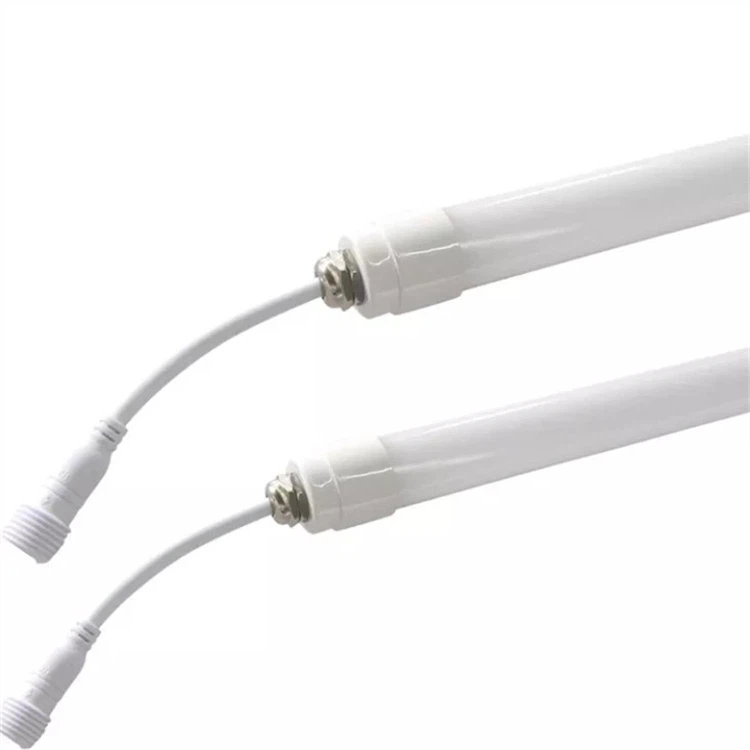
5. Consider the height of your barn. If your barn has a high ceiling, you may need a higher wattage bulb to provide enough light. A high ceiling will also require more fixtures to provide even lighting throughout the barn.In addition to the horizontal area of the barn, the vertical ceiling height is also a key factor affecting wattage selection, which is easily overlooked in daily lighting matching. Most barns have higher ceilings than ordinary houses, and many large farm barns have ultra-high ceiling designs to meet the needs of hay storage, large mechanical equipment access and livestock activity. When the ceiling is too high, the light will attenuate significantly during the propagation process from top to bottom. The light intensity reaching the ground and working area will be greatly reduced, resulting in dim ground lighting even if the horizontal area meets the wattage standard. Therefore, if your barn has a high ceiling, you need to properly increase the single bulb wattage on the basis of the original matching scheme to compensate for the light attenuation caused by height and ensure that the ground working area has sufficient brightness. At the same time, high-ceiling barns have a wider light coverage gap, and a single lighting fixture cannot cover the entire space. Increasing the number of lighting fixtures appropriately can disperse the light source, eliminate local dark corners and shadow areas, and ensure uniform and consistent lighting throughout the barn from near to far.
6. Install a dimmer switch. A dimmer switch will allow you to adjust the brightness of your barn lights, which can be useful for different tasks or times of day. This also allows you to save energy by dimming the lights when they are not needed.After selecting the correct bulb wattage matching the barn size and space, installing a dimmer switch is an excellent auxiliary optimization measure to further improve lighting flexibility and energy-saving performance. Barn lighting needs have obvious time and scenario differences: the brightness required for daytime auxiliary lighting, night full-time lighting, rest time low-intensity lighting and detailed work high-brightness lighting are completely different. A fixed single brightness cannot adapt to diversified usage needs. The dimmer switch can freely adjust the output brightness of the LED lights, allowing you to switch freely between high brightness, medium brightness and low brightness according to different tasks or times of day. For example, you can turn on full brightness during mechanical maintenance and detailed work, adjust to medium brightness during daily patrol and equipment sorting, and dim the lights to low brightness during night rest and standby. This flexible adjustment mode not only makes the barn lighting more humanized and practical, but also avoids long-term high-power operation of the lights when high brightness is not needed, effectively reduces daily energy consumption, and maximizes the energy-saving advantages of high-matching wattage lighting.
7. Consult a professional. If you are unsure about how much wattage you need for your barn size, consult with a professional electrician. They can help you choose the right bulbs and fixtures based on your specific needs.For barn owners who lack professional lighting knowledge and spatial matching experience, blindly selecting wattage may lead to deviations between lighting effect and actual demand. Many factors such as barn spatial structure, window light transmission, indoor partition distribution, dust and humidity environment will affect the final lighting effect and wattage demand. If you are unsure about how much wattage you need for your barn size, or are confused about lumen matching, quantity configuration and fixture layout, it is the safest and most effective way to consult with a professional electrician. Professional electricians have rich practical experience in farm and barn lighting design. They will comprehensively evaluate your barn's size, ceiling height, functional use, spatial structure and actual environment conditions, accurately calculate the most suitable bulb wattage, scientifically match the type and quantity of lighting fixtures, and formulate a targeted personalized lighting scheme for your specific needs, completely avoiding the problems of insufficient lighting, energy waste and uneven light caused by improper selection.
Choosing the right wattage for your barn lighting is important for both efficiency and functionality. By considering the size of your barn, the type of work you will be doing, and the bulb type and lumens, you can ensure that you have the right amount of light for your needs. Remember to also consider the height of your barn, install a dimmer switch, and consult a professional if needed. Happy barn lighting!
In summary, barn lighting wattage selection is not a simple random purchase, but a systematic matching work that integrates space size, functional demand, spatial structure and equipment performance. The correct wattage matching scheme can perfectly balance lighting functionality and energy efficiency, which is crucial for daily barn operation, work efficiency improvement and long-term cost control. Comprehensive consideration of barn area size, daily work types, bulb performance and lumen demand is the core of scientific lighting selection. At the same time, we cannot ignore the influence of ceiling height on light attenuation, the practical value of dimmer switches for flexible lighting adjustment, and the guiding role of professional electricians for complex space lighting schemes. Following these complete and systematic selection tips can help every barn owner avoid common lighting mistakes, configure the most appropriate lighting equipment, create a bright, uniform, safe and energy-saving barn lighting environment, and provide stable and reliable lighting guarantee for all farm production and daily operation work.

How To Cooperate With Us?
Because of our own facilities, we have complete control over the production process and the quality of our goods, which makes us very pleased. We are committed to giving our clients the greatest price since we are manufacturers rather than just brokers. We encourage clients to evaluate our samples first since we are certain that the cost and quality of our items are transparent. Our dedication to excellence and client happiness motivates us to consistently provide superior products.
Our address
3rd Floor, 5th Building, Hebei Industrial Park, Hualian Community, Longhua District, Shenzhen, China





