

Underground work lights are essential devices for workers in numerous industries. From underground mining, tunnel construction, pipeline maintenance, and basement renovation to municipal engineering and underground facility inspection, these portable lighting tools serve as indispensable auxiliary equipment for all dark and enclosed operation scenarios. They provide ample lighting in dark, cramped spaces that lack natural light and conventional lighting systems, making work more efficient and safe by illuminating work details, clearing visual blind spots, and helping workers accurately complete construction, inspection and repair tasks. However, using these tools in wet conditions can be quite dangerous. Most underground working environments are inherently humid and wet, with common water accumulation, splashing water, moist sediment and humid air. Water and electricity do not mix, and if the underground work light is not designed to be safe for use in water, it can cause great harm to the user and others working in the same area. Electrical leakage, short circuits, electric shocks and equipment burnout are extremely common safety hazards caused by improperly used work lights in wet environments, which may lead to personal injury, construction suspension and even serious safety accidents. Therefore, it is crucial to know if your underground work light is safe for use in wet conditions or not before carrying out any underground wet environment operations, so as to eliminate potential risks and guarantee on-site construction safety.
To determine if your underground work light is safe for use in wet conditions, you must first look for its Ingress Protection (IP) rating. As a unified international industrial standard, the IP rating is the most authoritative and intuitive basis for judging the dustproof and waterproof performance of electrical equipment, and it is widely used in the safety detection of construction lighting tools. The IP rating is a two-digit number that denotes the level of protection of the device against the entry of solid objects and moisture. Every qualified industrial-grade underground work light will be marked with a clear IP rating on the product shell, manual and parameter label, which can accurately reflect its environmental adaptability. The first digit ranges from 0 to 6 and indicates the degree of protection against solid objects such as dust and debris. The higher the first digit, the stronger the dustproof ability of the light, which can effectively prevent fine dust, gravel and suspended particles in underground environments from entering the lamp body and damaging internal circuits and light sources.
The second digit ranges from 0 to 9 and denotes the level of protection against moisture and water, which is the core reference index for judging whether the work light adapts to wet working conditions. Different numbers correspond to completely different waterproof levels, covering ordinary splash resistance, rain resistance, shallow water immersion and deep water pressure resistance. For underground working scenarios with complex water environments, this data directly determines the safety and service life of the work light. It is worth noting that the waterproof grade represented by the second digit is tested in accordance with strict international standards, which can truly reflect the product's actual waterproof performance in complex working conditions, rather than nominal waterproof effect.
The higher the second digit, the more resistant the device is to water. Each numerical grade has a clear corresponding use scenario and protection standard, providing clear guidance for workers to select equipment. For instance, an IP65-rated underground work light is moderately protected from dust and is highly protected from water. Its first digit 6 means complete dust tightness, with no dust entering the lamp body at all, adapting to dusty underground construction environments. The second digit 5 indicates that the device can resist low-pressure water jet splashing from all directions, which is suitable for conventional wet underground environments such as wall water seepage, ground water splashing and humid air. Meanwhile, an IP68-rated underground work light is completely dust-tight and waterproof up to a depth of 1.5 meters. This is the highest waterproof grade for civilian and industrial work lights, enabling long-term stable operation in shallow water immersion environments, which is very suitable for underground foundation pits, flooded pipelines and other harsh wet scenarios. That being said, it is vital to opt for an underground work light with a higher IP rating if you're going to use it in wet conditions frequently, so as to cope with the complex and changeable underground water environment and avoid safety accidents caused by insufficient waterproof performance.
Another important factor to consider when checking the safety of your underground work light for use in wet conditions is its build quality. The IP rating is a standardized test result, while the overall build quality determines the long-term stable waterproof performance of the work light in actual use. Many low-quality work lights with nominal high IP ratings often suffer from waterproof failure after a short period of use due to rough production processes. A proper waterproofing system should be in place to ensure that water cannot enter the lighting fixture. A qualified underground work light adopts a professional closed waterproof structure design from the internal circuit layout to the external shell assembly, forming an all-round waterproof barrier.
Rubber gaskets or O-rings help prevent water from seeping into the light body. These elastic waterproof accessories are installed at the splicing gaps of the lamp shell, the switch interface and the charging port. With good elasticity and aging resistance, they can fill all tiny gaps of the equipment, effectively blocking the penetration of water droplets and humid gas. High-quality work lights usually use thickened rubber gaskets and integrated O-rings, which are not easy to deform or fall off after long-term extrusion and friction, maintaining stable waterproof performance. In contrast, inferior products use thin and poor-quality sealing accessories, which are prone to aging and cracking, leading to water seepage and circuit damage.
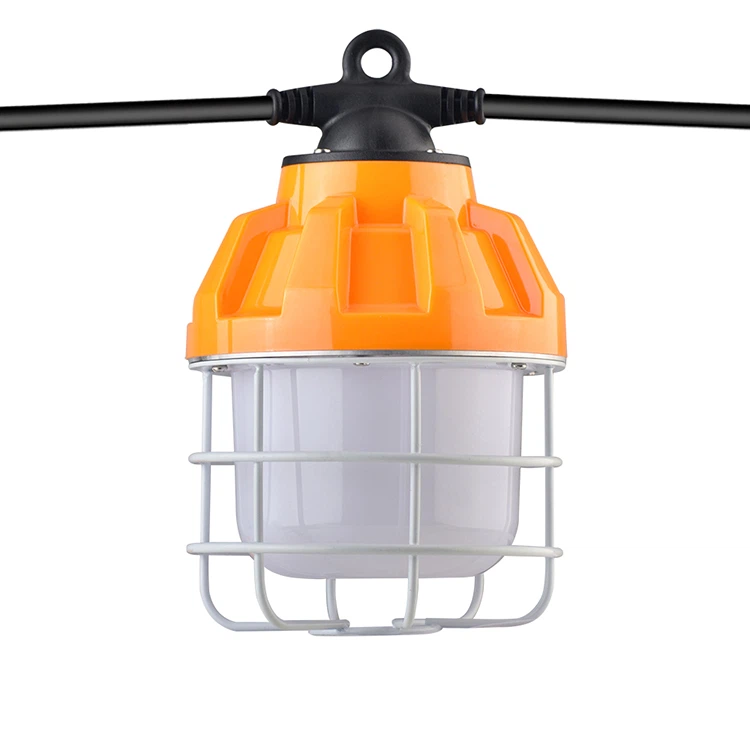
Also, ensure that the material of the underground work light is sturdy enough to withstand harsh environments. The underground wet environment is not only humid and watery, but also accompanied by corrosive substances such as sediment, muddy water and humid chemical gas. Ordinary plastic and thin metal materials are easy to rust, corrode and crack in such environments, destroying the waterproof structure of the work light. Materials such as aluminum and stainless steel are often used in construction because of their non-corrosive properties, making them ideal for underground work lights that could come into contact with water. High-strength aluminum alloy and 304 stainless steel shells have excellent compression resistance, impact resistance and corrosion resistance, which can prevent shell deformation and cracking caused by external collision and extrusion, and avoid waterproof failure caused by shell damage. At the same time, these materials are not easy to rust when exposed to water for a long time, effectively protecting the internal waterproof structure and circuit system of the lamp body.
Equally essential is the light's power source, whether it is battery operated or mains powered. The power supply mode is closely related to the electric shock safety of work lights in wet conditions, and different power sources have completely different risk levels in humid and watery environments. Battery-powered underground work lights with no cords are often the better option for wet conditions. Built-in rechargeable battery design completely abandons external power cords, eliminating the potential safety hazards such as cord aging, wire breakage and interface water seepage. They eliminate the risk of electrical shock caused by water contact, and are more flexible and portable for narrow and complex underground operation spaces, becoming the preferred equipment for most wet underground operations.
On the other hand, if you must use a mains-powered underground work light, ensure that it is plugged into an RCD (Residual Current Device). Mains-powered work lights have stable power and long continuous working time, but they have higher electrical safety risks in wet environments. Once the wire leaks electricity or the lamp body seeps water, it is easy to cause large-area electric shock hazards. The RCD will cut power to the lamp immediately if it detects any electrical faults, including leakage, short circuit and overload, making it safer to use in wet conditions. The residual current device can respond in milliseconds, quickly cutting off the power supply to avoid personal electric shock injuries and equipment burnout, which is a necessary safety protection device for all mains electrical equipment used in wet underground environments.
Finally, it is crucial to keep your underground work light properly maintained to ensure that it remains safe for use in wet conditions. Even high-quality work lights with high IP ratings and excellent build quality will have reduced waterproof performance after long-term use, collision and aging. Daily maintenance and inspection are key to maintaining their safe use in wet conditions. Regularly check the light for any cracks or breaks, as this could reduce the device's ability to withstand moisture and water. Fine cracks on the lamp shell, loose sealing gaskets and damaged charging interfaces will become water seepage channels, destroying the original waterproof system of the equipment.
Daily maintenance also includes cleaning the sediment and water stains on the surface of the work light, checking the elasticity of the sealing rubber ring, and confirming the tightness of the shell assembly. If damage has occurred, the device is best left unperturbed in wet conditions until repaired or replaced. Never use damaged work lights in humid and watery underground environments in order to save costs, so as to avoid unnecessary safety accidents. Timely maintenance and replacement can effectively extend the service life of the work light and ensure its long-term stable waterproof and safe performance.
In conclusion, using an underground work light in wet conditions requires appropriate safety measures. The special humid and watery environment of underground operations puts forward higher requirements for the waterproof performance, structural quality and safety protection of work lights. No matter what kind of underground construction operation is carried out, the safety of lighting equipment must be placed in the first place. Therefore, it is essential to understand the device's IP rating, build quality, power source, and maintenance requirements to avoid accidents and keep workers safe. By comprehensively judging the above four core indicators, workers can accurately screen safe and qualified underground work lights, effectively avoid electrical safety hazards in wet environments, ensure the smooth progress of underground construction work, and fully protect the personal safety of all on-site operators.

How To Cooperate With Us?
We are happy that we have total control over the manufacturing process and the quality of our products since we have our own facilities. Since we are producers rather than just brokers, we are dedicated to providing our customers with the best pricing. Since we are certain that the price and quality of our products are transparent, we advise customers to examine our samples first. Our commitment to quality and customer satisfaction drives us to continuously provide top-notch goods.
Our address
3rd Floor, 5th Building, Hebei Industrial Park, Hualian Community, Longhua District, Shenzhen, China





