One excellent illustration of the advancements in sustainable technology made by humans are solar street lighting. Recent years have brought attention to the significance of renewable energy sources, and it is evident that solar energy will soon overtake other kinds of energy as one of the main sources of electricity.
So how exactly do solar street lights operate? Although a solar street light's operation is rather straightforward, the technology that powers it is remarkable. Every lamp has a solar panel that essentially transforms sunlight into energy that is then stored in batteries. The LED street lights that illuminate the roadways at night are powered by these batteries.
When sunlight strikes the solar panel, the process begins. Photovoltaic cells, which are located within the panel, transform solar energy into electrical power that may be used. The cells in the panel produce a direct current (DC) when they are exposed to sunlight, and this DC is transferred to a controller.
Because it controls how much energy is stored in the batteries, the controller is a crucial component of the system. In order to do this, it keeps an eye on the battery voltage and turns off the charging process when the battery is fully charged.
The batteries are prepared to power the LED lights once they have been charged. Compared to conventional bulbs, LED lights are more energy-efficient and use less power. They may thus be operated for extended periods of time without depleting the batteries, which makes them perfect for use in solar street lighting.
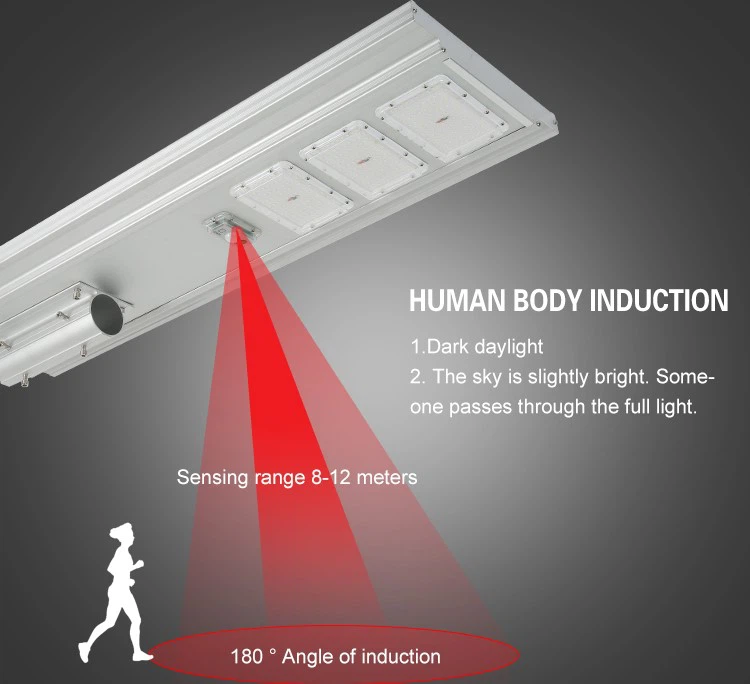
Wiring connects the LED lights to the batteries, and they are programmed to come on automatically at nightfall and go out at morning. This implies that the lights won't use electricity throughout the day and will always be prepared to illuminate the road.
Fully self-sufficient street lighting are one advantage of using solar power. They may be deployed in isolated locations or in regions with unstable energy since they don't need to be connected to the power grid. Because of this, they are ideal for usage in underdeveloped nations or rural areas.
There is no need for cable laying or excavation for the comparatively easy installation of solar street lighting. This implies that the installation may be finished fast and without interfering with traffic or generating other problems.
To sum up, solar street lights are a very effective, economical, and sustainable way to light up streets and roadways. They don't need to be connected to the electricity grid since they run their LED lights solely on solar energy. Because of this, they are ideal for usage in underdeveloped nations or isolated locations with little access to energy. They are a key component of our energy future and a wonderful illustration of the advancements mankind is making in sustainable technology.