

With the continuous innovation of semiconductor lighting technology and the diversified development of modern architectural interior design, LED strip lights have been widely popularized in residential and commercial building lighting scenarios. Compared with traditional rigid lighting fixtures, LED strip lights feature flexible bending performance, ultra-low power consumption, convenient construction and diverse layout forms, which can adapt to complex installation environments such as cabinet bottoms, wall edges, ceiling grooves and hidden alcove spaces.
In practical engineering applications and daily decoration construction, the installation difficulty, supporting tool configuration and standardized operation process of LED strip lights are the core factors affecting the final installation quality and long-term operating stability of lamps. Different from high-professional industrial lighting equipment, civil LED strip lights are designed with simplified installation structures, which support manual construction without complex professional equipment. Based on the structural characteristics of civil LED strip lights and the actual construction requirements of indoor scenarios, this paper systematically analyzes the overall installation difficulty level of LED strip lights, sorts out the whole-process standardized installation operation procedures, and summarizes the necessary tool configuration and safety operation specifications, so as to provide scientific practical guidance for the standardized installation of indoor LED strip lights.
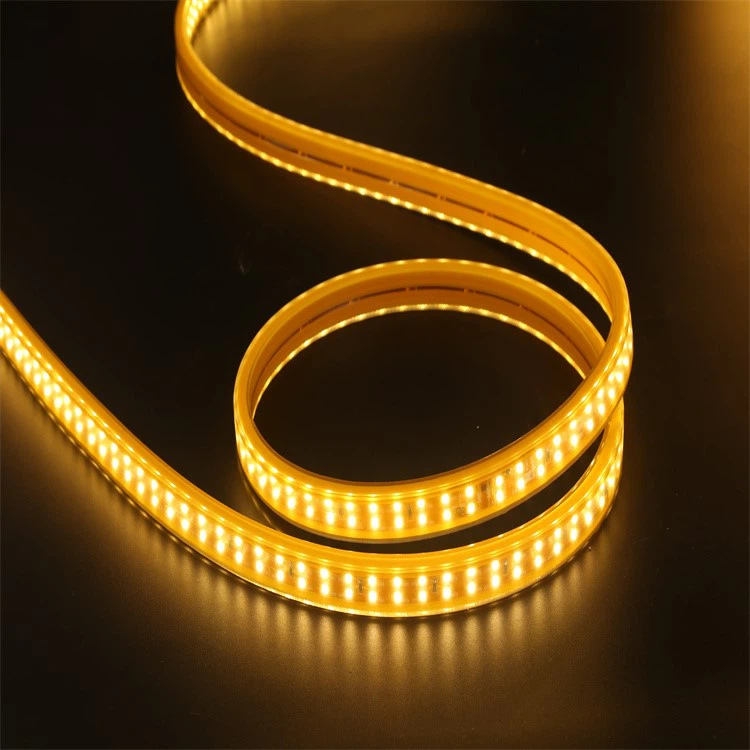
Overall Installation Difficulty Evaluation of Civil LED Strip Lights
Structural Design Advantages Reducing Construction Threshold
Civil LED strip lights adopt highly integrated modular design, integrating lamp beads, circuit boards and basic protective structures into a flexible strip structure. The product realizes standardized batch production, with unified interface specifications and cutting positioning points. Users can complete targeted cutting and splicing according to actual installation space size without professional circuit transformation and structural debugging, which greatly reduces the technical threshold of installation construction.
Most civil LED strip lights are equipped with high-viscosity waterproof adhesive backing, which can realize direct bonding and fixation on smooth and flat surfaces. It abandons the traditional complex fixing modes such as drilling, punching and bolt fixing, avoids damage to building decorative surfaces, and simplifies the construction process to the greatest extent. The simplified structural design makes the installation of LED strip lights different from professional electrical engineering construction, with low operational difficulty and strong operability.
Comprehensive Difficulty Level Definition of Whole Process Construction
The whole installation process of LED strip lights includes location determination, surface pretreatment, power supply deployment, equipment connection and power-on debugging. All operation links are conventional manual operations without professional electrical construction technology and large-scale mechanical equipment support. The construction process has the characteristics of simple operation, short construction cycle and low error rate. Compared with embedded ceiling lamps, professional stage lighting and other lighting equipment, LED strip lights belong to low-difficulty and high-popularization indoor lighting installation projects, which can be independently completed by ordinary users with the help of basic conventional tools.
Standardized Whole-Process Installation Operation Procedures for LED Strip Lights
Scientific Location Planning and Size Calibration
LED strip lights have strong spatial adaptability and can meet the hidden lighting and auxiliary atmosphere lighting needs of multiple indoor scenarios. In residential spaces, they are mostly used for under-cabinet supplementary lighting, corridor wall outline lighting, ceiling alcove ambient lighting and furniture internal decorative lighting; in commercial spaces, they are applied to display cabinet lighting, store atmosphere layout and office hidden light trough lighting. Before installation, it is necessary to combine the functional positioning of the space, light distribution demand and decorative layout logic to determine the accurate installation path and coverage area of the strip lights, so as to avoid blind installation affecting the lighting effect and spatial aesthetics.
After confirming the installation location and path, accurately measure the actual laying length of the installation area with a measuring tool, and calculate the required length of the LED strip light according to the measured data. In view of the modular design characteristics of LED strip lights, cutting operations must be carried out along the reserved cutting identification points on the lamp strip to avoid random cutting damaging the internal circuit structure. Clean scissors or professional lamp strip cutting tools can be used for flat and neat cutting to ensure that the cutting interface is smooth and free of burrs, so as to facilitate subsequent splicing and power connection operations.
Installation Surface Pretreatment and Cleaning Maintenance
The adhesive fixation stability of LED strip lights directly depends on the flatness and cleanliness of the installation base surface. Dust, oil stains, floating impurities and residual sundries on the base surface will reduce the viscosity of the adhesive backing, resulting in lamp strip falling off, virtual pasting and displacement in the later stage. Before formal installation, it is necessary to use a clean damp cloth to wipe the installation surface repeatedly to completely remove surface dust, oil stains and particulate impurities, ensuring that the base surface is clean and free of attachments.
After the damp cleaning operation, the residual water stain on the base surface will also affect the bonding effect of the adhesive backing. It is necessary to place the installation environment in a ventilated state, and wait for the base surface to be completely dried before the next installation operation. At the same time, visually inspect and touch the flatness of the base surface to eliminate raised particles and concave uneven areas, so as to ensure that the lamp strip can be fully attached to the base surface and improve the firmness and uniformity of installation.
Matching Installation and Layout of Power Supply System
The power supply is the core energy supply equipment of the LED strip light system, and its power specification and voltage matching degree directly determine the operating stability of the lamp strip. It is necessary to select a matched professional LED power supply according to the parameters such as the total length of the lamp strip, rated power and rated voltage. Avoid the mismatch of power supply parameters leading to insufficient light brightness, lamp bead stroboscopic, and even circuit burnout caused by overload operation.
According to the installation position of the lamp strip and the layout of indoor power sockets, reasonably arrange the installation position of the power supply to ensure convenient later maintenance and heat dissipation of the power supply equipment. Fix the power supply stably to avoid shaking and displacement, connect the power supply with the municipal power socket in accordance with the standard electrical operation specifications, and reserve a safe wiring distance. All operations shall strictly follow the parameter specifications and operation guidelines issued by the power supply manufacturer to ensure standardized and safe power supply deployment.
Circuit Connection and Lamp Strip Fixation Construction
For long-distance installation scenarios that require multiple lamp strips to be spliced, use special matched connector cables for docking assembly. Align the positive and negative interfaces of the lamp strip and the connector accurately to avoid reverse connection and virtual connection, ensure the tightness and stability of the interface, and prevent poor contact affecting the power supply and lighting effect. After splicing, check the overall circuit connectivity to ensure that the combined lamp strip circuit is complete and unobstructed.
Tear off the protective backing paper of the lamp strip adhesive strip completely, avoid residual adhesive paper affecting the bonding effect, align the lamp strip with the preset installation path, and press the lamp strip evenly and firmly along the path to make it fully fit the base surface. For the corner bending position and long-distance laying position, properly strengthen the pressing force to eliminate the gap between the lamp strip and the base surface. For the base surface with low flatness or long-term vibration risk, auxiliary fixing such as fixing clips can be added to improve the overall firmness of the lamp strip.
Power-On Debugging and Quality Inspection
Before the overall power-on test, cut off the total power supply of the circuit first, and comprehensively inspect all links of the installation construction. Focus on checking whether the power supply wiring is standard, whether the lamp strip interface is firmly connected, whether the lamp strip is completely fixed without warping and falling off, and whether there are hidden dangers such as exposed circuits and short circuits. After confirming that all construction links meet the safety specifications, prepare for power-on debugging.
Switch on the total power supply slowly to observe the overall operating state of the LED strip light system. Check whether all lamp beads are lit normally without stroboscopic, dark light, local no-light and other abnormal phenomena. Verify the uniformity of light distribution to ensure that the lighting brightness of the laying area is consistent and meets the preset lighting demand. At the same time, observe the heating state of the power supply and the lamp strip during operation to ensure that the equipment operates within the normal temperature range without abnormal overheating.
Necessary Tool and Equipment Configuration for LED Strip Light Installation
Core Functional Installation Tools
Scissors or professional LED strip cutting tools are used for fixed-size cutting of lamp strips. Professional cutting tools can ensure flat and neat cutting sections, protect the internal circuit structure of the lamp strip, and avoid circuit damage caused by irregular cutting. Conventional household scissors can also meet the cutting needs of ordinary low-power lamp strips, with strong accessibility.
Special LED power supply is used to convert municipal power into low-voltage stable power suitable for lamp strip operation, which is the core equipment to ensure the normal operation of the lighting system. Matching connector cables are applied to the splicing and butt joint between multiple lamp strips and between lamp strips and power supplies, realizing stable circuit conduction and solving the laying demand of long-distance lamp strips.
Auxiliary Construction and Safety Protection Tools
Clean damp cloth is a necessary auxiliary tool for installation surface pretreatment, which is used to remove surface dust, oil stains and impurities to ensure the bonding firmness of the lamp strip. It is the basic guarantee for the long-term stable operation of the installed lamp strip.
Electrical tape is used for winding and insulating protection of circuit joints, which can effectively prevent electric leakage, short circuit and poor contact of exposed interfaces. Screwdrivers are used for auxiliary installation and fixation of power supply equipment, fixing brackets and lamp strip clips, which is suitable for complex installation scenarios that need auxiliary structural fixation.
Conclusion
Civil LED strip lights have extremely low installation difficulty and high construction operability by virtue of their modular integrated structure, self-adhesive fixing mode and simplified circuit design. The whole installation process only needs conventional basic tools and simple manual operations, without professional electrical construction technology and large-scale mechanical equipment support, which can be independently completed by ordinary users.
The standardized installation process of LED strip lights includes location planning and sizing, surface cleaning and drying, power supply system deployment, lamp strip connection and fixation, and power-on debugging and inspection. Each link has clear operational specifications and technical requirements. Reasonable tool configuration and standardized construction operations can effectively ensure the installation quality, lighting effect and long-term operational safety of LED strip lights. In the actual installation process, if users encounter complex circuit matching and special scenario construction problems, they should refer to the manufacturer's official specifications or consult professional electricians for construction guidance, so as to avoid equipment damage and potential safety hazards caused by non-standard operation. With the advantages of simple installation, energy saving and high efficiency, and diverse application scenarios, LED strip lights have broad popularization and application value in modern residential and commercial indoor lighting.

How To Cooperate With Us?
Our firm prides itself on owning its own factory, guaranteeing complete control over the production process and the quality of our goods. We are not only agents; we are manufacturers committed to offering our clients the most competitive rates available. We invite consumers to evaluate our samples first, as we are assured that the quality and pricing of our items are self-evident. Our dedication to excellence and client satisfaction compels us to consistently perform at our best and provide superior quality products.
Our address
3rd Floor, 5th Building, Hebei Industrial Park, Hualian Community, Longhua District, Shenzhen, China





