

Introduction: The Hidden Pain Point of Solar Street Lighting in Variable Weather
The Common Failure of Ordinary Solar Street Lights on Cloudy Days
Solar street lighting has become the mainstream green outdoor lighting solution for modern municipal roads, urban parks, industrial parks, and rural infrastructure, relying on renewable solar energy to replace traditional grid-powered lighting. However, most low and medium-end solar street lights on the market face a universal technical bottleneck: unstable power generation and insufficient energy storage on cloudy, rainy, and hazy days. In low-light overcast environments, ordinary solar panels cannot effectively capture scattered sunlight, resulting in a sharp drop in power generation efficiency, insufficient battery charging, and a series of practical problems such as late-night dimming, intermittent lighting, and even automatic shutdown.
For engineering contractors, municipal procurement departments, and property management teams, cloudy-day lighting failure is the core factor restricting the practical value of solar street lights. In continuous rainy and cloudy seasons, unqualified solar street lights lose their lighting function completely, forcing projects to increase emergency power supply equipment and manual maintenance costs, which greatly reduces the cost performance and operational stability of green lighting projects. In regions with frequent cloudy weather and insufficient annual direct sunlight, ordinary polycrystalline and thin-film solar panels are completely unable to meet long-term stable lighting requirements, becoming a major hidden danger for public traffic safety and night landscape operation.
The Core Solution Advantage of High-Efficiency Monocrystalline Silicon Panels
Different from ordinary solar panels with weak low-light adaptability, high-efficiency monocrystalline silicon solar panels have become the core upgraded configuration to solve cloudy-day lighting pain points by virtue of their unique single-crystal structure, excellent diffuse light absorption capacity, and ultra-high photoelectric conversion efficiency. This integrated solar street light is equipped with industrial-grade upgraded monocrystalline silicon panels, which fundamentally optimize the low-light power generation performance, perfectly adapting to complex weather environments such as cloudy days, rainy days, dawn and dusk weak light, and haze weather.
This article will analyze in depth the technical principles of monocrystalline silicon panels adapting to cloudy low-light environments, compare the performance gaps with traditional panels, elaborate on the linkage optimization of the whole lamp system, and verify its practical engineering value in improving the stability, durability and economy of solar street lights in bad weather. Centering on the core selling point of "stable power generation on cloudy days", this paper fully demonstrates the product's irreplaceable advantages in medium and high-end municipal engineering, commercial parks and long-term outdoor lighting projects, providing professional purchasing basis for global engineering buyers.

Technical Principles: Why Monocrystalline Silicon Panels Outperform on Cloudy Days
Unique Single-Crystal Structure and Low-Light Photon Capture Mechanism
The essential difference between monocrystalline silicon panels and polycrystalline, thin-film panels lies in the internal crystal structure. High-efficiency monocrystalline silicon panels adopt a complete single-crystal integrated molding process, with uniform internal molecular arrangement, no crystal grain gaps and structural defects. This pure and ordered crystal structure enables the silicon cell to have extremely high electron mobility and photoresponse sensitivity, which can efficiently capture scattered photons in cloudy environments that cannot be identified by ordinary panels.
On cloudy days, solar radiation is blocked by cloud layers, and direct sunlight is converted into diffuse reflected light with low intensity and wide spectral distribution. The irradiance is usually only 15%-25% of that on sunny days, which makes it difficult for ordinary panels to trigger effective photoelectric conversion. In contrast, monocrystalline silicon cells have a broader spectral response range, which can fully absorb low-intensity scattered light, reflected light and ambient diffused light, and efficiently complete photon excitation and electron transition. Even in severely overcast weather, they can maintain stable power generation output, realizing continuous energy storage for street lamp batteries.
Ultra-High Photoelectric Conversion Efficiency and Cloudy-Day Power Generation Retention Rate
The industrial-grade monocrystalline silicon panels equipped with this product have a steady conversion efficiency of 21%-23%, far exceeding the 15%-17% conversion rate of traditional polycrystalline panels. The high-efficiency core enables the panel to maintain excellent power generation retention rate in low-light environments. Professional environmental test data shows that under heavy cloudy weather conditions, polycrystalline panels can only retain 10%-15% of the rated power generation capacity, while our upgraded monocrystalline silicon panels can stably maintain 25%-35% of the rated output, with the cloudy-day power generation efficiency 20%-30% higher than that of conventional panels.
This efficient power generation retention capability solves the core problem of insufficient energy storage on cloudy days. For solar street lights, the total power generation in daytime directly determines the night lighting duration and brightness stability. The high-efficiency monocrystalline panels ensure that even after consecutive 3-5 days of cloudy and rainy weather, the battery pack can still store sufficient electric energy to support all-night stable lighting, without dimming or power failure, realizing true all-weather adaptive lighting.
Anti-Reflection and UV-Stabilized Coating Technology for Weak Light Enhancement
To further amplify the low-light power generation advantage on cloudy days, the surface of the monocrystalline silicon panel of this product is coated with a dual-layer nano anti-reflection and UV-stabilized coating. Ordinary solar panels have smooth and reflective surfaces, which will reflect most of the weak diffuse light on cloudy days, resulting in low light utilization rate. The customized nano-coating structure can eliminate light reflection loss, maximize the absorption of low-intensity diffused light, and greatly improve the light energy utilization rate in low-light environments.
In addition, the UV-stabilized coating can resist long-term outdoor ultraviolet radiation, prevent the panel surface from aging, yellowing and light transmittance attenuation, and ensure that the low-light power generation performance will not decline after years of wind and sun exposure. Many low-cost solar panels suffer from reduced cloudy-day power generation efficiency after one or two years of use due to coating aging, while our optimized monocrystalline panels maintain stable weak-light performance throughout the service life, avoiding performance degradation in the later stage of the project.
Comparative Advantage: Monocrystalline vs. Traditional Solar Panels in Cloudy Environments
Power Generation Stability Comparison Under Variable Cloudy Weather
Cloudy weather has extremely unstable light intensity, with frequent changes of light and shade, and instantaneous fluctuation of solar irradiance, which puts forward high requirements for the voltage and current stability of solar panels. Ordinary polycrystalline panels have disordered internal crystal structures, prone to current surge and voltage drop under fluctuating low-light conditions, resulting in unstable charging current, unable to charge the battery efficiently, and even triggering the protection mechanism of the battery management system to stop charging.
High-efficiency monocrystalline silicon panels have stable electrical performance, with small fluctuation range of output voltage and current under intermittent cloudy light conditions, continuous and stable charging output, and no intermittent charging failure. This stable charging characteristic ensures that the lithium iron phosphate battery pack can obtain continuous and effective energy supplementation in variable cloudy weather, avoiding battery power shortage caused by discontinuous charging, and fundamentally improving the overall operational stability of the solar street light system.
Continuous Power Generation Capacity in Consecutive Overcast and Rainy Days
The biggest challenge for solar street light engineering applications is consecutive cloudy and rainy weather. Most solar products on the market can only support 1-2 days of emergency lighting after continuous cloudy days, and will completely fail to light up on the third day, which cannot meet the basic lighting needs of public infrastructure. Relying on the excellent low-light power generation performance of monocrystalline silicon panels, this product supports 5-7 days of continuous stable lighting in fully overcast and rainy environments, which is far ahead of similar products.
This breakthrough continuous lighting capability is derived from the superposition of high-efficiency weak-light power generation and high-density energy storage configuration. On consecutive cloudy days, the monocrystalline panel continuously captures diffuse light to generate electricity and supplement battery power, offsetting the night lighting power consumption, realizing dynamic balance of power generation and power consumption, and ensuring long-term trouble-free lighting of roads and parks in rainy and cloudy seasons. For municipal projects in coastal, subtropical and rainy areas, this advantage directly determines the practical qualification and service life of the project.
Long-Term Attenuation Resistance of Cloudy-Day Power Generation Performance
In addition to instantaneous power generation performance, long-term performance attenuation is also a key indicator of product quality. Traditional polycrystalline panels have large structural gaps, and are prone to internal moisture oxidation and crystal aging in humid and cloudy environments, resulting in continuous decline in low-light power generation efficiency year by year. After 2-3 years of use, the cloudy-day power generation capacity is attenuated by more than 40%, completely losing the weak-light working ability.
The high-purity monocrystalline silicon panel adopted by our product has an integrated closed structure, with excellent moisture-proof, anti-oxidation and aging resistance. After professional accelerated aging tests, the power generation attenuation rate is less than 8% after 10 years of outdoor use, and the low-light power generation performance on cloudy days remains stable for a long time. It avoids the frequent replacement of panels caused by performance attenuation, greatly reduces the later maintenance cost of the project, and creates long-term stable value for engineering buyers.
Whole-Lamp System Linkage: How Panels Optimize Overall Street Light Performance
Matching with Lithium Iron Phosphate Battery for Efficient Energy Storage
High-efficiency monocrystalline silicon panels realize perfect performance linkage with the built-in large-capacity lithium iron phosphate battery pack. Ordinary solar panels have low cloudy-day power generation, unable to fully charge the battery, resulting in long-term insufficient battery power, which easily causes deep discharge damage and accelerates battery aging. The stable and efficient power generation of monocrystalline panels on cloudy days can fully charge the battery pack even in low-light environments, maintain the battery in a healthy charge-discharge state, and effectively extend the battery cycle life of more than 3000 times.
The built-in intelligent BMS battery management system cooperates with the high-efficiency panel to dynamically adjust the charging strategy according to real-time light intensity. In cloudy low-light conditions, it adopts low-current slow charging mode to improve charging conversion rate, reduce electric energy loss, and maximize the storage of weak light power generation. This precise linkage mechanism makes the whole lamp system always maintain efficient energy storage and release state in bad weather.
Intelligent Dimming System Adapted to Cloudy-Day Power Generation
Aiming at the power generation characteristics of monocrystalline panels on cloudy days, the product is equipped with an adaptive intelligent dimming control system. The high-sensitivity light sensor can accurately identify cloudy low-light environments, and automatically match the power output mode according to the real-time power generation and battery power. Unlike ordinary solar lights that simply turn on or off, this system realizes graded stable dimming without stroboscopic and brightness fluctuation.
In the evening peak traffic period, the lamp maintains high-brightness stable lighting to ensure road safety; in the late night period, it properly adjusts the power to balance lighting demand and energy saving. The whole process makes full use of every watt of electricity generated by monocrystalline panels on cloudy days, avoiding energy waste caused by unreasonable power output, and maximizing the utilization rate of weak-light power generation resources.
Low-Loss Heat Dissipation and Protection Structure to Stabilize Low-Light Operation
The product's die-cast aluminum heat dissipation structure and IP65 fully sealed protection system provide reliable guarantee for the stable operation of monocrystalline panels in cloudy and rainy environments. Cloudy and rainy weather is accompanied by high humidity and temperature changes, which easily cause condensation and circuit failure of ordinary solar lamps. The fully sealed structure completely isolates moisture, dust and rainwater, protecting the panel circuit and power generation components from environmental erosion.
The optimized heat dissipation design ensures that the panel will not generate heat accumulation during low-light power generation, maintaining constant working temperature and stable photoelectric conversion efficiency. It avoids the problem of power generation drop caused by overheating or damp failure, so that the monocrystalline silicon panel can always exert excellent low-light power generation performance in complex and changeable weather.
Engineering Purchase Value: Cost Reduction and Efficiency Improvement Brought by Cloudy-Day Performance
Reduce Project Failure Rate and Improve Lighting Safety
For municipal road and park lighting projects, lighting failure on cloudy and rainy days is a key index affecting project acceptance and public safety. Unstable lighting will lead to dark road sections, blurred vision for drivers and pedestrians, and greatly increase the risk of traffic accidents. At the same time, the abnormal operation of street lights will affect the normal night use of parks and public areas, reducing urban public service quality.
The excellent cloudy-day power generation performance of high-efficiency monocrystalline silicon panels completely solves the above problems, realizing full-weather stable lighting without fear of cloudy and rainy weather. It effectively reduces the project failure rate, passes municipal engineering acceptance stably, and improves the safety and stability of urban public lighting infrastructure, which is an indispensable core advantage for high-standard green lighting projects.
Cut Long-Term Operation and Maintenance Costs
Solar street light projects with ordinary panels need frequent maintenance and equipment replacement in rainy and cloudy areas, including panel cleaning, battery replacement, circuit maintenance and emergency power supply deployment, resulting in huge long-term operation costs. In contrast, this product with high-efficiency monocrystalline panels has stable performance, low attenuation and low failure rate, almost no daily maintenance, and saves a lot of labor and material costs for project operation.
One-time installation can realize more than 8 years of stable operation, eliminating the repeated investment caused by weather performance failure. For large-scale municipal projects, industrial park supporting lighting and rural road reconstruction projects, the long-term cost-saving benefit brought by cloudy-day stable performance is extremely significant, with far higher comprehensive cost performance than ordinary solar street lights.
Adapt to Global Complex Climate Scenarios and Expand Application Scope
Global lighting project scenarios are diverse, including rainy and cloudy coastal areas, foggy mountainous areas, temperate monsoon climate zones with frequent overcast weather, and high-altitude haze areas. Ordinary solar street lights are only suitable for sunny areas with sufficient direct sunlight, with extremely limited application scope. This product relying on high-efficiency monocrystalline silicon low-light technology can adapt to almost all global climatic environments, realizing stable lighting in sunny, cloudy, rainy and foggy days.
It is widely applicable to urban municipal roads, community landscape roads, urban parks, large parking lots, industrial parks, rural highways and off-grid remote areas, meeting the diversified lighting needs of global engineering projects, and is the most adaptable and reliable green solar lighting solution at present.
Conclusion: Monocrystalline Technology Defines New Standards for Cloudy-Day Solar Lighting
The weather adaptability of solar street lights, especially the performance on cloudy days, is the core standard to distinguish high-quality engineering products from low-cost ordinary products. Traditional solar lighting products are restricted by panel technology, with poor low-light power generation capacity, serious weather dependence and unstable operation, which cannot meet the long-term and high-standard use requirements of public infrastructure.
High-efficiency monocrystalline silicon panels completely subvert the performance limitations of traditional solar street lights. Through superior single-crystal structure, high conversion efficiency, nano anti-reflection low-light enhancement technology and whole-system linkage optimization, they achieve efficient power generation and stable energy storage in cloudy, rainy and low-light environments, solving the industry's common pain point of cloudy-day lighting failure. Combined with IP65 industrial-grade protection, ultra-low luminous attenuation, long-cycle battery life and zero-energy green environmental protection advantages, this product has comprehensive leading performance in weather adaptability, operational stability and economic benefits.
For global engineering purchasers and contractors, selecting solar street lights equipped with high-efficiency monocrystalline silicon panels is not only a product selection, but also a strategic choice of stable project quality, low long-term cost and high comprehensive benefit. It can effectively avoid project quality risks, reduce operation and maintenance pressure, improve urban green infrastructure level, and create continuous, stable and reliable night lighting value for various outdoor public scenarios.
How To Cooperate With Us?
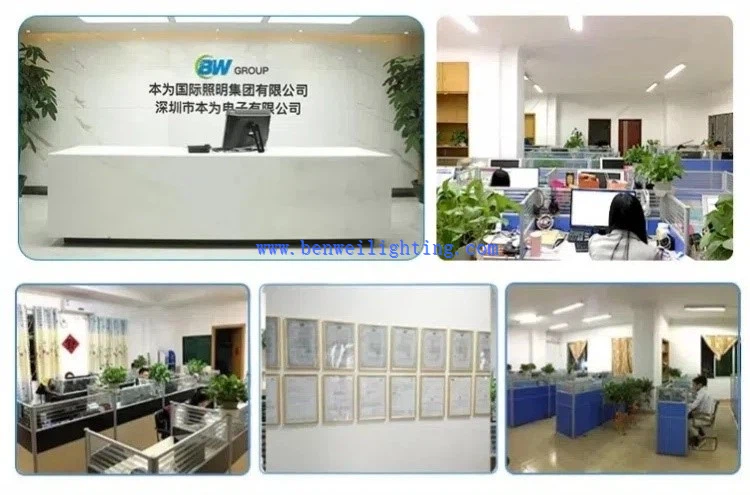
Since we have our own facilities, we are pleased to have complete control over the production process and the quality of our goods. We are committed to giving our clients the finest prices since we are manufacturers rather than just brokers. We encourage buyers to see our samples first since we are certain that the cost and calibre of our items are transparent. Our dedication to excellence and client happiness motivates us to consistently provide superior products.
Our address
3rd Floor, 5th Building, Hebei Industrial Park, Hualian Community, Longhua District, Shenzhen, China





