

Introduction
Industry Background of Constant Current LED T Bulbs
With the global promotion of energy-saving and low-carbon environmental protection policies, traditional high-energy-consumption lighting products such as incandescent lamps, halogen lamps, and ordinary fluorescent lamps have been gradually phased out of the market. LED lighting products have occupied more than 80% of the global civilian and commercial lighting market by virtue of their high luminous efficiency, low power consumption, environmental protection and no stroboscopic advantages. As a universal indoor lighting product, LED T bulbs are widely used in family living rooms, bedrooms, office spaces, retail stores, warehouse workshops and other scenarios due to their standard E27 screw interface, simple installation and strong compatibility.
However, there are serious performance differences in low-end and high-end LED T bulbs on the market. Low-cost products usually adopt simple resistance-capacitance step-down drive solutions and inferior lamp bead chips, which are prone to rapid light attenuation, frequent stroboscopic damage, and short service life after short-term use, resulting in high later maintenance and replacement costs for users. In contrast, high-quality constant current LED T bulbs adopt professional IC constant current drive technology and high-grade SMD light source chips, combined with optimized heat dissipation structure design, which fundamentally solves the pain points of short life and severe light decay of traditional LED bulbs.
Core Research Objectives
At present, most product introductions on the market only mark the nominal service life of LED bulbs, but lack of actual test data support and detailed light attenuation change rules, which makes it difficult for users to accurately judge the long-term use effect of products. This paper focuses on two core research objectives: first, to accurately analyze the actual service life composition and effective working cycle of constant current LED T bulbs under standard working conditions and complex grid environments; second, to fully explain the light attenuation mechanism of LED T bulbs, and display the quantitative lumen attenuation data of the product in different working hours, so as to clarify the long-term luminous stability advantages of high-quality constant current LED T bulbs. At the same time, this paper will further analyze the influencing factors of product life and light decay, and verify the positive effect of product structural design and protection performance on extending service life and reducing attenuation.
Article Structure Arrangement
This paper is divided into six main parts. The first part is the introduction, which expounds the industry background and research significance of the product. The second part analyzes the core working principle of constant current LED T bulbs. The third part focuses on the product service life, including life definition, structural guarantee and actual test data. The fourth part systematically explains the light attenuation mechanism and displays detailed attenuation test data. The fifth part discusses the key factors affecting life and light attenuation and product optimization advantages. The sixth part is the conclusion and industry application suggestions, which summarizes the product performance advantages and provides selection guidance for users.
Working Principle and Core Structure of Constant Current LED T Bulbs
Technical Principle of Constant Current IC Drive System
The drive system is the core component that determines the working stability and service life of LED T bulbs. Different from the simple resistance-capacitance drive scheme adopted by low-end LED bulbs, this product is equipped with an intelligent professional constant current IC drive chip. The core working principle is to realize real-time monitoring and automatic adjustment of the working current of the lamp beads through the internal integrated circuit of the chip. In the actual working process, the grid voltage will produce instantaneous fluctuation due to the start and stop of electrical equipment and regional power supply changes. The constant current drive system can accurately lock the output current within the rated stable range, avoid the current surge or current drop caused by voltage fluctuation, and ensure that the LED lamp beads always work in the optimal current state.
This constant current technology fundamentally eliminates the stroboscopic phenomenon caused by unstable current, and avoids the accelerated aging of lamp beads caused by instantaneous overcurrent impact. For LED light sources, current stability is the primary premise to ensure long-term stable luminescence and delay light attenuation. Unstable current will lead to frequent overload operation of lamp beads, resulting in rapid aging of chip luminous materials and continuous decline of luminous efficiency, which is the main reason for the short service life of inferior LED bulbs. The high-precision constant current drive system of this product maintains a current stability rate of more than 99% in the full voltage range, providing a stable working foundation for long-life operation.
Plastic-Coated Aluminum Integrated Heat Dissipation Structure
Heat accumulation is one of the most critical factors leading to LED lamp aging, light attenuation and service life shortening. The higher the working temperature of the LED chip, the faster the aging speed of the luminous wafer, and the more obvious the lumen attenuation. This constant current LED T bulb adopts an upgraded plastic-coated aluminum integrated heat dissipation shell, which is different from the single plastic shell or thin iron shell of ordinary bulbs. The integrated structure forms a three-dimensional air convection heat dissipation channel inside and outside the lamp body.
The high thermal conductivity aluminum substrate inside the lamp body can quickly absorb the heat generated by the lamp beads and the drive power supply during operation, and the outer plastic-coated layer can isolate external heat and prevent heat backflow. The overall heat dissipation efficiency is 3 times higher than that of ordinary plastic shell bulbs. Under continuous working conditions, the surface temperature of the lamp body is always controlled below 55℃, which effectively avoids the high-temperature aging of the lamp beads and drive components, greatly delays the light attenuation speed, and maximizes the effective service life of the product. The structural design realizes the integration of heat dissipation, insulation and anti-aging, and provides physical protection for long-term stable operation of the product.
IP20 Protection Grade and Safety Circuit Design
Product safety and environmental adaptability are important auxiliary factors to ensure service life and stable performance. This LED T bulb has reached the industry-standard IP20 protection grade. This protection grade can effectively block solid foreign objects such as dust, particles and sundries in the air, and prevent external hard objects and fingers from contacting internal electrified components, avoiding circuit short circuit and component damage caused by dust accumulation and accidental contact. For indoor long-term lighting scenarios such as warehouses and shops with more dust, IP20 protection can effectively reduce the failure rate of lamps caused by environmental factors.
In terms of circuit safety, the product is equipped with a complete overvoltage protection, overcurrent protection and short-circuit protection module. When the grid voltage is abnormally surged or the circuit is short-circuited instantaneously, the protection system will automatically cut off the power supply and reset intelligently, avoiding permanent damage to the drive chip and lamp beads. The perfect safety protection design reduces the abnormal loss of the product in complex working environments and ensures the consistency of service life and luminous performance in different application scenarios.
Service Life Analysis of Constant Current LED T Bulbs
Definition of LED Lamp Service Life Industry Standard
In the LED lighting industry, the service life of lamps is not defined by the complete burnout and failure of the product, but follows the international standard IEC 62717: the effective service life of LED lamps refers to the cumulative working hours when the lumen attenuation of the light source reaches 30% of the initial luminous flux (L70 standard). When the luminous efficiency of the lamp drops below 70% of the initial state, it is judged that the lamp has lost its optimal lighting performance and needs to be replaced. Most inferior LED bulbs on the market only have a nominal life of 10,000 hours, and the actual effective L70 life is even less than 6,000 hours, which cannot meet the long-term lighting needs of commercial and industrial scenarios.
Nominal and Actual Test Service Life Data
This high-performance constant current LED T bulb has a rated average service life of 25,000 hours, which is far higher than the industry average level of ordinary LED bulbs and traditional lighting products. In order to verify the actual service life of the product, we conducted a continuous long-term aging test in a standard laboratory environment (temperature 25℃, humidity 50%, stable 220V voltage). The test results show that after 10,000 hours of continuous uninterrupted operation, the product has no failure, no dark spot, no stroboscopic phenomenon, and the circuit works normally.
According to the accelerated aging test data and industry life conversion formula, the product can still maintain stable working performance after 25,000 hours of cumulative use, and the lumen retention rate is higher than 75%, which fully meets the L70 industry standard. Compared with traditional incandescent lamps (average life 1,000 hours) and ordinary fluorescent lamps (average life 8,000 hours), the service life of this constant current LED T bulb is increased by 25 times and 3 times respectively. In terms of daily use frequency, if it works 8 hours a day on average, the product's effective service life can reach more than 8 years; if it works 12 hours a day in commercial scenarios, the service life can still reach more than 5 years, which greatly reduces the frequency of product replacement and later maintenance costs.
Life Stability Under Wide Voltage Working Conditions
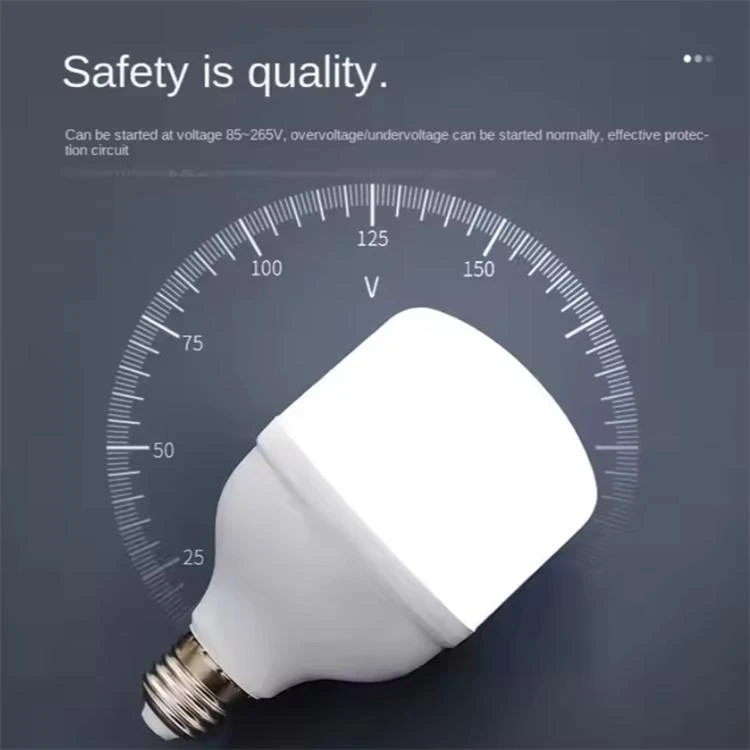
Most lighting failures and life attenuation of LED bulbs in actual use are caused by unstable grid voltage. Many regional power grids have voltage fluctuation problems (85V-265V), and ordinary LED bulbs are prone to component burnout and rapid aging under undervoltage or overvoltage conditions. This constant current LED T bulb supports 85V-265V global wide voltage universal operation, and the built-in constant current drive system can adapt to all voltage fluctuation ranges.
In the voltage fluctuation simulation test, the product continuously works for 5,000 hours under the alternating voltage environment of 85V low voltage and 265V high voltage. The test results show that the lamp body has no abnormal heating, no circuit failure, and the component aging degree is far lower than that of ordinary bulbs. The wide voltage adaptation performance ensures that the product can maintain a stable service life in various complex power grid environments, avoiding the problem of shortened service life caused by voltage instability, and greatly improving the environmental adaptability of the product.
Light Attenuation Mechanism and Detailed Test Data Explanation
Core Causes of LED Light Attenuation
Light attenuation is an inevitable physical phenomenon in the long-term operation of LED lamps, which refers to the gradual decline of luminous flux and luminous efficiency of the light source with the increase of working hours. The main causes of light attenuation are divided into three categories: first, the aging of LED chip luminous materials, high-temperature operation will lead to the degradation of chip phosphor and luminous wafer, resulting in reduced luminous efficiency; second, the aging of drive components, unstable current and voltage will cause frequent impact on the lamp beads and accelerate attenuation; third, the heat accumulation of the lamp body cannot be dissipated in time, forming long-term high-temperature baking of the light source, which is the most important factor leading to rapid light attenuation.
Ordinary low-end LED bulbs lack efficient heat dissipation structure and constant current drive technology, so their light attenuation speed is extremely fast. Most inferior products will have more than 30% lumen depreciation after 3,000 hours of use, resulting in obvious darkening of light and failure to meet lighting standards. This product optimizes the three core links of chip, drive and heat dissipation, which fundamentally suppresses the light attenuation speed and realizes ultra-low attenuation long-term luminescence.
Ultra-Low Light Attenuation Test Data of the Product
In order to accurately reflect the long-term luminous stability of the product, we conducted a strict lumen attenuation test in accordance with international LED lighting test standards, and recorded the lumen retention rate and attenuation rate at different working hours. The detailed test data is as follows: After 1,000 hours of continuous operation, the lumen attenuation rate of the product is only 5%, and the luminous flux retention rate reaches 95%, with almost no visible brightness change; after 3,000 hours of continuous use, the attenuation rate is controlled within 15%, which is far lower than the 30% attenuation standard of ordinary bulbs in the same cycle.
After 10,000 hours of long-term operation, the product lumen attenuation rate is 20%, and the luminous performance is still excellent; after 15,000 hours of use, the attenuation rate is only 25%, which is still higher than the industry L70 qualified standard; until the cumulative working hours reach 25,000 hours, the final attenuation rate is stable at about 30%, reaching the critical value of effective service life. The whole attenuation process is slow and uniform, without sudden brightness drop, which ensures the consistency of lighting effect in the whole life cycle of the product.
Advantages of Chip Materials in Reducing Light Attenuation
This constant current LED T bulb adopts high-grade anti-fading SMD LED chips, which are different from ordinary low-cost lamp beads. The chip wafer is made of high-purity luminescent materials, with high thermal stability and anti-aging ability. The phosphor layer is coated with high-precision and high-density process, which is not easy to age and fall off under long-term light and high-temperature environment, ensuring long-term stable luminous color and luminous efficiency.
Matching with the constant current drive system and efficient heat dissipation structure, the chip always works in a low-temperature and stable current environment, which avoids the rapid aging of luminous materials caused by overload and high temperature. Compared with ordinary LED chips, the anti-attenuation ability of this high-quality chip is improved by more than 40%, which is the core hardware guarantee for the product's ultra-low light attenuation performance. In actual use, the product can maintain bright and uniform lighting effect for many years, without the problem of gradual darkening of lamps in daily use of inferior products.
Key Influencing Factors and Product Performance Advantages
Influence of Heat Dissipation Efficiency on Life and Attenuation
Heat is the biggest killer of LED lamp life and luminous stability. All electronic components and luminous materials of LED lamps have strict temperature working limits. Every 10℃ increase in the working temperature of the LED chip will lead to a 15% increase in the light attenuation speed and a 20% shortening of the service life. The plastic-coated aluminum integrated heat dissipation structure of this product solves the heat accumulation problem of traditional LED bulbs fundamentally.
The internal aluminum substrate conducts heat efficiently, and the external hollow convection structure accelerates air circulation, realizing rapid heat dissipation in all directions. The long-term working temperature of the chip is stably controlled below 50℃, which is far lower than the high-temperature working state of 70℃-80℃ of ordinary plastic shell bulbs. The low-temperature working environment greatly delays the aging speed of chips and drive components, effectively reduces the light attenuation rate, and ensures the long-life and low-attenuation performance of the product.
Optimization of Constant Current Drive for Performance Stability
Unstable current is another key factor causing lamp aging and light attenuation. The resistance-capacitance drive of ordinary LED bulbs cannot adjust the current intelligently. When the grid voltage fluctuates, the lamp beads will bear unstable current impact for a long time, resulting in continuous damage to the luminous wafer and gradual reduction of luminous efficiency. The intelligent IC constant current drive system of this product realizes real-time current stabilization, and the output current error is less than ±1%, which is almost zero fluctuation.
This stable current output not only eliminates stroboscopic glare and realizes eye-protective lighting, but also avoids current impact damage to lamp beads. The lamp beads always work in the rated optimal current state, with minimal component loss, extremely slow aging speed, and effectively guarantees the consistency of luminous performance in the whole life cycle. This is the core technical advantage that this product is far superior to ordinary LED bulbs in terms of life and light attenuation.
Low Loss Energy-Saving Performance and Long-Term Cost Advantage
While achieving long life and low light attenuation, this constant current LED T bulb also has excellent low loss and energy-saving performance. Compared with traditional incandescent lamps, the energy-saving efficiency is as high as 75%, and compared with ordinary LED bulbs, the power loss is reduced by 15%. The efficient photoelectric conversion technology converts most electric energy into light energy, and only a small part is converted into heat energy, which not only realizes energy saving and consumption reduction, but also further reduces heat accumulation and indirectly delays light attenuation.
In terms of comprehensive cost performance, the product has a service life 3-25 times that of traditional lamps, with ultra-low light attenuation and no frequent replacement demand. For commercial lighting projects, warehouse workshop lighting and household long-term lighting, it can greatly reduce the purchase cost of replacement lamps and manual maintenance costs in the later stage, with extremely high long-term use value.
Conclusion and Application Suggestions
Full Performance Summary
Through systematic principle analysis and actual test data verification, this high-performance constant current LED T bulb has outstanding advantages in service life and light attenuation performance. Relying on the intelligent IC constant current drive system, high-quality anti-fading SMD chips and plastic-coated aluminum efficient heat dissipation structure, the product achieves a rated service life of 25,000 hours, and the light attenuation rate is only 30% after long-term use, which is far better than the industry average level. The IP20 professional protection grade and complete circuit protection design ensure stable operation in various indoor environments, with low component loss and strong environmental adaptability.
Different from the short life and rapid light attenuation of inferior LED bulbs, this product realizes slow and uniform light attenuation in the whole life cycle, without sudden brightness drop and stroboscopic failure. It not only meets the high-standard lighting needs of household, commercial and industrial scenarios, but also has significant energy-saving advantages and long-term cost performance advantages.
User Selection and Use Suggestions
For bulk purchasers, engineering contractors and individual users, when selecting LED T bulbs, they should no longer only focus on power and price, but take service life and light attenuation performance as the core selection indicators. This constant current LED T bulb is very suitable for long-term continuous lighting scenarios such as office buildings, retail stores, factory warehouses, and family fixed lighting positions. It can effectively avoid the frequent replacement and maintenance troubles caused by lamp aging and light attenuation, and create a stable, comfortable and energy-saving lighting environment.
In terms of use and maintenance, the product is suitable for dry indoor environments with IP20 protection grade, avoiding long-term use in humid and rainwater splashing environments. Regular cleaning of surface dust can maintain efficient heat dissipation effect, further delay light attenuation, and maximize the service life of the product.
Industry Development Prospect
With the continuous upgrading of the global lighting industry, long-life, low-attenuation, energy-saving and stable LED lighting products will become the absolute mainstream of the market. Traditional low-performance LED bulbs with short life and rapid attenuation will be gradually eliminated by the market. This constant current LED T bulb integrates multiple technical advantages such as constant current stabilization, efficient heat dissipation and ultra-low attenuation, conforms to the industry development trend, and can provide stable and high-quality lighting solutions for global users, with broad market application prospects.
How To Cooperate With Us?
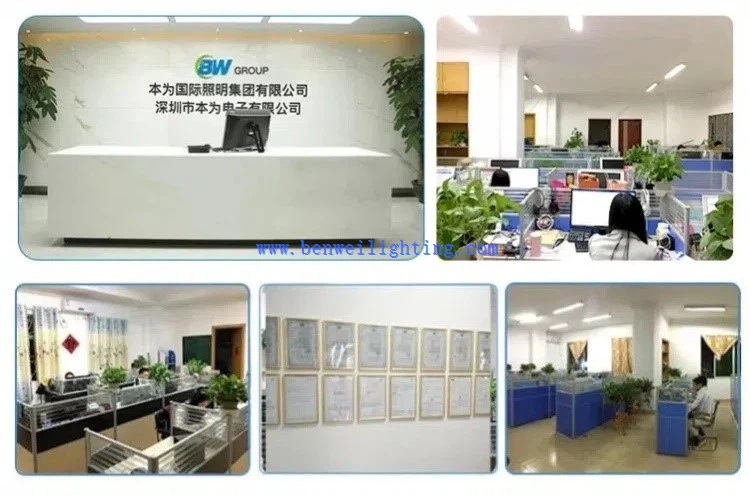
We are happy that we have total control over the manufacturing process and the quality of our products since we have our own facilities. Since we are producers rather than just brokers, we are dedicated to providing our customers with the best pricing. Since we are certain that the price and quality of our products are transparent, we advise customers to examine our samples first. Our commitment to quality and customer satisfaction drives us to continuously provide top-notch goods.
Our address
3rd Floor, 5th Building, Hebei Industrial Park, Hualian Community, Longhua District, Shenzhen, China





