Introduction
Challenges of Light Environment in Indoor Plant Cultivation
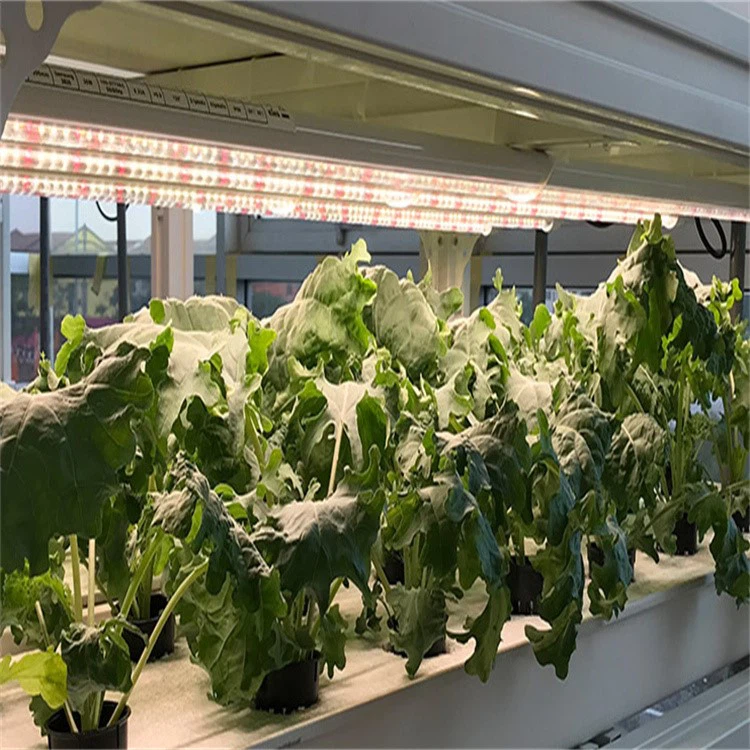
Indoor planting has become a prevalent cultivation mode in modern urban agriculture and family horticulture, featuring space-saving, climate-independent, and high controllability advantages. Nevertheless, the lack of sufficient and stable natural sunlight is the core restrictive factor for indoor plant growth. Different from open-field cultivation that obtains full-spectrum, regular-cycle solar radiation, indoor plants suffer from insufficient light intensity, incomplete spectral distribution, and disordered photoperiod, which easily lead to a series of growth problems including stunted vegetative growth, inhibited flower bud differentiation, low fruit setting rate, and etiolated seedlings. As the most effective artificial light supplement equipment, grow lights can simulate solar spectral characteristics and build a controllable light environment for indoor plants.
The Significance of Scientific Grow Light Photoperiod Management
In indoor artificial light cultivation systems, light quality, light intensity, and photoperiod constitute the three core regulatory indicators of plant light environment. Among them, photoperiod (the daily duration of light irradiation) directly regulates the circadian rhythm, photosynthetic accumulation, and photomorphogenesis of plants. Improper grow light operation duration, either excessive or insufficient, will break the plant's growth balance. Insufficient lighting time leads to inadequate photosynthetic product accumulation and restricts plant growth and development; uninterrupted long-hour lighting deprives plants of necessary dark respiration and rest period, resulting in physiological metabolism disorders and reduced stress resistance. Therefore, formulating scientific and targeted daily grow light running duration is the key to healthy growth and high-quality yield of indoor plants. This study systematically discusses the influencing factors and standardized control strategies of grow light photoperiod to provide professional guidance for indoor planting practitioners.
Core Theoretical Basis: Plant Photoperiod Physiology and Growth Rhythm
Dual Mechanism of Plant Light Photosynthesis and Dark Respiration
Plant growth relies on the collaborative operation of photosynthesis and dark respiration. Photosynthesis occurs only under light conditions, through which plants absorb light energy, convert carbon dioxide and water into carbohydrates, and accumulate organic nutrients required for growth. Dark respiration operates throughout day and night, which consumes organic substances to provide energy for cell division, root development, and tissue differentiation. A reasonable alternating cycle of light and dark can maximize the net photosynthetic accumulation of plants. Continuous lighting will inhibit the normal dark respiration process, cause nutrient metabolism disorder, lead to leaf burn, growth weakness, and even premature plant aging. In standard indoor cultivation environments, most plants require no less than 8 hours of continuous dark rest time every day to complete physiological repair and metabolic adjustment.
Photoperiod Adaptation Characteristics of Different Plant Growth Stages
The light demand of plants shows significant stage differentiation, and the optimal daily lighting duration varies greatly in seedling stage, vegetative growth stage, and flowering and fruiting stage, which is the primary basis for formulating grow light operation schemes. The seedling stage is the key period for root system and leaf tissue differentiation, requiring sufficient stable light to avoid seedling spindling; the vegetative growth stage focuses on nutrient growth and needs long-time light irradiation to accumulate a large number of photosynthetic products; the flowering and fruiting stage is dominated by reproductive growth, and appropriate shortening of photoperiod can effectively induce flower bud differentiation and improve fruit setting efficiency.
Standard Grow Light Duration Scheme Based on Plant Growth Stages
Seedling Stage Photoperiod Configuration
Plant seedlings have weak photosynthetic capacity and poor environmental adaptability, and are extremely prone to spindling under low light and short photoperiod conditions. For most vegetable, fruit and ornamental plant seedlings, the recommended daily grow light running duration is 16 hours, with 8 hours of dark environment for rest. Sufficient long-time soft light can promote the healthy development of seedling root systems, thicken stem tissues, enhance leaf chlorophyll synthesis, and cultivate strong seedlings with high stress resistance, laying a solid foundation for later vegetative growth and reproductive development.
Vegetative Growth Stage Photoperiod Configuration
The vegetative growth stage is the rapid growth period of plant stems, leaves and roots, which requires massive nutrient accumulation. For most indoor cultivated plants, the standard daily lighting duration is maintained at 14–16 hours. Long-term stable light irradiation can continuously drive photosynthetic efficiency, accelerate plant tissue growth, make plant type compact and lush, and effectively shorten the vegetative growth cycle. For fast-growing leafy plants, 16 hours of light irradiation is preferred to maximize growth rate and yield.
Flowering and Fruiting Stage Photoperiod Configuration
After entering the reproductive growth stage, the plant's growth focus shifts from nutrient growth to flower bud differentiation, pollination and fruiting. Excessively long photoperiod will inhibit the transformation from vegetative growth to reproductive growth and delay flowering and fruiting. Therefore, the daily grow light duration should be adjusted to 12 hours, matched with 12 hours of dark rest. The appropriate short photoperiod can effectively stimulate plant reproductive differentiation, increase the number of flower buds, improve fruit setting rate, and promote fruit expansion and coloring, so as to improve crop yield and quality.
Key Influencing Factors of Grow Light Daily Operation Duration
Differences in Plant Species and Light Demand Types
Different types of plants have evolved distinct photoperiod adaptation mechanisms in the long-term growth and evolution process, which leads to great differences in light duration demand. Leafy green vegetables represented by spinach, lettuce and kale belong to light-loving foliage plants, with a daily applicable light duration of 12–16 hours. Long-time light supply can promote leaf expansion and nutrient accumulation and improve edible yield. Fruiting crops such as tomatoes, peppers and strawberries are high-light-demand crops, which require 14–18 hours of light irradiation per day in the growth period. Sufficient photoperiod is conducive to improving photosynthetic efficiency and ensuring fruit development quality. In contrast, shade-tolerant ornamental plants such as ferns and pothos can maintain normal growth with 10–12 hours of daily light irradiation, and excessive lighting will cause leaf tissue damage.
Performance Differences of Different Types of Grow Lights
The light energy output, heat generation and spectral utilization efficiency of different grow light types directly affect the reasonable lighting duration. LED grow lights are the most widely used indoor planting light sources at present, with the advantages of low heat generation, high photoelectric conversion efficiency and targeted spectral matching. They can operate stably for a long time without causing high-temperature damage to plants, supporting the standard 12–16 hours of continuous daily lighting. Fluorescent grow lights have moderate heat output and low light energy density, requiring appropriately prolonged lighting duration to compensate for insufficient light intensity. High-intensity discharge (HID) grow lights have high luminous efficiency but severe heat generation. Long-time continuous operation will cause ambient temperature overheating, easily leading to plant leaf burn and root scald. Thus, it is necessary to appropriately reduce the single lighting duration or set intermittent lighting cycles, and equip with auxiliary heat dissipation equipment.
Matching Relationship Between Light Plant Distance and Lighting Duration
Light intensity is inversely proportional to the square of the light propagation distance, which means the distance between grow light and plant canopy directly affects the effective light radiation received by plants, and further affects the setting of lighting duration. When the grow light is 6–12 inches away from the plant canopy, the light intensity is moderate and uniform, which is the optimal installation distance for indoor planting. If the lamp is too close (less than 6 inches), the local light intensity is too high, and long-time lighting will cause light stress and leaf burn, so the daily lighting duration needs to be appropriately shortened. If the lamp is too far (more than 12 inches), the light intensity attenuates significantly, resulting in insufficient effective radiation. On the premise of ensuring no light damage, the daily lighting duration can be appropriately prolonged to make up for the lack of light intensity.
Scientific Operation Principles and Optimization Strategies of Grow Light Photoperiod
Adhere to the Alternating Light-Dark Cycle Rule
All green plants rely on the light-dark alternating cycle to complete normal physiological metabolism. In the process of indoor planting, it is forbidden to keep grow lights on for 24 hours continuously. Sufficient dark time is not only the key to plant respiration and nutrient transformation, but also an important condition for inducing flower bud differentiation and improving plant immunity. In daily management, the dark rest time should be guaranteed to be no less than 8 hours to avoid physiological disorders such as growth retardation, leaf yellowing and disease susceptibility caused by long-term light exposure.
Dynamic Adjustment Based on Comprehensive Factors
The daily operation duration of grow lights cannot adopt a unified standard. Planters need to dynamically adjust the photoperiod scheme according to the combination of plant species, growth stage, grow light type and light plant distance. For high-light-demand fruiting crops in the vegetative stage, high-duration lighting is adopted; for foliage plants in the mature stage, moderate short-duration lighting is matched; for high-heat HID lamps, intermittent lighting is optimized; for distant lamp installation, the lighting time is appropriately prolonged to ensure balanced light supply.
Conclusion
The daily running duration of grow lights is a comprehensive regulation result based on plant photophysiology, growth characteristics and light source equipment performance. In general, the standard photoperiod for most indoor plants is 12–16 hours of light irradiation with 8 hours of dark rest per day. Specifically, seedlings and vegetative-stage high-light-demand crops adapt to 14–16 hours of long-duration lighting, while flowering and fruiting-stage plants are suitable for 12 hours of moderate lighting. Plant species classification, grow light type, and light plant distance are crucial auxiliary factors for photoperiod optimization. Scientific and reasonable grow light duration management can effectively improve plant photosynthetic efficiency, optimize growth morphology, increase crop yield and quality, and realize efficient and stable sustainable cultivation of indoor plants. In actual planting practice, dynamic and refined photoperiod adjustment should be carried out according to specific growth conditions to maximize the application value of grow lights.

How To Cooperate With Us?
Our firm prides itself on owning its own factory, guaranteeing complete control over the production process and the quality of our goods. We are not only agents; we are manufacturers committed to offering our clients the most competitive rates available. We invite consumers to evaluate our samples first, as we are assured that the quality and pricing of our items are self-evident. Our dedication to excellence and client satisfaction compels us to consistently perform at our best and provide superior quality products.
Our address
3rd Floor, 5th Building, Hebei Industrial Park, Hualian Community, Longhua District, Shenzhen, China