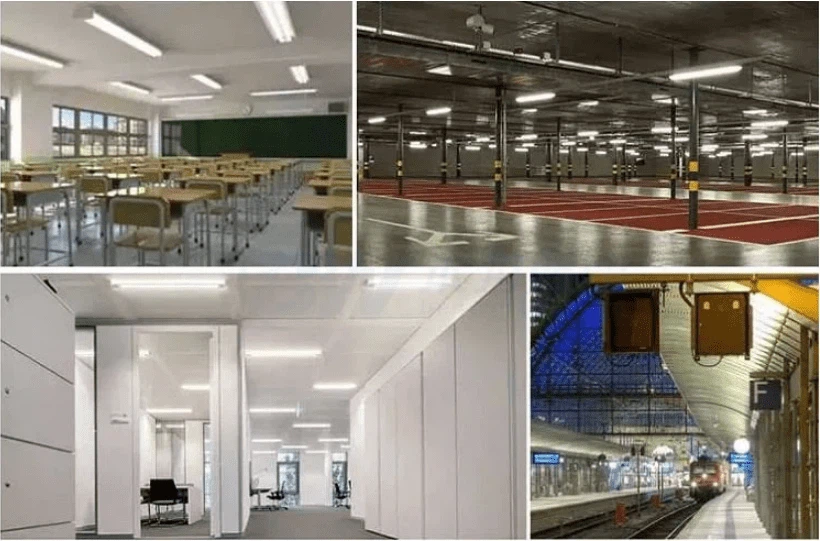
It is imperative to guarantee that emergency lighting is installed correctly and adheres to the appropriate standards, as it is a critical component of building safety planning. The quantity of lumens necessary to achieve sufficient illumination is a critical component of emergency lighting. In this article, we will examine the necessity of lumens for emergency illumination and the reasons for this.
Initially, it is necessary to define lumens. The quantity of visible light emitted by a source is quantified in lumens. Lumens are a measure of the brightness of a light. In order to guarantee that the emergency lighting system provides sufficient illumination, it is crucial to evaluate the quantity of lumens necessary.
The quantity of lumens necessary for emergency lighting is contingent upon a variety of factors, including the ceiling height, the size of the area to be illuminated, and the nature of the activities that occur within the area. Generally, emergency lighting should emit a minimum of one foot-candle of illumination, which is equivalent to ten luminosity. For instance, in order to satisfy this minimum requirement, emergency lights must emanate a minimum of 1000 lumens when installed in a 1000 square foot area.
Additionally, it is crucial to evaluate the variety of bulbs employed in emergency lighting. LED lights are the preferable choice due to their ability to produce a brighter illumination while consuming less energy. LED bulbs are frequently employed in emergency illumination systems due to their high lumen output.
The duration of illumination is another critical factor to consider when selecting emergency lighting. In the event of a power outage, emergency lighting should provide illumination for a minimum of 90 minutes. This requirement guarantees that occupants have an adequate amount of time to evacuate in a secure manner.
In addition to the minimum lumens necessary, emergency lighting must be positioned appropriately to ensure that it provides sufficient illumination. In order to guarantee that the entire region is adequately illuminated, it is imperative that the lights be installed at consistent intervals. Additionally, it is crucial to guarantee that emergency lights are not obstructed or blocked by furniture or other objects.
In summary, emergency illumination is an indispensable component of building safety planning. It is crucial to take into account the duration of illumination, the type of bulbs used, and the number of lumens necessary to provide sufficient illumination when selecting emergency lighting. LED lights are the most favoured due to their low energy consumption and maximum lumen output. In the event of a power disruption, building owners can guarantee that their emergency lighting systems comply with the requisite standards and create a well-lit and secure environment by taking these factors into account.