

Introduction: Market Status of Conventional UV Lighting and Energy Waste Pain Points
Ultraviolet blacklight lighting centered on 395nm UVA spectrum is a rigid demand across diversified downstream industries: hospitality entertainment such as nightclubs, KTV and glow-themed party venues, fine processing including nail glue solidification and UV resin handicraft production, industrial nondestructive leakage inspection with fluorescent tracer agent, as well as aquarium ornamental viewing and anti-counterfeit detection for retail stores. Over 70% of early-stage market UV lighting installations adopt traditional gas-discharge fluorescent UV tubes with built-in mercury vapor, which rely on electrode heating to excite mercury atoms for ultraviolet radiation.
From the perspective of electrical utilization efficiency, traditional fluorescent UV tubes feature two core energy-loss defects. First, extra power is consumed to preheat internal electrodes and maintain mercury vapor ionization, nearly 40% of input electric energy converts into useless thermal energy instead of effective UVA radiant output. Second, matched inductive ballast for fluorescent UV tubes brings fixed no-load power loss; even under standby state without light output, the ballast still consumes continuous reactive power, leading to invisible long-term electricity waste for large-batch installed projects. Meanwhile, severe luminous attenuation emerges after 3,000–5,000 working hours of mercury UV tubes: ultraviolet radiant flux drops by over 45%, end-users have to increase lamp quantity or extend daily lighting duration to guarantee required UV irradiation intensity, which further amplifies total power consumption.
In addition to direct electricity expense, traditional mercury-containing UV tubes generate prominent indirect cost: frequent periodic replacement due to short lifespan raises procurement and labor maintenance cost, high operating ambient temperature increases air-conditioning load for enclosed indoor venues, and waste mercury lamps need classified hazardous waste disposal with extra administrative expense. Against such industry background, integrated SMD LED 395nm UV tubes with built-in constant-current drive become mainstream replacement solution, and quantitative calculation of electricity-saving amplitude turns into core decision-making factor for bulk purchasers. This article takes mainstream 18W LED UV tube (1200mm length, alternative to 36W conventional fluorescent UV tube) as core research sample, combines global mainstream commercial electricity price standards to calculate verifiable energy-saving data.
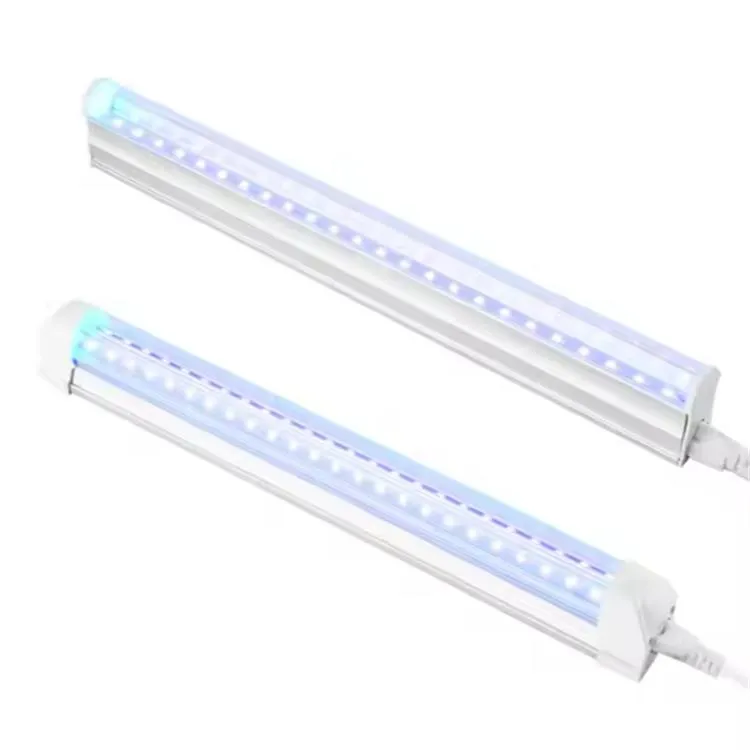
Core Technical Difference: Light Source, Power Supply and Energy Consumption Mechanism Between Two Types of UV Tubes
Light Source Structure and Photothermal Conversion Efficiency
The target LED UV tube adopts screened industrial-grade SMD2835 UVA LED chips with fixed 395±5nm wavelength as luminous core, all chips pass strict luminous flux binning before assembly to eliminate inconsistent spectrum caused by unqualified raw components. LED belongs to solid-state semiconductor luminescence technology: electric energy directly excites semiconductor PN junction to generate targeted UVA ultraviolet ray, theoretical electro-optical conversion efficiency reaches 32%–38% for 395nm UVA LED; only residual energy converts into heat after luminescence. Optimized uniform dot-spacing layout of LED beads on extruded aluminum substrate accelerates heat dissipation, stabilizing long-term radiant output and restraining efficiency decline from overheating. The high-transmittance frosted PC lampshade owns above 92% UV penetration rate, minimizing ultraviolet refraction loss on the light outlet surface to maximize effective available radiant energy.
Different from semiconductor LED, traditional fluorescent UV tube works on gas discharge luminescence principle. Inside glass tube, low-pressure mercury vapor is ionized by high voltage to produce UVC short-wave ultraviolet, then UVC stimulates internal fluorescent powder to convert into target 395nm UVA. Two-time energy conversion inevitably causes massive energy loss: primary mercury ionization loss plus secondary fluorescent powder conversion loss make overall effective electro-ultraviolet conversion efficiency only 8%–12%, most input electricity dissipates as redundant heat. Moreover, traditional fluorescent UV tube's glass shell cannot lock ultraviolet effectively, around 25% generated UV ray is absorbed by tube wall, further reducing available radiant efficiency.
Built-in Drive vs External Inductive Ballast: Standby and Operating Power Gap
The integrated LED UV tube is equipped with full-range constant-current isolation drive IC inside aluminum housing, supporting global universal input voltage AC85V–265V covering North America 110V, European 230V and Southeast Asia multi-spec mains voltage. Constant-current drive circuit features ultra-low no-load power consumption below 0.5W; power fluctuation of whole lamp is controlled within ±3% during full lifespan operation, avoiding power surge alongside component aging. Besides, daisy-chain cascading terminal design allows maximum six tubes connected in series without extra intermediate wiring accessories, reducing circuit power loss from redundant wiring resistance in large-area engineering installation.
Conventional fluorescent UV tube must be matched with external inductive ballast to stabilize startup voltage and operating current. Traditional copper-core inductive ballast has inherent reactive power loss of 5–7W per unit all year round regardless of lamp working or shutdown; low-quality aluminum-core ballast even reaches over 10W idle loss. Such continuous standby power loss accumulates into considerable hidden electricity expenditure especially for venues with hundreds of installed UV tubes.
Service Life and Luminous Attenuation's Derivative Energy Consumption
Rated service life of the tested LED UV tube reaches 30,000 working hours, after long-term operation the lamp retains more than 90% of initial UVA radiant flux, nearly no need to increase lamp quantity to compensate attenuation within five years of regular use. In contrast, standard mercury fluorescent UV tube's nominal service life is merely 6,000 hours, luminous efficiency drops rapidly after 3,000 hours of continuous lighting. When actual UV output decreases, commercial operators commonly extend daily working hours by 20%–30% or add extra UV tubes to maintain scene glowing effect, which directly increases effective daily power consumption of the whole UV lighting system.
Quantitative Calculation of Direct Electricity Saving Based on Practical Application Data
Basic Calculation Parameters Definition
Core comparison group specification:
Original configuration: 36W traditional fluorescent UV tube (including 6W average ballast idle loss, total comprehensive power =42W per piece)
Alternative configuration: 18W integrated LED UV tube (built-in drive, total actual working power=18W per piece, negligible standby loss) Global average commercial electricity price benchmark: $0.15 per kWh (widely adopted for EU, US, Australia mainstream commercial venues; regional electricity price fluctuation can proportionally adjust final saving amount) Two universal working scenarios for calculation: Scenario 1: Entertainment venues (bar/KTV), daily average working hour=8h, annual opening 360 days; Scenario 2: Industrial curing factory, daily continuous working 12h, annual production 300 days. Single venue sample quantity: 50pcs UV tubes (medium-sized standard installation volume).
Annual Power Consumption & Saving Calculation for Scenario 1 (Bar & KTV, 8h/day, 360d/year, 50 tubes)
Total installed traditional UV total power: 42W×50=2100W=2.1kW Annual power consumption of fluorescent UV set: 2.1kW×8h×360=6048kWh Annual electricity cost of traditional solution: 6048×0.15=$907.2
Total installed LED UV total power:18W×50=900W=0.9kW Annual power consumption of LED UV set:0.9kW×8×360=2592kWh Annual electricity cost of LED solution:2592×0.15=$388.8
**Direct annual electricity saving for single medium bar: 907.2−388.8= $518.4** Energy-saving rate on direct power expense: (518.4÷907.2)×100%≈57.14%. If venue expands UV lamp quantity to 200pcs for large nightclub decoration, annual direct electricity saving breaks through $2073.6 merely on lighting power.
Annual Power Consumption & Saving Calculation for Scenario 2 (Industrial Curing Plant,12h/day,300d/year,50 tubes)
Traditional UV annual power usage:2.1kW×12×300=7560kWh, annual cost=7560×0.15= $1134 LED UV annual power usage:0.9kW×12×300=3240kWh, annual cost=3240×0.15=$486 Annual direct electricity saving:1134−486=$648, direct energy-saving ratio≈57.14%
Additional Air-conditioning Derivative Power Saving from Low Heat Output
Apart from direct lamp power saving, low heat generation of LED UV tubes brings secondary electricity saving on refrigeration equipment. Traditional mercury UV tube converts over 70% input power into ambient heat; 50pcs 36W fluorescent UV set releases continuous heat equivalent to extra 1.47kW heating load inside enclosed room. LED UV's low heat conversion rate cuts indoor heat source greatly, reducing daily running load of venue air conditioner. According to HVAC industry empirical data, replacing with LED UV can save extra 12%–18% of air-conditioning electricity cost in UV concentrated layout space. Taking 15% intermediate saving ratio as reference, the medium-sized bar with $907.2 original lamp electricity cost gains extra annual air-condition saving around $136.08, accumulating total comprehensive annual power saving up to over $650 per project.
Hidden Indirect Cost Reduction to Improve Comprehensive Economic Benefit
Electricity saving is only part of overall cost advantage; prolonged lifespan and mercury-free design of LED UV tubes reduce multiple hidden long-term expenditure which indirectly upgrades overall investment return rate for buyers.
First, replacement procurement cost saving: Traditional fluorescent UV tube needs full replacement every 1.5–2 years based on 8h daily use, while LED UV runs over 8 years under same working condition before large-scale replacement. Calculated with average $8 unit price of traditional UV tube and $22 unit price of LED UV tube, although single LED purchase cost is higher, long-term batch replacement expense drops by over 70% within five-year operation cycle, saving repeated procurement fund and storage cost for spare lamps.
Second, maintenance labor cost saving: Frequent burnout of traditional mercury UV tubes requires fixed maintenance worker for periodic inspection and replacement, generating hourly labor payout. LED UV's low failure rate cuts down maintenance frequency drastically; medium-sized venues can save dozens of working hours annually on lamp maintenance work, converting into invisible labor cost saving.
Third, hazardous waste disposal expense elimination: Mercury inside waste fluorescent UV belongs to hazardous chemical substance; EU, US and most developed regions enforce strict classified hazardous waste disposal regulation with designated processing fee per discarded lamp. LED UV is fully mercury-free and RoHS compliant, categorized as ordinary electronic waste without extra hazardous treatment cost, complying with global increasingly strict environmental protection policies and avoiding potential administrative fines from irregular waste disposal.
For global bulk importers and lighting distributors, superior energy-saving attribute also improves product market competitiveness: when downstream customers calculate return on investment, obvious annual cost reduction becomes core bargaining advantage to accelerate bulk order conversion of LED UV tubes.
Industry-Specific Application Differentiation of Energy-Saving Benefits
Entertainment & Glow Party Industry
Short-term intensive usage mode for temporary party layout plus long-term all-year operation for fixed bars form dual demand. For seasonal festival glow events with temporary mass UV installation, low power consumption of LED UV cuts generator or venue power rental cost; fixed commercial bars obtain stable annual fixed electricity saving as calculated above, most venue owners recover extra initial purchase premium of LED UV within 18–24 months via accumulated electricity savings.
UV Resin & Nail Art Processing Industry
Small-batch individual nail salon and large-scale handicraft curing workshop both benefit obviously: long continuous working time of curing lamps magnifies daily power gap between LED and traditional UV tubes, small nail salon with 10pcs UV curing tubes can save around $100+ electricity cost per year, accumulating to remarkable profit increment after multi-year operation.
Industrial Nondestructive Testing & Pipeline Leak Inspection
Factory production line runs 12–16 hours daily all year round, ultra-long operating hours maximize energy-saving effect; large chemical plants with hundreds of inspection UV lamps achieve five-figure annual electricity saving after whole-system replacement, meanwhile low heat avoids high-temperature damage to precision detection equipment around irradiation area.
Aquarium & Reptile Terrarium Ornamental Lighting
Household and commercial aquarium keepers run UV lighting 6–10h per day stably; low calorific value prevents excessive water temperature rise of fish tank, reducing cooling equipment power consumption for constant-temperature aquatic environment besides lamp electricity saving.
Conclusion & Procurement Suggestion for Global Buyers
Quantitative data in above calculation verifies that switching from conventional mercury fluorescent UV tube to high-efficiency 395nm integrated LED UV tube achieves approximately 57% direct lighting electricity saving on average, plus additional air-conditioning secondary energy saving and multi-dimensional hidden cost reduction including replacement, maintenance and waste disposal expense, overall comprehensive operating cost of UV lighting system declines by over 60% in most application scenarios. Although unit purchase price of LED UV is higher than traditional fluorescent counterpart, short investment payback period and long-term stable cost control make LED UV the cost-optimal solution for medium and long-term commercial and industrial UV layout.
For global lighting distributors and bulk purchasers: prioritize LED UV tube with full-range wide voltage AC85–265V constant-current drive and aluminum heat dissipation structure to adapt different national grid standard and guarantee stable long-term energy-saving performance; for end-users including venue operators and factory procurement managers, formulate phased replacement plan according to existing installed traditional UV quantity, finish full-system upgrading in batches to balance initial capital input and monthly electricity expenditure decline. Along with increasingly tightened global carbon emission and mercury restriction legislation in all regions, energy-saving mercury-free LED UV tube will gradually completely phase out high-energy-consuming traditional gas-discharge UV lighting, realizing dual benefit of economic electricity saving and environmental compliance for all downstream industries.
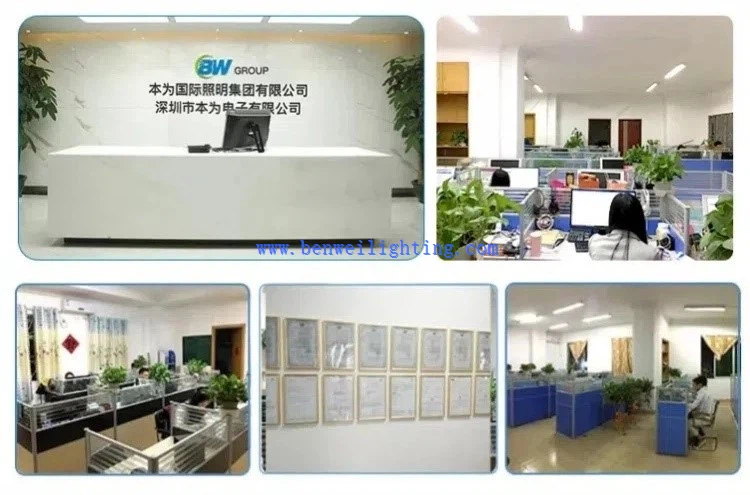
How To Cooperate With Us?
Our company takes great satisfaction in having its own factory, which ensures total control over the manufacturing process and the calibre of our products. We are manufacturers dedicated to providing our customers with the most affordable prices, not just agents. Since we are certain that the quality and cost of our products are obvious, we encourage customers to assess our samples first. Our commitment to quality and customer satisfaction drives us to always provide top-notch goods.
Our address
3rd Floor, 5th Building, Hebei Industrial Park, Hualian Community, Longhua District, Shenzhen, China





