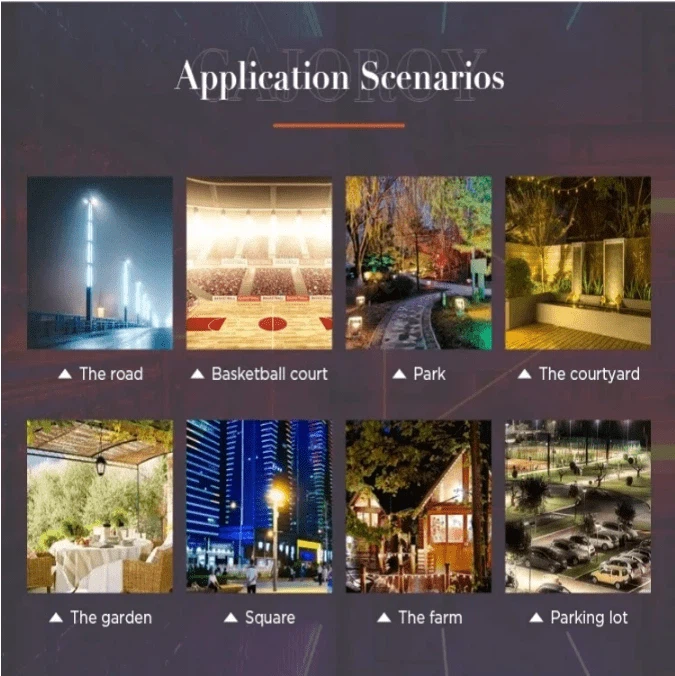
Outdoor solar lights have become a popular, sustainable lighting choice for residential yards, garden landscapes, public walkways and commercial outdoor spaces. As a renewable energy lighting device, solar outdoor lights rely entirely on natural solar energy to operate, eliminating grid electricity consumption and reducing daily operation costs. Many users often encounter dim lighting, short working hours or insufficient battery power of solar lights, which is mostly caused by unreasonable sunlight exposure. Therefore, mastering the standard sunlight requirements and scientific installation placement of solar lights is the key to maintaining stable long-term operation. This article details the required sunlight duration, installation orientation skills and seasonal usage tips for solar lights.
Core Advantages of Outdoor Solar Lights
Solar lights are an excellent enhancement for any outdoor area. These outdoor solar lighting fixtures not only create a warm and pleasant atmosphere for landscapes and public spaces, but they are also an economical and eco-friendly lighting option with low maintenance costs and zero energy consumption. Nevertheless, it is crucial to guarantee that your solar lights receive a enough amount of sunlight in order to function optimally and maintain stable nightly lighting performance.
Basic Daily Sunlight Requirement for Solar Lights
What is the required amount of sunlight for solar lights?
Determining the answer to this issue is not simple, as it is contingent upon the specific characteristics of the solar light model, panel efficiency and its actual placement site environment. Typically, standard outdoor solar lights necessitate many hours of direct sunshine each day to achieve a complete battery charge and sustain normal lighting function throughout the whole night.
To achieve the best working performance and longest lighting duration, it is advisable to position solar lights in an open area that receives a minimum of six hours of direct sunlight per day. This sufficient solar irradiation enables the solar panels to completely recharge the built-in batteries, guaranteeing that the lights will function for their entire designated working duration at night.
Optimal Solar Panel Orientation & Placement Guidelines
When positioning solar lights, it is crucial to take into account the installation angle and orientation of the solar panels, which directly determines solar energy absorption efficiency. For optimal power generation efficiency, it is recommended to orient solar panels towards the sun and position them facing south in the northern hemisphere, and facing north in the southern hemisphere. This scientific placement guarantees that they obtain the utmost quantity of sunshine feasible throughout the daytime.
Furthermore, it is crucial to refrain from positioning solar lights in regions with heavy shade from trees, buildings and shelters, as this will greatly restrict the quantity of sunlight they can absorb and lead to insufficient power storage.
Seasonal & Weather Adaptation Tips
It should be emphasized that the quantity of sunshine received by solar lights can fluctuate based on the changing seasons and complex weather conditions. In cold winter, when daylight hours are shorter and sunshine is scarce with more cloudy and rainy days, solar lights may not receive sufficient sunlight to completely recharge their batteries, resulting in weakened lighting effect and shorter working time.
In such instances, it can be imperative to relocate the lights to a more open and sunlit area or employ an alternate supplementary lighting method to ensure stable outdoor lighting supply.
Key Takeaways for Solar Light Daily Use
Ultimately, solar lights necessitate a substantial amount of direct sunshine for multiple hours on a daily basis in order to function optimally. In order to achieve the best possible performance and extend service life, it is recommended to position them in a location that receives a minimum of six hours of direct sunlight every day. The solar panels should be tilted towards the sun and facing south in the northern hemisphere, and north in the southern hemisphere. By according to these scientific installation and placement instructions, you can fully experience the energy-saving and eco-friendly advantages of solar illumination in your outdoor area for an extended period of time.
Consultation
Want to match the most suitable solar lights for your outdoor environment or solve problems like insufficient sunlight absorption and dim lighting? If you need custom installation guidance, professional site placement suggestions and high-efficiency solar light product recommendations, feel free to contact our team. We provide one-stop outdoor solar lighting solutions to maximize your lighting equipment performance!