

Proper lighting can have a significant impact on the milk production of dairy cows, a key factor that many small-scale and large-scale dairy farmers overlook in daily breeding management. Most farmers focus on cow feed quality, drinking water hygiene, barn temperature control, and daily disinfection work, but ignore the vital role of scientific lighting in dairy cow breeding. In modern standardized dairy farming, lighting is no longer a simple auxiliary facility for barn lighting, but a professional breeding management means that directly affects the physiological state and production performance of dairy cows. By utilizing the correct lighting system in your dairy farm, you can effectively improve the physical health, mental state, and overall production efficiency of your herd, bringing stable and reliable income growth to the farm. In this article, we will fully explore the core benefits of proper lighting for dairy cows and elaborate on how standardized lighting configuration can steadily boost milk production in your dairy farm, providing practical guidance for dairy farm breeding optimization.
Why Proper Lighting is Important for Dairy Cows
Dairy cows require a certain amount of light to maintain a healthy circadian rhythm, which is the basis for ensuring their normal physiological metabolism and lactation function. Like humans and most mammals, dairy cows have a fixed biological clock regulated by light and dark cycles, which controls hormone secretion, appetite metabolism, immune function, and physical recovery. Without enough light exposure, cows can experience obvious disorder changes in their key hormone levels, such as cortisol and melatonin. Melatonin, which is secreted in large quantities in dark environments, will inhibit the secretion of lactogenic hormones in dairy cows, while abnormal cortisol levels will cause physical stress and metabolic disorders. These hormonal imbalances can directly impact their daily feed digestion, physical recovery, and long-term milk production and overall health. Proper lighting can help scientifically regulate these hormones, keep hormone secretion in a stable and balanced state, ensuring the cows are always in a healthy physical condition and maintain efficient and stable milk production performance.
Another critical aspect of proper lighting in dairy farms is the positive effect it has on the cows' feed intake, which is closely linked to milk yield. Milk production of dairy cows relies entirely on the digestion and transformation of nutrients in feed, and sufficient and stable feed intake is the prerequisite for high milk production. Cows need a certain amount of feed to produce milk, and a large number of animal husbandry studies and farm practical tests have shown that cows exposed to the correct lighting system have stronger appetite and more active feeding behavior, consume more feed and produce more milk than cows raised in unreasonable lighting environments. Additionally, proper lighting can also actively adjust the cows' daily behavior, reduce anxiety, irritability and other negative emotions caused by dim environment or light disorder, and effectively reduce stress levels. A low-stress and comfortable breeding environment can further optimize the metabolic efficiency of dairy cows, promote nutrient absorption and conversion, and continuously increase their milk production.
Types of Lighting for Dairy Farms
There are various types of lighting systems that dairy farmers can utilize to optimize the barn breeding environment and enhance their cows' milk production. Different lighting equipment has distinct differences in energy consumption, light quality, heat generation, and service life, which will directly affect the breeding effect and farm operating cost. Choosing targeted lighting equipment according to the actual scale and layout of the dairy farm is an important part of scientific breeding. The most common and widely used types in modern dairy farms are LED and fluorescent lights, which occupy the mainstream market of dairy barn lighting with their respective advantages and characteristics.
LED lights are becoming increasingly popular among dairy farmers for several prominent and practical reasons that adapt to modern dairy farming needs. First, they are extremely energy-efficient and can last up to 50,000 hours of stable operation, greatly reducing the frequency of equipment maintenance and frequent replacements, which effectively saves labor costs and equipment investment costs for farms. Second, LED lights produce far less heat than traditional lighting equipment and emit almost no harmful UV light, avoiding high-temperature heat radiation and ultraviolet stimulation to dairy cows, which can lead to a more comfortable and stable living and breeding environment for the cows. Finally, long-term farm practice and professional breeding data have fully verified that LED lights with uniform and soft light quality can effectively regulate the circadian rhythm of dairy cows, increase feed intake, reduce stress responses, and further increase milk production and improve overall cow health.
Fluorescent lights are another common traditional lighting system widely used in small and medium-sized dairy farms in the early stage. They are inexpensive in initial procurement cost and can provide basic adequate lighting brightness for the cows to meet the most basic barn lighting needs. However, they have obvious shortcomings compared with modern LED lighting. They are not as energy-efficient as LED lights, resulting in higher long-term power consumption costs, and their service life is short, which may require more frequent replacements and daily maintenance. In addition, fluorescent lights will produce obvious heat during long-term operation, raising the local temperature of the barn, especially in summer, which can cause heat discomfort and stress response in the cows and adversely affect their appetite and milk production.
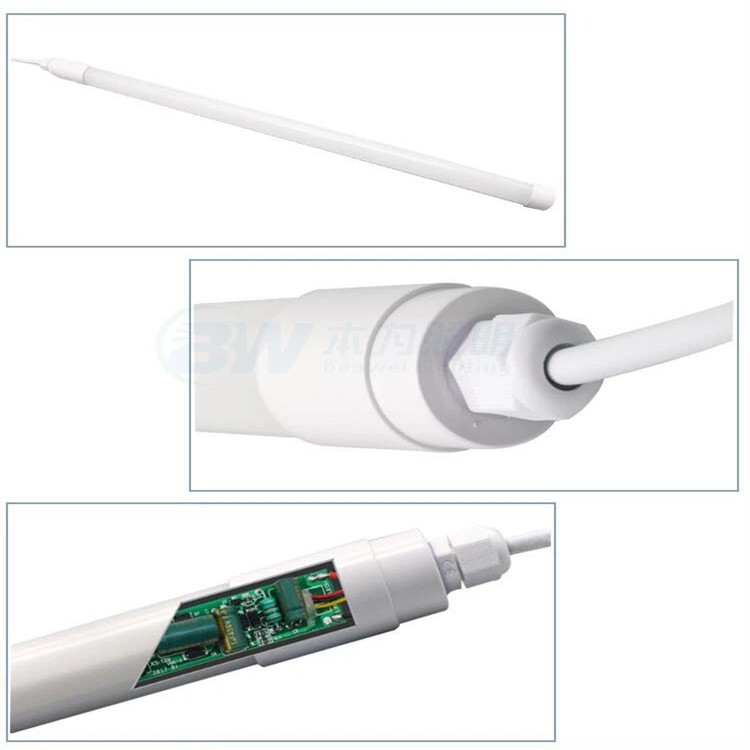
Proper Lighting Design
It is essential to design your lighting system correctly and scientifically to ensure it is effective in increasing milk production, because unreasonable lighting layout and parameter setting will not only fail to exert positive effects but may also counteract the physiological state of dairy cows. One critical aspect is the placement of the lights. The lights should be placed evenly throughout the barn and spaced appropriately according to the barn area, cow density, and breeding layout to ensure uniform light coverage without dark corners or local over-bright areas, providing sufficient and comfortable lighting for every cow in the barn. Meanwhile, the bulbs' wattage should also be fully considered in the design process, as high watt bulbs will emit excessive heat and produce strong light stimulation, which can be harmful to the cows' physical health and lactation state.
Another key factor to consider in lighting design is the timing of the lights, which is the core of regulating the circadian rhythm of dairy cows. Cows require a fixed and reasonable amount of light exposure every day to maintain their stable physical condition and continuous high production levels. Therefore, professional farmers should provide the cows with 16 to 18 hours of light exposure per day to simulate natural daylight and promote feeding and metabolism, followed by eight hours of complete darkness at night to ensure the cows get sufficient rest, hormone regulation and physical recovery. This scientific light and dark cycle can maximize the physiological potential of dairy cows and lay a solid foundation for stable milk production growth.
ConclusionProper lighting can have a significant and irreplaceable impact on the milk production of dairy cows, serving as a low-cost and high-efficiency breeding optimization measure. The right lighting system can effectively regulate the cows' hormone levels to avoid physiological disorders, increase their daily feed intake and nutrient conversion efficiency, reduce their environmental stress levels and negative emotions, and ultimately steadily increase their milk production. Among various lighting equipment, LED lights are becoming increasingly popular among dairy farmers due to their outstanding energy efficiency, long service life, comfortable light quality, and significant ability to improve cow health and milk production. When designing your dairy farm lighting system, it is essential to comprehensively consider the bulbs' reasonable placement and matched wattage, as well as the scientific timing of the lights to ensure maximum effectiveness of the lighting system. Standardized lighting management can help dairy farms achieve refined breeding, improve economic benefits, and realize sustainable and healthy development of dairy breeding.

How To Cooperate With Us?
Since we have our own facilities, we are pleased to have complete control over the production process and the quality of our goods. We are committed to giving our clients the finest prices since we are manufacturers rather than just brokers. We encourage buyers to see our samples first since we are certain that the cost and calibre of our items are transparent. Our dedication to excellence and client happiness motivates us to consistently provide superior products.
Our address
3rd Floor, 5th Building, Hebei Industrial Park, Hualian Community, Longhua District, Shenzhen, China





