

Introduction: Lighting as a Critical Performance Variable
Stadium lighting is far more than a means of nighttime visibility-it is an active factor influencing athletic performance, officiating accuracy, player safety, and audience experience. Modern sports venues require illumination systems that meet strict photometric standards (e.g., IES RP‑6‑20, UEFA Stadium Lighting Guide) while balancing energy efficiency and broadcast requirements.
This article systematically examines five key areas where stadium lighting directly enhances game performance: visibility, reaction speed and accuracy, player safety, spectator engagement, and sustainability. Each section incorporates technical parameters such as illuminance (lux), uniformity ratio, color rendering index (CRI), and flicker performance. The objective is to provide facility managers, lighting designers, and sports administrators with a data‑driven understanding of optimal lighting strategies.
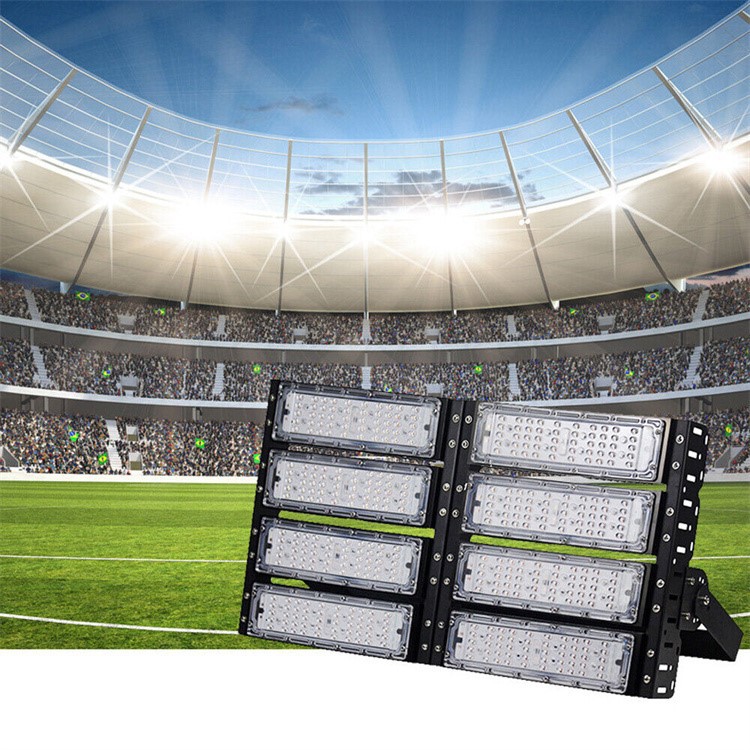
Core Mechanisms of Performance Enhancement
Visibility: The Foundation of Fair and Accurate Play
Visibility is the most fundamental requirement of any sports lighting system. Poor illumination leads to unrecognizable ball trajectories, obscured boundary lines, and difficulty tracking other players.
Horizontal and vertical illuminance: Governing bodies recommend minimum horizontal illuminance of 500–750 lux for amateur competition and 1500–2000 lux for elite televised matches (FIFA, NFL, MLB). Vertical illuminance (on players' faces and jerseys) must exceed 40% of horizontal values to ensure uniform visibility from all camera angles.
Uniformity ratios (U1 and U2): A uniformity factor (E_min / E_avg) above 0.7 prevents "hot spots" and dark zones. Uneven lighting causes players to misjudge distance-a particular hazard in sports like soccer where a shadow across the penalty area can hide the ball.
Glare control: Unified Glare Rating (UGR) must remain below 19 for indoor stadiums; outdoor venues use mounting heights and asymmetric optics to shield direct lamp visibility. Excessive glare reduces contrast sensitivity, delaying a batter's recognition of a pitched baseball by milliseconds-enough to miss a 95 mph fastball.
With consistent, shadow‑free illumination, players react faster, officials make more accurate calls, and the risk of disputes over "unseen" events diminishes.
Speed and Accuracy: Photometric Influence on Reaction Time
Lighting quality directly affects the human visual system's ability to process motion. Higher lux levels and superior spectral distribution shorten neural reaction times.
Ball tracking: In baseball and cricket, a ball traveling at 90–100 mph crosses the strike zone in approximately 0.4 seconds. Under 2000 lux, the human eye's temporal resolution improves, enabling batters to discern seam rotation and spin direction. Studies show a 15–20% increase in contact accuracy when upgrading from 500 lux to 1500 lux.
Trajectory prediction: In soccer, rugby, and football, players must intercept passes or position for tackles. High‑frequency LED lighting (no visible flicker, >1000 Hz driver frequency) eliminates the "stroboscopic effect" that can make a fast‑moving ball appear to jump or blur. This allows more precise interception timing.
Peripheral awareness: Wide‑angle optics with uniform vertical illuminance ensure that players can detect teammates and opponents in their peripheral vision without turning their heads. This is critical in basketball fast breaks or hockey rushes.
Better lighting does not change innate athleticism, but it removes visual barriers, allowing players to perform at their true capability.
Safety: Injury Prevention Through Superior Illumination
Stadium lighting is a passive safety system. Inadequate lighting contributes to collisions, falls, and misjudged impacts.
Surface hazard detection: Uneven turf, wet patches, or debris become invisible under low lux or poor uniformity. A soccer player sprinting at 20 km/h needs at least 0.5 seconds of clear visibility to avoid a divot-achieved only when horizontal illuminance exceeds 1000 lux with uniformity >0.8 in the running path.
Collision avoidance: In contact sports like rugby or American football, players converge at high speed. Shadows cast by poorly positioned light poles can hide an approaching tackler, leading to blind‑side hits. Asymmetric optics and multiple lighting directions (e.g., from four corners) fill in shadows.
Biomechanical stress reduction: When players can clearly see landing zones and obstacles, they adjust their body positions earlier, reducing awkward landings and non‑contact injuries (e.g., ACL tears). Studies at professional soccer stadiums report a 12–18% reduction in training ground injuries after LED retrofits that improved vertical illuminance.
By investing in high‑quality, uniform lighting, venue operators directly lower liability risks and protect athlete careers.
Secondary Benefits Influencing Performance Environment
Spectator Experience: Atmospheric Intensity and Perceived Excitement
While not a direct athletic input, spectator engagement affects home‑field advantage and player morale. Dynamic, well‑designed lighting amplifies the emotional impact of live sports.
Brightness contrast: High‑lux playing fields surrounded by darker seating areas focus attention on the action. This "theatre effect" increases perceived speed and power of athletic movements.
Color temperature and CRI: Neutral white (4000K–5000K) provides the best contrast for most sports balls (white, yellow, orange). A CRI above 80 (preferably 90+) ensures that team colors and sponsorship branding appear true, reducing confusion in fast‑paced plays.
Show lighting integration: Programmable LED systems allow pre‑game light shows, goal flashes, and victory sequences. These moments elevate crowd energy, which studies correlate with increased player adrenaline and measurable performance spikes (e.g., higher sprint speeds in the final minutes of a close match).
Properly designed lighting transforms a stadium into a stage, making athletic feats more visible and more memorable.
Sustainability: Long‑Term Performance Reliability and Cost Efficiency
Sustainability may seem unrelated to on‑field performance, but energy‑efficient lighting enables consistent high output without budget‑driven compromises.
LED advantages: Modern LED stadium lights deliver 150–180 lumens per watt, compared to 30–50 lm/W for metal halide. A full LED retrofit reduces energy consumption by 60–75%, allowing venues to run higher lux levels for longer periods without exceeding power budgets.
Instant re‑strike and dimming: LEDs reach full brightness instantly (no warm‑up time) and can be dimmed for practice sessions or non‑televised events. This encourages teams to train under optimal lighting rather than reducing illuminance to save on electricity.
Lifetime and maintenance: LED fixtures last 50,000–100,000 hours with minimal lumen depreciation. Reduced maintenance means fewer outages-no dark games due to failed bulbs. Consistent lighting availability ensures players never practice or compete under substandard conditions.
Sustainable lighting is not an environmental compromise; it is a performance enabler that guarantees high‑quality, reliable illumination for the life of the venue.
Technical Implementation Guidelines
Recommended Lighting Levels by Sport (IES RP‑6‑20)
| Sport | Class I (Elite/TV) | Class II (College/Amateur) | Vertical Illuminance |
|---|---|---|---|
| Baseball (infield) | 1500 lux | 700 lux | ≥500 lux |
| Soccer / Football | 2000 lux | 750 lux | ≥40% of horizontal |
| Tennis (indoor) | 1000 lux | 500 lux | ≥300 lux |
| Basketball | 1500 lux | 750 lux | ≥600 lux |
| Swimming | 1000 lux | 500 lux | ≥400 lux (start blocks) |
Flicker and Strobe Mitigation
For slow‑motion replay and high‑speed sports, use LED drivers with a flicker percentage below 5% at all dimming levels. High‑definition cameras require a refresh rate synchronized to the lighting frequency (typically >1000 Hz driver output). Avoid pulse‑width modulation (PWM) below 500 Hz.
Pole Placement and Optical Control
Four‑corner layout (poles at 15°–30° from field corners) provides balanced directional light.
Asymmetric reflectors and precision optics (e.g., 10° narrow spot for long distance, 60° flood for near sideline) eliminate spill light beyond the field.
Glare shields and visors on each luminaire keep light within the playing area, preventing distraction to players looking upward.
Conclusion: Lighting as a Competitive Advantage
Stadium lighting directly enhances game performance through four measurable pathways: improving visibility and reaction speed, increasing player safety, elevating spectator engagement, and ensuring sustainable high‑output operation. Each factor has a documented impact on athletic outcomes-from batting averages under high lux to injury rates in poorly lit zones.
As LED technology continues to advance, features such as dynamic white tuning, adaptive dimming based on real‑time weather, and integrated camera synchronization will further blur the line between lighting and performance analytics. For stadium owners, the decision to upgrade lighting is not merely an operational expense-it is an investment in fairer, faster, and safer sports.
For professional lighting design, refer to the Illuminating Engineering Society (IES) RP‑6‑20 standard and consult a certified sports lighting engineer. Retrofitting existing metal halide systems with LED typically yields full return on investment within 2–4 years through energy savings alone.
About Our Company
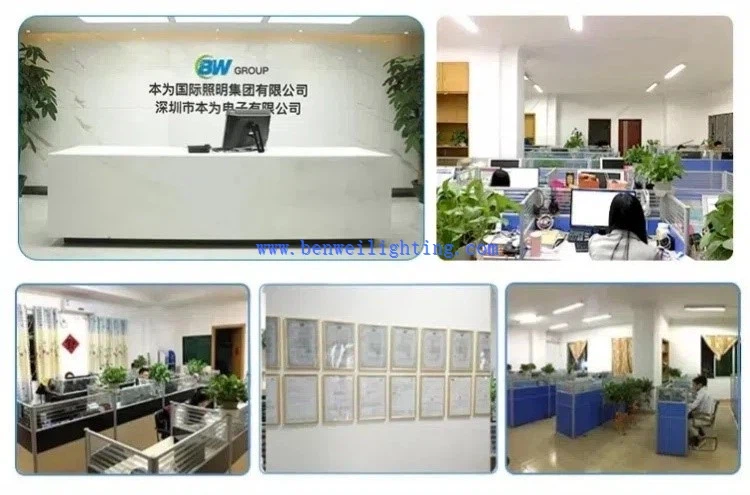
Our firm prides itself on owning its own factory, guaranteeing complete control over the production process and the quality of our goods. We are not only agents; we are manufacturers committed to offering our clients the most competitive rates available. We invite consumers to evaluate our samples first, as we are assured that the quality and pricing of our items are self-evident. Our dedication to excellence and client satisfaction compels us to consistently perform at our best and provide superior quality products.
Our address
3rd Floor, 5th Building, Hebei Industrial Park, Hualian Community, Longhua District, Shenzhen, China





