

Introduction: The Hidden Crisis of Early Failure of Underwater Pool Lights
Common Phenomena of Early Light Failure in Practical Application
In the global pool lighting industry, early failure of underwater lights has always been a widespread pain point different from ordinary outdoor lighting equipment. Different from landscape lights and wall lights working in atmospheric environments, underwater pool lights are immersed in water for 24 hours all year round, and face multiple extreme interference factors such as chlorine-containing water corrosion, alternating cold and hot temperature differences, water vapor penetration, and water flow impact. In actual engineering and household use, a large number of ordinary LED pool lights will experience various failure problems within 1–3 years of use, far lower than the industry's standard rated lifespan of 30,000–50,000 hours. Common early failure manifestations include gradual dimming and uneven light output, single color failure of RGB color-changing lights, intermittent flickering operation, internal water fogging of the lamp body, lens yellowing and cracking, and even short-circuit burnout leading to complete lighting failure.
These failure problems not only damage the night landscape effect of swimming pools and affect the swimming experience of users, but also bring huge hidden dangers to underwater electrical safety. For commercial swimming pools, spa clubs and scenic fountains, frequent lamp replacement and regular maintenance will greatly increase operating costs and reduce operational efficiency; for household private pool users, early failure of lights means repeated investment and troublesome manual replacement work, seriously reducing product use satisfaction.
Core Differences Between Underwater Lights and Ordinary Outdoor Lights
Many users mistakenly equate underwater pool lights with ordinary waterproof outdoor lights, ignoring the rigorous environmental adaptability requirements of long-term submerged operation. Ordinary outdoor waterproof lights only need to cope with rainwater splashing and humid air, and their waterproof structure is designed for intermittent water resistance. In contrast, underwater pool lights need to achieve permanent submersible protection, and their internal electronic components are in a high-humidity, high-corrosion working state for a long time. In addition, the temperature difference alternating effect generated by the light source heating up during operation and cooling down after shutdown will form air pressure difference inside the lamp body, which is extremely easy to cause negative pressure water absorption of unqualified sealing structures, becoming the primary inducement of early failure. Therefore, the selection of underwater pool lights cannot follow the standard of ordinary outdoor lighting, and must focus on anti-failure design for submerged working conditions.
In-Depth Analysis of Core Causes of Early Failure of Underwater Pool Lights
Waterproof Sealing Failure: The Primary Cause of Early Light Damage
Industry data shows that more than 70% of underwater pool light early failures are caused by water ingress and sealing failure. Most low-cost ordinary pool lights adopt single-layer rubber gasket sealing or simple mechanical pressing sealing structure, which has fatal structural defects in long-term submerged scenarios. Under the continuous erosion of chlorine-based disinfectants in pool water and the repeated cycle of thermal expansion and cold contraction, ordinary rubber gaskets are prone to aging, hardening, shrinkage and cracking, resulting in gaps in the sealing surface. When the lamp body heats up during operation, the internal air expands and overflows; after shutdown, the internal air cools down to form negative pressure, which continuously sucks pool water and water vapor into the lamp body through tiny gaps.
With the continuous accumulation of water vapor and micro water droplets inside the lamp body, the PCB circuit board and LED chip beads will be corroded and oxidized, resulting in increased circuit resistance, unstable current output, gradual light decay, and finally short-circuit burnout. In addition, some inferior products falsely mark the IP68 protection rating. Their sealing structure does not pass professional submersible durability tests, and can only resist short-term water splashing, but cannot adapt to long-term deep water submergence, which leads to large-scale failure within a short service cycle.
Material Aging and Chemical Corrosion Accelerated Performance Degradation
Pool water contains chlorine, pH regulators, algaecides and other chemical components all year round, which have strong corrosive effects on inferior plastic, metal and transparent materials. Most low-end underwater lights use ordinary ABS plastic shell and ordinary acrylic lens. After long-term immersion in chemical pool water, the shell will gradually become brittle, discolored and cracked, and the lens will turn yellow, fog and scratch. On the one hand, the yellowing and fogging of the lens will reduce light transmittance, cause uneven light output, and seriously affect the lighting effect; on the other hand, shell cracking and lens damage will directly destroy the waterproof structure, accelerate water ingress, and trigger secondary failure of the lamp body.
In addition, some products use metal structural parts that are not treated with anti-rust and anti-corrosion treatment. In a long-term humid underwater environment, metal parts are prone to rust and corrosion. Rust expansion will squeeze the sealing structure, resulting in sealing failure, and the rust falling off will also pollute the internal circuit, inducing circuit failure. Material aging and corrosion are chronic failure factors, which will gradually reduce the overall performance of the lamp, resulting in the product being unable to reach the designed service life.
Defective Thermal Dissipation Design Leading to Rapid Light Decay and Chip Burnout
LED light source failure caused by poor heat dissipation is another key factor for early failure of underwater pool lights. The luminous efficiency and service life of LED chips are extremely sensitive to operating temperature. The industry's authoritative test data shows that for every 10°C increase in the long-term operating temperature of LED chips, the luminous attenuation speed will double, and the overall service life will be reduced by nearly 50%. Different from air-cooled outdoor lights, underwater lights rely on water for heat conduction and heat dissipation, which puts forward higher requirements for the internal thermal structure design of the lamp body.
Most ordinary underwater lights adopt fully enclosed integrated design without optimized heat dissipation structure. The heat generated by the LED chip during long-term continuous operation cannot be exported in time, resulting in heat accumulation inside the lamp body and long-term overheating of the chip. Long-term high-temperature operation will accelerate the aging of the chip phosphor layer, cause rapid light decay, make the lamp brightness drop significantly within 1–2 years, and even directly burn the chip and circuit board in severe cases, resulting in permanent failure of the lamp body.
Non-Standard Installation and Voltage Safety Risks Induced Failure
Improper installation and non-standard power configuration are artificial inducements for early failure of underwater pool lights. Many users and construction teams lack professional underwater lighting installation experience. Common problems include uneven installation fixation leading to lamp body deformation and sealing gap, random wiring without grounding protection, and mismatched transformer voltage.
Underwater lights without grounding protection are prone to current instability and voltage surge in humid water environment, which will impact LED chips and circuit boards for a long time and cause intermittent failure and burnout. In addition, the traditional embedded niche installation method is easy to cause water accumulation and mold growth in the niche. The long-term damp environment will erode the lamp body wiring port, accelerate line aging, and trigger circuit failure. These non-standard operation behaviors greatly shorten the actual service life of underwater lights.
Professional Anti-Failure Solutions: Core Design of High-Durability Underwater Pool Lights
IP68 Multi-Layer Composite Waterproof Structure: Fundamentally Solve Water Ingress Failure
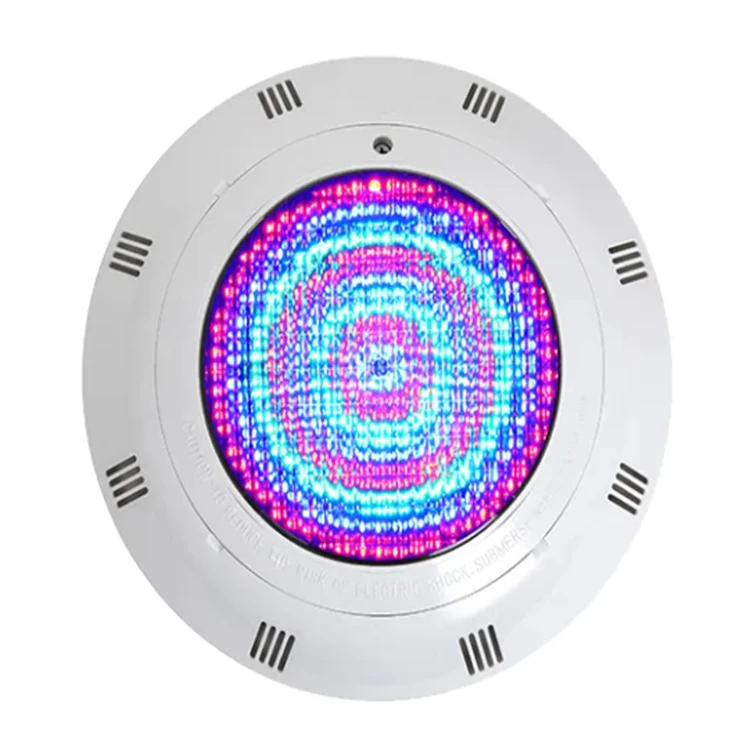
To completely avoid early failure caused by water ingress, high-performance wall-mounted RGB LED underwater pool lights adopt industry-leading multi-layer composite waterproof technology, abandoning the single-layer sealing structure of traditional products. The product adopts double mechanical compression sealing + internal full glue filling potting process to form a three-dimensional waterproof barrier system. The high-elasticity anti-aging sealing gasket is used for the fitting gap between the lens and the shell, which can adapt to the thermal expansion and cold contraction of the lamp body, always maintain a tight fitting state, and avoid gap water absorption caused by temperature difference.
The internal full glue filling process completely wraps the PCB circuit board, LED chip and all electronic components in waterproof glue, which can completely isolate pool water, water vapor and chemical corrosive liquid. Different from ordinary hollow sealed lights, this full encapsulation structure has no internal air cavity, fundamentally eliminates the negative pressure water absorption phenomenon caused by temperature difference alternation, and truly realizes IP68 permanent submersible waterproof grade. It can operate stably in deep water for many years, resist the erosion of chlorine-containing pool water, and completely avoid short-circuit failure caused by water ingress.
High-Grade Anti-Aging Materials: Resist Corrosion and Delay Performance Degradation
Aiming at the problem of material aging and chemical corrosion failure, this professional underwater pool light selects industrial-grade high-durability materials in an all-round way. The main lamp body is made of high-performance modified PBT engineering plastic, which has super anti-UV aging, anti-chlorine corrosion and anti-brittle cracking properties. Compared with ordinary ABS plastic, PBT material can maintain stable mechanical strength and structural tightness after long-term immersion in chemical pool water, no cracking, no deformation, no discoloration.
The front light-transmitting lens adopts high-impact high-transparency PC material, which has excellent scratch resistance, yellowing resistance and light transmittance stability. It can effectively resist the erosion of pool disinfectants and long-term water flow impact, maintain high light transmittance for a long time, avoid light attenuation caused by lens fogging and yellowing, and ensure consistent and uniform lighting effect throughout the product life cycle. All structural parts are free of rust-prone metal materials, completely eliminating hidden dangers of rust corrosion and structural failure, and greatly improving the environmental adaptability and service stability of the product.
Optimized Passive Heat Dissipation System: Control Light Decay and Extend Service Life
In view of the heat dissipation pain point that leads to rapid light decay of traditional pool lights, this product is equipped with a scientific passive heat dissipation structure. The high-density LED lamp bead array is matched with a targeted heat conduction and dissipation design. The heat generated by the chip during operation can be quickly and evenly transferred to the overall lamp body structure, and efficiently dissipated through the contact heat conduction between the shell and pool water, avoiding internal heat accumulation and local overheating of the chip.
The optimized thermal management system controls the long-term operating temperature of the LED chip within the safe and efficient range, effectively slows down the phosphor aging speed and luminous attenuation rate. The product's rated service life reaches 50,000 working hours, and the long-term light decay is controlled within the industry's optimal range. Compared with ordinary pool lights with rapid brightness fading, this high-performance LED pool light can maintain more than 90% of the initial brightness after years of continuous operation, completely avoiding early dimming and lighting effect degradation, and realizing long-term stable lighting output.
Safe Wall-Mounted Installation and Low-Voltage Design: Eliminate Artificial Failure Risks
Different from the traditional embedded niche installation mode with hidden dangers, this underwater pool light adopts innovative wall-mounted direct installation design, no need for pre-embedded niche, which solves the problems of water accumulation and damp corrosion of the embedded structure from the source. The matched fixed mounting bracket fits closely with the pool wall, with firm installation and no deformation, ensuring the long-term stability of the lamp body sealing structure and avoiding sealing gaps caused by loose installation.
The product adopts safety extra-low voltage design, equipped with professional three-core grounding power cord, which complies with international underwater electrical safety standards. The stable low-voltage operating environment avoids voltage surge and current instability problems, effectively prevents chip and circuit burnout caused by electrical abnormalities, and eliminates early failure induced by power supply problems. The standardized and simplified installation method avoids structural damage and wiring errors caused by non-standard construction, further guarantees the long-term stable operation of the product, and reduces manual maintenance and replacement costs.
Practical Value and Purchase Advantage of Anti-Failure Underwater Pool Lights
Long-Term Cost Savings: Reduce Frequent Replacement and Maintenance
The core value of selecting high-performance anti-failure underwater pool lights lies in long-term cost optimization. Although ordinary low-cost pool lights have low single purchase cost, they are prone to early failure within 1–3 years, requiring frequent replacement parts and professional maintenance. For commercial pool venues, the cumulative replacement and maintenance costs in 5 years are far higher than the purchase cost of high-quality lamps. This professional IP68 waterproof pool light relies on excellent anti-failure performance and 50,000-hour long service life, which can realize stable operation for more than 8 years in daily use, almost zero maintenance in the whole life cycle, and greatly reduce the later operation and maintenance pressure and comprehensive cost.
Stable Lighting Effect: Maintain Long-Term Pool Nightscape Presentation
Early failure of pool lights is often accompanied by gradual light decay, color cast and uneven light output, which makes the pool nightscape dim and disordered and loses decorative effect. This high-quality RGB color-changing pool light maintains ultra-low light attenuation and stable color output through professional heat dissipation and anti-aging design. Multiple dynamic lighting modes such as gradient color change, flash and static monochrome can operate stably for a long time, always presenting brilliant and uniform underwater lighting effects, maintaining the high-end nightscape texture of swimming pools, spas and fountains, and bringing lasting and comfortable visual experience and swimming experience to users.
Universal Applicability: Adapt to Diverse Scenario Requirements
With its comprehensive anti-failure performance and safe and convenient design, this underwater LED pool light is widely applicable to all kinds of underwater lighting scenarios. It is not only suitable for daily lighting and atmosphere decoration of household private swimming pools, but also meets the long-term stable operation requirements of high-frequency use scenarios such as commercial swimming pools, hotel spas, scenic landscape fountains and water parks. Whether it is new pool construction or old pool renovation and lighting upgrade, it can perfectly adapt, eliminate the hidden danger of early failure in subsequent use, and realize one-time investment and long-term stable return.
Summary and Professional Selection Suggestions
The early failure of underwater swimming pool lights is not an accidental product quality problem, but an inevitable result of unprofessional structural design, inferior material selection, defective heat dissipation technology and non-standard installation. Waterproof sealing failure, material chemical corrosion, thermal accumulation light decay and electrical safety abnormalities are the four core root causes of early light failure. To fundamentally avoid this problem, users must abandon the low-cost selection concept of only focusing on initial price, and take waterproof grade, sealing process, material quality, heat dissipation design and safety configuration as the core selection standards.
High-performance wall-mounted IP68 RGB LED underwater pool lights solve the industry pain points of early failure from the source through multi-layer composite waterproof structure, high-grade anti-corrosion aging-resistant materials, optimized heat dissipation system and safe installation design. It has absolute advantages in service life stability, lighting effect durability, environmental adaptability and later maintenance cost control. For all users who pursue long-term stable operation, low maintenance cost and high-quality nightscape effect, this anti-failure professional underwater pool light is the most cost-effective and reliable lighting solution, which can completely solve the trouble of early failure of pool lights and create a lasting and beautiful underwater lighting environment.
How To Cooperate With Us?
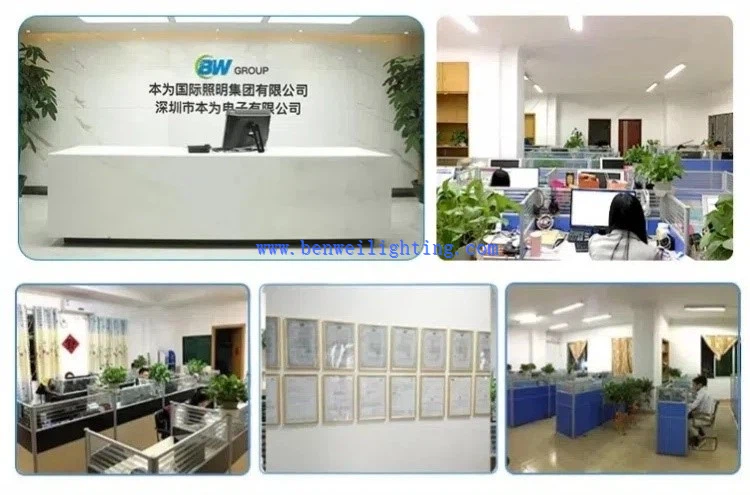
We are happy to have total control over the manufacturing process and the calibre of our products since we have our own facilities. Since we are producers rather than just brokers, we are dedicated to providing our customers with the best pricing. Since we are certain that the price and quality of our products are clear, we invite customers to see our samples first. Our commitment to quality and customer satisfaction drives us to continuously provide top-notch goods.
Our address
3rd Floor, 5th Building, Hebei Industrial Park, Hualian Community, Longhua District, Shenzhen, China





