

Introduction: The Hidden Cost of Rapid Light Loss in Bulk LED Procurement
The Misunderstanding of Traditional Commercial LED Procurement
In the commercial lighting bulk procurement market, most purchasers traditionally focus excessively on initial luminous flux, unit price, and basic energy-saving data while ignoring the core indicator oflumen maintenance rate. Many low-priced generic LED bulbs boast high initial brightness and ultra-low procurement costs, but they suffer from severe light attenuation after 1,000 to 3,000 hours of operation. The brightness drops sharply by 30% or even more, resulting in dim lighting spaces, uneven illumination, and failure to meet industrial and commercial lighting standards. This typical "low upfront cost, high later loss" procurement trap has become a common pain point for enterprise lighting renovation and batch replacement projects.
Most buyers judge LED bulb quality only by nominal service life data marked on product labels, ignoring the difference between theoretical lifespan and actual working lifespan. The nominal 30,000-hour or 50,000-hour lifespan of ordinary low-quality LED bulbs is often measured under ideal laboratory conditions, which cannot adapt to complex industrial environments such as high temperature, dust accumulation, humidity, and voltage fluctuation. Once put into actual commercial operation, rapid light loss will trigger a series of subsequent problems, completely offsetting the initial cost advantages of low-priced products.
Practical Hazards of Uncontrolled Rapid Light Loss
Rapid light loss of bulk commercial LED bulbs brings multi-dimensional economic and operational losses to enterprises, which are far more serious than short-term procurement savings. First, frequent brightness attenuation leads to inconsistent lighting effects in large spaces, affecting workplace visibility and operational safety, and even reducing work efficiency in factory workshops and warehousing sorting areas. Second, accelerated light decay shortens the actual service life of bulbs, greatly increasing the frequency of batch replacement and manual maintenance costs, and consuming more human and material resources for enterprise facility management. Third, severely attenuated LED bulbs will increase operating power consumption indirectly. Dim lighting forces enterprises to increase auxiliary lighting or replace lamps in advance, resulting in higher long-term electricity and renewal costs. In addition, unstable lighting quality will affect the overall environmental grade of supermarkets, stores and other commercial venues, reducing customer experience and indirectly damaging business benefits.
The Necessity of Professional Anti-Light-Decay Procurement Standards
With the continuous upgrading of commercial lighting energy-saving renovation standards, the industry has shifted from "initial high brightness" to "long-term stable luminous performance". Professional bulk procurement must take lumen depreciation control as the core evaluation index, establish a complete set of screening standards covering chip quality, heat dissipation structure, driving system, protection grade and structural design. Only by fundamentally solving the problem of rapid light loss can enterprises truly realize low-maintenance, high-efficiency and long-life lighting operation, and achieve sustainable cost reduction and efficiency improvement. High-performance sealed LED T-bulbs, which adopt industrial-grade anti-attenuation design, have become an optimal solution for bulk commercial lighting procurement due to their excellent light decay control capability and environmental adaptability.
Core Technical Causes of Rapid Light Loss in Commercial LED Bulbs
Excessive Operating Temperature: The Primary Killer of LED Light Decay
Thermal accumulation is the most fundamental cause of rapid lumen depreciation of LED bulbs. LED chips will generate continuous heat during electro-optical conversion; if the heat cannot be dissipated in time, the core temperature of the chip will rise sharply, triggering accelerated aging of the chip phosphor layer and internal electronic components, resulting in irreversible brightness decline. According to industrial lighting test data, for every 10°C increase in the core working temperature of an LED chip, the lumen maintenance rate will decrease significantly, and the light decay speed will increase exponentially.
Most low-cost commercial LED bulbs on the market adopt thin and simplified heat dissipation structures, such as ordinary plastic shells and ultra-thin aluminum substrates with poor thermal conductivity. These structures have small heat exchange areas and low heat conduction efficiency, which cannot cope with long-term continuous operation in high-load commercial scenarios (10–16 hours of daily lighting). A large amount of heat accumulates inside the lamp body, forming a high-temperature closed environment, which continuously erodes the LED chip and accelerates light loss. In contrast, high-quality industrial-grade LED T-bulbs are equipped with aviation aluminum heat sinks and optimized ribbed heat dissipation structures, which greatly expand the heat dissipation area, realize rapid heat conduction and air convection heat dissipation, and keep the chip working temperature within a safe and stable range, fundamentally suppressing thermal-induced light decay.
Inferior Chip and Phosphor Layer Materials
The quality of LED chips and phosphor layers directly determines the inherent anti-light-decay performance of bulbs. Low-priced bulk LED products usually use low-grade refurbished chips and inferior phosphor materials. These chips have uneven wafer quality, poor current stability, and low high-temperature resistance. Under long-term constant-current operation, the luminous efficiency decays rapidly, and the phosphor layer is prone to aging, yellowing and failure, resulting in decreased light transmittance, color shift and continuous brightness loss.
Regular high-performance commercial LED bulbs adopt high-luminosity original imported LED chips and high-stability phosphor layers, with precise wafer cutting and packaging technology. The chips have high electro-optical conversion efficiency, strong temperature resistance and stable luminous performance. After long-term operation, the phosphor layer will not age and fail easily, ensuring slow and controllable lumen attenuation. This inherent material advantage is the basic guarantee for long-term stable lighting and is also the core difference between high-quality industrial LED bulbs and ordinary civilian low-end products.
Unstable Driving Power and Current Fluctuation
The driving power supply is the "core control system" of LED bulbs, and its stability directly affects the service life and light decay rate of lamps. Most inferior commercial LED bulbs use low-cost non-isolated driving power supplies with simple circuit design and no over-current, over-voltage and over-temperature protection mechanisms. In commercial power supply environments, grid voltage often has instantaneous fluctuation and surge interference. Unstable current and voltage will cause frequent impact on LED beads, resulting in abnormal chip operation, accelerated aging and rapid light loss.
In addition, inferior driving power supplies have poor constant-current accuracy, which cannot maintain stable current output. Long-term over-current operation will overload the LED chips, greatly shortening the attenuation cycle. High-quality industrial LED T-bulbs are equipped with high-precision constant-current isolated driving power supplies, with built-in multi-protection mechanisms of over-voltage, under-voltage, over-current and over-temperature. They can resist grid voltage fluctuation and instantaneous surge impact, ensure constant and stable current output of the lamp beads, avoid chip damage caused by electrical instability, and effectively delay lumen depreciation speed.
Poor Sealing Performance and Environmental Corrosion Damage
Commercial lighting scenarios such as factories, warehouses and garages are usually accompanied by dust, moisture, insect erosion and other complex environmental factors. Ordinary LED bulbs adopt semi-open or simple sealing structures, with poor dust-proof and moisture-proof capabilities. Dust and water vapor easily penetrate into the lamp body, adhere to the chip and circuit board surface, cause component oxidation, corrosion and short circuit hidden dangers, and damage the luminous performance of the lamp beads, resulting in accelerated light decay and even lamp failure.
Insect entering the lamp body will also block the heat dissipation channel and cause local heat accumulation, further aggravating light loss. High-performance sealed LED T-bulbs adopt an integrated fully sealed cylindrical structure, with excellent dust-proof, moisture-proof and insect-proof capabilities. The closed lamp body completely isolates external dust, water vapor and tiny organisms, protects internal chips, driving power and circuit components from environmental corrosion, maintains stable internal working environment, and eliminates light decay and failure problems caused by environmental factors.
Professional Procurement Strategies to Avoid Rapid LED Light Loss
Prioritize Lumen Maintenance Data Over Nominal Lifespan
Most purchasers easily fall into the trap of "nominal lifespan data". In fact, the L70 lumen maintenance rate is the most authoritative index to judge LED light decay performance, which refers to the working time when the LED bulb brightness decays to 70% of the initial luminous flux, and is the industry standard for measuring the effective service life of lamps. Ordinary low-quality LED bulbs only have a theoretical lifespan of 30,000 hours, but their L70 maintenance time is less than 15,000 hours, with extremely fast light decay. High-quality industrial-grade LED bulbs can achieve L70 lumen maintenance for more than 25,000 hours, with the light attenuation controlled within 30% after long-term operation, and the actual effective service life far exceeds that of ordinary products.
In bulk procurement, purchasers must abandon the single judgment standard of nominal lifespan and require manufacturers to provide LM-80 professional test reports and TM-21 extrapolation data. These third-party certification data can truly reflect the long-term light decay performance of products, avoid exaggerated marketing of theoretical parameters, and ensure that the purchased bulbs have stable luminous performance in actual commercial operation.
Strictly Screen Heat Dissipation System Configuration
Heat dissipation performance determines the long-term light decay stability of LED bulbs, so heat dissipation structure configuration must be strictly checked in procurement. First, priority should be given to products with aviation aluminum heat sinks and thickened thermal substrates. Aviation aluminum has high thermal conductivity, fast heat conduction speed and good high-temperature resistance, which can quickly export core heat. Second, optimized ribbed heat dissipation structure should be selected to increase the heat dissipation contact area and form efficient air convection, avoiding heat accumulation inside the lamp body.
It is necessary to avoid purchasing products with full plastic heat dissipation shells and ultra-thin aluminum substrates. Although these products have low cost, their heat dissipation efficiency is extremely poor, and they will face serious light decay after long-term high-load operation. For large-space commercial and industrial scenarios with long-term lighting demand, excellent heat dissipation system is the core guarantee to suppress rapid light loss and extend the overall service life of lamps.
Verify Driving Power Stability and Protection Mechanism
Stable driving system is the key to avoid abnormal light decay caused by electrical fluctuation. In bulk procurement, isolated constant-current driving power supplies must be selected, and non-isolated low-cost driving products are completely eliminated. Isolated driving power supplies have strong anti-interference ability, which can effectively isolate grid voltage fluctuation and surge impact, and maintain constant current output.
At the same time, it is necessary to confirm that the product is equipped with complete over-voltage, under-voltage, over-current and over-temperature protection mechanisms. When the working environment is abnormal, the power supply will automatically adjust the operating state to avoid chip overload damage. High-precision constant-current drive can ensure that the LED beads work in a safe and stable state for a long time, reduce the aging rate of components, and effectively delay lumen depreciation.
Focus on Sealing Protection Grade and Environmental Adaptability
Commercial industrial lighting environments are complex and changeable, and excellent sealing protection performance can avoid environmental-induced light decay and lamp failure. Bulk procurement should prioritize products withintegrated sealed structure and high dust-proof and moisture-proof grade. The fully enclosed lamp body can completely block external dust, water vapor and insects, protect internal precision electronic components, and prevent light decay caused by component corrosion and heat dissipation channel blockage.
For humid warehouses, dusty factory workshops and other harsh scenarios, sealed LED bulbs are far more stable than ordinary open-structured bulbs. Their strong environmental adaptability ensures that the luminous performance will not deteriorate rapidly due to environmental interference, maintaining long-term consistent lighting effect and reducing maintenance replacement frequency.
Product Case: High-Performance Sealed LED T-Bulb Anti-Light-Decay Advantages
Core Structural Design for Ultra-Low Light Decay
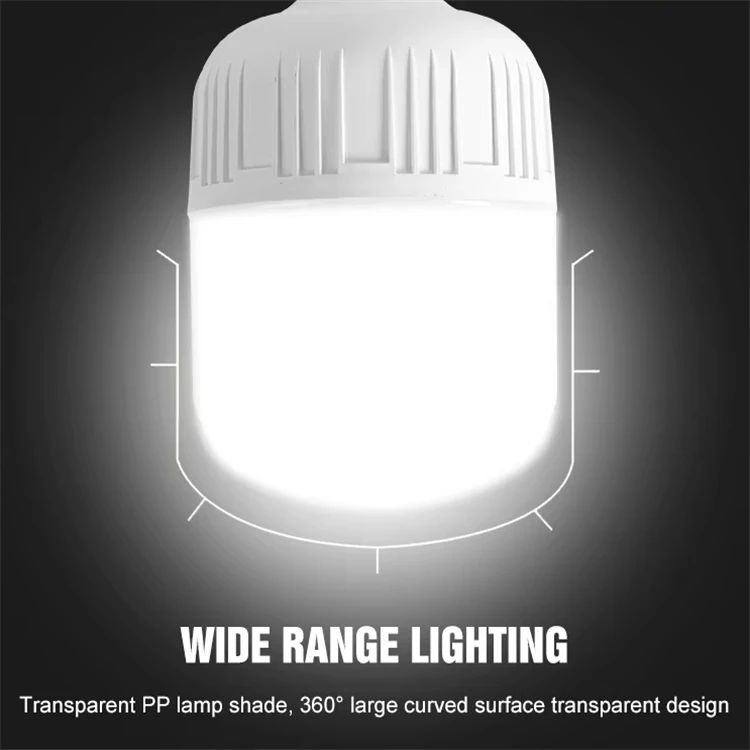
The industrial-grade sealed LED T-bulb is specially optimized for the pain points of rapid light loss in commercial bulk procurement, and realizes full-link control of lumen attenuation through structural upgrading and material optimization. The product adopts an integrated sealed cylindrical overall structure, matched with high-transmittance PP lampshade and aviation aluminum heat sink, forming a dual advantage of efficient heat dissipation and full environmental protection. The aviation aluminum thickened heat dissipation substrate and ribbed heat dissipation shell greatly expand the heat exchange area, realize rapid conduction and diffusion of internal heat, keep the core chip working temperature in a safe range at all times, and fundamentally suppress thermal aging and light decay of chips.
Different from the split structure of ordinary LED bulbs, the integrated sealing design eliminates assembly gaps, completely isolates dust, moisture and insects, ensures that the internal working environment is clean and stable, avoids component aging and light loss caused by environmental corrosion, and greatly improves the long-term stability of luminous performance.
Professional Light Decay Data and Lifespan Performance
This LED T-bulb has passed professional LM-80 light decay testing and TM-21 data extrapolation certification, with ultra-stable lumen maintenance performance. The rated service life reaches 30,000 hours, and the lumen depreciation is strictly controlled within 30% after 25,000 hours of continuous operation. Compared with ordinary commercial LED bulbs which decay 30% brightness within 3,000 hours, its anti-light-decay ability is improved by more than 8 times. In actual commercial operation, the product can maintain more than 70% of the initial brightness for a long time, avoid sharp brightness decline in the middle and later service period, and realize long-term stable lighting effect.
In terms of long-term operation data, the product has a flat light decay curve, no sudden failure and rapid dimming phenomenon, and the failure rate is far lower than the industry average. It can effectively reduce the batch replacement frequency of enterprise lighting equipment, cut maintenance labor costs and material renewal costs, and bring stable and long-term return on investment for bulk purchasers.
Stable Drive System and Eye-Catching Luminous Performance
Equipped with high-precision constant-current isolated driving power supply, this LED T-bulb has strong voltage resistance and anti-fluctuation ability, which can adapt to unstable grid voltage in industrial and commercial environments. It maintains flicker-free and stroboscopic-free stable light output for a long time, not only protects human eyesight and reduces visual fatigue of long-term workers, but also avoids chip damage and light decay caused by current and voltage impact.
The optimized high-transmittance PP lampshade realizes 360° omnidirectional uniform lighting, with soft and even light distribution, no local dark areas, and high space lighting uniformity. While ensuring high luminous efficiency, it avoids local overheating of light beads caused by uneven light emission, further optimizing the long-term anti-light-decay performance of the product.
High Energy-Saving and Low-Maintenance Comprehensive Benefits
While achieving ultra-low light decay, this sealed LED T-bulb has excellent energy-saving performance, with energy conversion efficiency 80% higher than traditional incandescent lamps, which can greatly reduce the long-term lighting power consumption of enterprises. Its universal E27 screw base supports direct installation without complex wiring and transformation, which is convenient for batch replacement and old lighting renovation of factories, warehouses, supermarkets and other scenarios.
The product has no mercury and harmful heavy metals, no ultraviolet and infrared radiation, and meets global green lighting standards. It has low failure rate and stable overall performance, which can effectively solve a series of problems such as rapid light loss, frequent replacement and high maintenance cost of traditional commercial LED bulbs, and is the most cost-effective and stable lighting solution for bulk commercial procurement.
Conclusion: Establish a Long-Term Value-Oriented Procurement System
Rapid light loss of bulk commercial LED bulbs is a comprehensive problem caused by material defects, structural deficiencies, unstable driving system and environmental adaptability differences. For commercial lighting bulk purchasers, abandoning low-price and short-sighted procurement concepts and establishing a long-term value-oriented procurement system with light decay control as the core is the key to reducing operating costs and improving lighting quality.
Professional bulk procurement needs to take L70 lumen maintenance rate, LM-80 test data, heat dissipation system configuration, driving stability and sealing protection grade as the core evaluation indicators, completely eliminate low-quality products with rapid light decay, and select industrial-grade high-stability LED lighting products. The sealed LED T-bulb analyzed in this paper solves the industry pain point of rapid light loss through full-dimensional technical optimization, with excellent long-term luminous stability, ultra-low attenuation rate and low maintenance cost. It can help enterprises realize long-term stable operation of commercial lighting, maximize lighting investment value, and is the preferred high-quality choice for modern industrial and commercial large-scale lighting procurement and renovation projects.
How To Cooperate With Us?
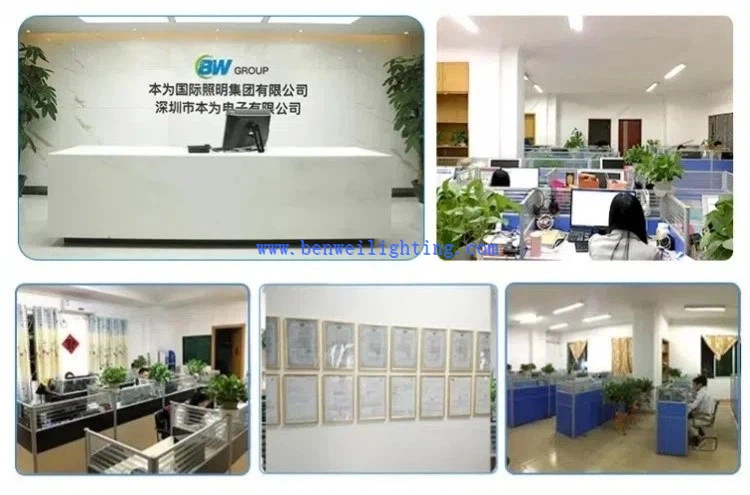
Since we have our own facilities, we are pleased to have complete control over the production process and the quality of our goods. We are committed to giving our clients the finest prices since we are manufacturers rather than just brokers. We encourage buyers to see our samples first since we are certain that the cost and calibre of our items are transparent. Our dedication to excellence and client happiness motivates us to consistently provide superior products.
Our address
3rd Floor, 5th Building, Hebei Industrial Park, Hualian Community, Longhua District, Shenzhen, China





