

Introduction: The Core Pain Point of Commercial Lighting Project Procurement
The Hidden Loss Caused by High Light Decay Lighting Products
In commercial lighting engineering procurement, most purchasers traditionally focus on superficial parameters such as lamp power, lumen value, and IP protection grade, while ignoring the key hidden indicator of light decay speed. Different from household lighting, commercial LED cast lights usually work continuously for 8–12 hours a day, and the annual working time exceeds 3,000 hours. For large-scale commercial projects with a service cycle of 3–5 years, high light decay lamps will face obvious performance degradation within 1–2 years of operation. Typical problems include gradual dimming brightness, inconsistent luminous uniformity, reduced lighting coverage, and even local dark areas, which seriously affect the overall aesthetic effect and functional lighting requirements of commercial venues.
More importantly, high light decay LED cast lights bring huge invisible economic losses to commercial projects. After the brightness drops significantly, the project party needs to increase the number of lamps or replace the whole batch of equipment to maintain the lighting standard, which greatly increases the later maintenance labor cost, material cost, and project operation cost. In addition, frequent equipment failure and brightness attenuation will affect the overall image of commercial buildings and scenic spots, resulting in indirect economic losses that are difficult to quantify.
The Necessity of Low Light Decay LED Cast Lights for Commercial Projects
Low light decay LED cast lights refer to professional lighting fixtures that adopt high-quality light source chips, optimized heat dissipation structure, and stable drive system, with extremely slow luminous flux attenuation speed. Different from ordinary civilian LED lights with severe light decay, qualified low light decay commercial cast lights can maintain more than 70% of the initial luminous brightness after long-term continuous operation, and the service life is far higher than ordinary products. For commercial lighting projects pursuing long-term stability, low maintenance, and high cost performance, low light decay performance is no longer an optional advantage but a core rigid indicator for project acceptance and long-term operation.
With the continuous upgrading of commercial lighting industry standards and the increasingly strict engineering acceptance specifications, low light decay, long-life, and high-stability LED cast lights have become the mainstream choice for high-end commercial projects, municipal supporting lighting, and scenic spot landscape lighting, completely replacing traditional halogen lamps and inferior ordinary LED flood lights.
Professional Definition and Technical Principle of LED Light Decay
Standard Definition of LED Light Decay
LED light decay, namely luminous flux depreciation, refers to the phenomenon that the luminous brightness of LED lamps gradually decreases with the extension of working time under rated working conditions. The industry universally adopts the L70 light decay standard as the core evaluation basis: when the luminous flux of the lamp decays to 70% of the initial factory luminous flux, the cumulative working time is the effective service life of the lamp. For commercial lighting products, low light decay is defined as that after 50,000 hours of rated operation, the luminous flux retention rate is not less than 70%, and the annual light decay rate is controlled within 3%.
In contrast, inferior ordinary LED cast lights often have an annual light decay rate of more than 8%, and the brightness drops to less than 60% of the initial value after 1–2 years of use, which cannot meet the long-term operation requirements of commercial projects.
Core Technical Causes of LED Light Decay
The light decay of LED cast lights is not caused by a single factor, but is the result of the joint action of light source chips, heat dissipation system, drive power supply, and assembly process. The core influencing factors are divided into three categories, which are also the key technical breakthrough points of low light decay products.
First, chip quality and packaging technology. Inferior LED chips have uneven wafer quality and low luminous efficiency, and the light-emitting area is prone to aging and carbonization after long-term high-power operation, resulting in rapid luminous attenuation. Unqualified packaging glue is easy to yellow and age under long-term light and high temperature irradiation, blocking light output and accelerating light decay.
Second, heat dissipation performance defects. High-power LED chips will generate a lot of heat during operation. If the lamp body heat dissipation structure is unreasonable and the heat conduction and heat dissipation speed is slow, the long-term high-temperature working state will cause irreversible aging of the chip and internal electronic components, which is the primary cause of rapid light decay of most LED cast lights.
Third, unstable drive power supply. The unqualified constant current drive system cannot stabilize the output current and voltage. The frequent current surge and voltage fluctuation will impact the LED chips for a long time, resulting in chip fatigue damage, reduced luminous efficiency, and accelerated light decay and failure.
Core Selection Standards for Low Light Decay LED Cast Lights for Commercial Projects
High-Grade LED Chip Configuration: The Foundation of Low Light Decay
The LED chip is the core light-emitting component of the cast light, and its quality directly determines the light decay speed and service life of the product. Excellent low light decay commercial cast lights must adopt high-lumen integrated high-quality LED beads, with pure wafer, uniform light emission, and stable photoelectric performance. Different from ordinary fragmented beads, integrated beads have better heat concentration control ability, lower thermal resistance, and will not produce local overheating and local light decay during long-term operation.
High-quality chips have strict luminous flux consistency screening before leaving the factory, with a single bead luminous efficiency of up to 180lm/W, which ensures high brightness output while effectively controlling the light decay rate. After long-term continuous lighting, the luminous uniformity remains stable, without local dimming and color difference, fully meeting the high-standard lighting effect requirements of commercial building facades, landscape plazas, and large parking lots.
Optimized Heat Dissipation System: The Key to Suppressing Light Decay
Heat accumulation is the biggest killer of LED light source aging and light decay. Professional low light decay LED cast lights adopt high-density die-cast aluminum heat dissipation housing and optimized internal heat dissipation channel structure. The high-purity aluminum material has ultra-high thermal conductivity, which can quickly export the heat generated by the LED chip to the entire lamp body surface, and realize rapid heat dissipation through air convection, avoiding long-term high-temperature baking of the chip.
Different from thin and light ordinary aluminum shells on the market, the commercial-grade heat dissipation structure adopts thickened heat dissipation fins and integrated forming process, which increases the heat dissipation area by more than 40%. It can maintain efficient heat dissipation efficiency even in high-temperature outdoor environments in summer, control the chip working temperature within a safe range, fundamentally suppress thermal aging and luminous attenuation, and greatly delay the light decay speed.
Stable Constant Current Drive System: Guarantee of Long-Term Stable Luminous
Excellent light source and heat dissipation structure need to be matched with a high-quality drive system to realize low light decay performance. Professional low light decay LED cast lights are equipped withintelligent constant current drive power supply, which has over-voltage protection, over-current protection, short-circuit protection, and surge resistance functions. It can automatically adjust the output current and voltage according to the power supply fluctuation and working environment, ensure that the LED chips work in a stable rated state for a long time, and avoid chip damage and light decay acceleration caused by current surge and voltage instability.
The high-quality drive power supply has a wide voltage adaptation range, which can adapt to the unstable power supply environment of commercial outdoor engineering sites. It eliminates the stroboscopic phenomenon of lamps, realizes instant full brightness startup without warm-up delay, ensures continuous and stable luminous output, and effectively extends the effective service life of the light source.
High-Transmittance Optical Lampshade: Reduce Secondary Light Loss
Many purchasers ignore the influence of lampshade materials on long-term luminous efficiency. Inferior plastic lampshades are easy to age, yellow, and fog after long-term ultraviolet irradiation and wind and rain erosion, resulting in reduced light transmittance and artificial "light decay" phenomenon. Professional low light decay commercial cast lights adopt high-transmittance PC optical lampshade, which has anti-aging, anti-yellowing, and anti-ultraviolet properties.
This high-performance lampshade can maintain a light transmittance of more than 92% for a long time, effectively reduce light refraction and scattering loss, maximize the output of effective luminous flux, and avoid the gradual dimming of lighting effect caused by the aging of the lampshade. While ensuring uniform and soft light emission, it maintains long-term luminous efficiency stability, and assists the light source to realize real low light decay operation.
Auxiliary Performance Matching of Low Light Decay Commercial LED Cast Lights
IP66 High-Level Protection: Adapt to Complex Commercial Outdoor Environments
Commercial lighting projects are mostly in open-air outdoor environments, facing the erosion of rainwater, dust, humidity, and salt spray. Poor environmental protection performance will lead to internal circuit dampness, dust accumulation, and component aging, which indirectly aggravate light decay and equipment failure. High-quality low light decay LED cast lights are equipped with standard IP66 waterproof and dustproof grade (complying with IEC 60529 international standard).
The first digit 6 of IP66 means complete dust tightness, no dust can penetrate into the lamp body, avoiding dust covering the chip and light source channel to cause light efficiency loss and heat dissipation blockage. The second digit 6 means it can resist high-pressure water jet impact from all directions, fully adapting to heavy rain washing, outdoor water cleaning, and humid coastal environments. The overall sealed assembly structure with anti-rust and anti-corrosion fasteners prevents internal component aging caused by environmental erosion, ensures the long-term stable operation of low light decay performance, and reduces abnormal light decay caused by environmental factors.
Ultra-Long Service Life: Verify Low Light Decay Core Advantages
Low light decay performance is the core premise of ultra-long service life of LED cast lights. Professional commercial-grade low light decay cast lights have a rated service life of more than 50,000 working hours, which is 3–5 times that of ordinary LED flood lights and 10 times that of traditional halogen lamps. Under standard daily working conditions, the service cycle can reach more than 5 years.
Based on the L70 industry standard, this product can still retain more than 70% of the initial luminous flux after 50,000 hours of operation, with an extremely low annual light decay rate. It avoids the frequent replacement and maintenance problems caused by rapid brightness attenuation of ordinary lamps, greatly reduces the post-operation and maintenance cost of commercial projects, and provides stable long-term lighting guarantee for large-scale commercial projects.
Flexible Installation and Multi-Scene Adaptation
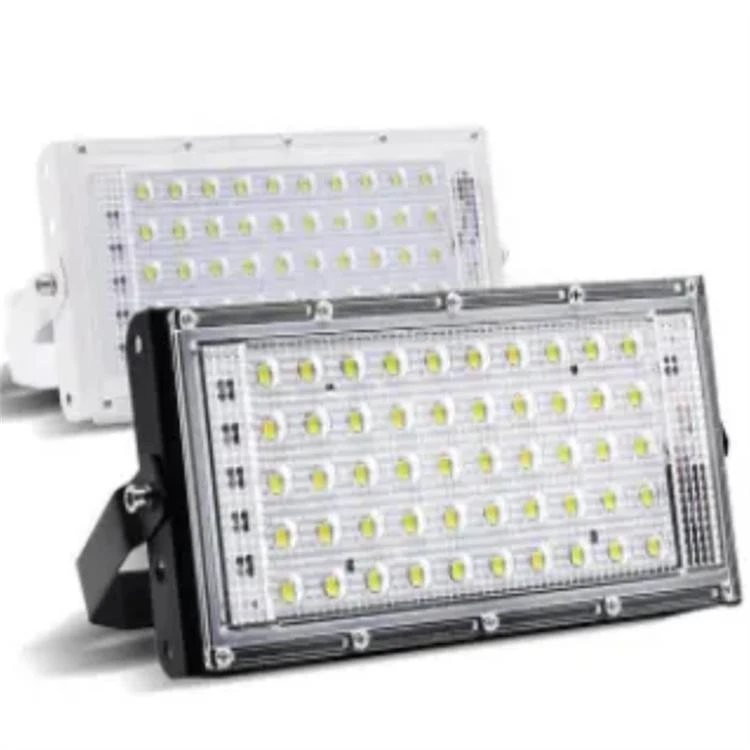
Commercial lighting projects have diverse scene requirements, and low light decay LED cast lights need to match flexible application performance. This professional cast light is equipped with a 180° adjustable rotating bracket, which can freely adjust the lighting projection angle according to the installation height and lighting coverage requirements of commercial scenarios, realizing precise targeted lighting and wide-area flood lighting.
At the same time, it supports five optional light colors: white light, warm yellow light, blue light, green light, and red light, which can meet the functional lighting needs of parking lots, warehouses, and plazas, as well as the decorative lighting needs of building facades, scenic spots, and holiday landscape lighting. The dual-color housing design of black and white can be perfectly matched with various commercial building styles and landscape styles, with strong scene compatibility.
Economic Value and Project Benefits of Low Light Decay LED Cast Lights
Reduce Long-Term Operation and Maintenance Costs
For commercial lighting projects, the total cost of equipment includes not only the initial procurement cost, but also the later maintenance cost, replacement cost, and power consumption cost. Although the initial procurement cost of low light decay high-quality LED cast lights is slightly higher than that of inferior products, it can bring huge cost savings in the whole life cycle. Its ultra-low light decay rate avoids batch replacement of lamps caused by brightness attenuation, reduces the labor cost and material loss of frequent maintenance, and greatly improves the overall economic benefit of the project.
Improve Project Lighting Quality and Compliance
High-quality low light decay LED cast lights maintain stable luminous brightness and uniform lighting effect for a long time, which can always meet the national commercial lighting engineering acceptance standards and scene lighting design requirements. There will be no unqualified acceptance problems caused by later light decay and brightness decline, ensuring the smooth delivery and long-term stable operation of commercial projects, and improving the professional grade and market reputation of engineering projects.
Energy Saving and Environmental Protection, In line with Commercial Green Building Standards
Low light decay LED cast lights have ultra-low power consumption and high luminous efficiency, which can save more than 70% of electric energy compared with traditional halogen lamps. They have no stroboscopic, no ultraviolet and infrared radiation, no harmful substances such as mercury, which meet international green environmental protection standards. While realizing energy saving and emission reduction for commercial buildings, they create a healthy and comfortable lighting environment, conforming to the current green building and low-carbon commercial development trend.
Common Procurement Pitfalls and Avoidance Strategies
Avoid Blindly Pursuing High Power and Ignoring Light Decay Parameters
Many purchasers mistakenly believe that the higher the power, the better the lighting effect, and ignore the core light decay index. In fact, high-power inferior lamps often have faster heat accumulation and more serious light decay. When purchasing, we should take luminous efficiency and L70 light decay life as the core evaluation index, not just power parameters.
Reject Exaggerated False Parameter Marking
Many inferior products on the market falsely mark the service life and light decay parameters. Professional commercial procurement should focus on product quality certification and real test data, select products with formal warranty service, and avoid choosing cheap inferior products with false parameters to prevent project losses.
Pay Attention to the Matching of Overall Structural Performance
Low light decay performance is the result of the coordination of chips, heat dissipation, drive, and protection structure. A single excellent parameter cannot represent the overall low light decay capability of the product. It is necessary to comprehensively evaluate the product's comprehensive configuration to ensure that all core components are matched and avoid performance bottlenecks caused by single defect.
Conclusion
In the field of modern commercial lighting engineering, low light decay has become the core standard to measure the comprehensive quality of LED cast lights, and is also the key factor to determine the long-term operational stability and economic benefit of the project. Excellent low light decay LED cast lights rely on high-quality LED chips, efficient heat dissipation system, stable drive technology, and high-standard protection performance, which can effectively suppress luminous flux attenuation, maintain long-term high-brightness and uniform lighting effects, and have ultra-long service life and low maintenance costs.
For commercial lighting project procurement and engineering design, abandoning the traditional single parameter selection mode and taking low light decay performance as the core selection standard can effectively avoid various hidden dangers in project operation, reduce full-cycle operation costs, improve project lighting quality and compliance, and create higher long-term value for commercial lighting projects. This professional low light decay LED cast light, with its comprehensive and excellent technical performance, is the most cost-effective and reliable long-term lighting solution for various commercial outdoor lighting projects.

How To Cooperate With Us?
Because we have our own facilities, we are pleased to have complete control over the production process and the quality of our goods. We are committed to giving our clients the finest prices since we are manufacturers rather than just brokers. We encourage clients to look at our samples first since we are certain that the cost and quality of our items are transparent. Our dedication to excellence and client happiness motivates us to consistently provide superior products.
Our address
3rd Floor, 5th Building, Hebei Industrial Park, Hualian Community, Longhua District, Shenzhen, China





