

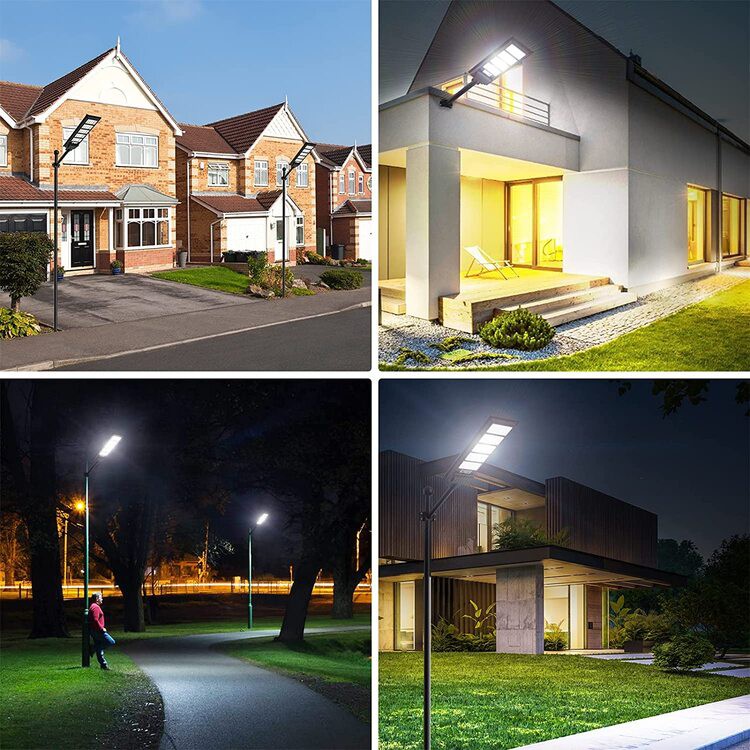
Planning out good street lighting necessitates taking into account a variety of variables that influence the neighborhood surrounding your city's roadways. You should consider things like: How many light posts will be required? LEDs or solar lights: which is better? What is the area's general layout and appearance?
Your strategy's necessary brightness is a key consideration. Determining how much light is required to guarantee that streets, roads, parking lots, and highways are adequately lighted so that pedestrians and automobiles have appropriate sight is not always simple.
Your public streets will be well-lit throughout the night thanks to bright solar street lighting. But where do you look for the best answer? Here's an explanation of lumens, what this brightness measurement implies, and how many you'll need for your really brilliant solar street lights.
How Do Lumens Work?
The day when you could only gauge the performance of your lights by looking at their wattage is long gone. Including lumens on packaging has become customary so that customers and planners may accurately gauge how bright their lights will be. This holds true for any lighting, including floodlights, streetlights, and lampposts.
What exactly are lumens? Lumens (lm) are units of measurement that show you the precise amount of light emanating from a bulb. They measure the amount of visible light coming from a particular light source. The brightness of the light will increase with the lumen rating. A dimmer light is the result of having less lumens.
You must determine the required quantity, power, and location of lumens for your solar street lights. For street lights, the range of lumens varies and is unrelated to wattage. Lumens describe the brightness and quantity of light that a street light will produce.
The difference between lumens and watts
Lumens and watts are often misunderstood. In the past, a bulb's brightness was determined purely by its wattage. A light bulb's output of electrical power is measured in watts. They measure how much energy the lightbulb is using. When you pay your energy bill, you are essentially paying for the amount of watts you use.
A single power unit is a watt. It is a rate that gauges the energy being transferred by a certain item. Watts are used to measure energy in a variety of appliances, including microwaves, refrigerators, and even tiny electronic devices like computers and phones.
A widespread fallacy is that wattage determines how bright a light bulb is; this was made abundantly evident with the introduction of LED lights. With LEDs, more light can be produced with fewer watts. This indicates that more visible light, but with less energy, is being released. Because they save customers money while still producing the same, if not greater, impact, LEDs are quite popular nowadays.
Due to these changes in the lighting business, a new method of determining a bulb's brightness is now necessary. Lumens are useful in this situation. The more lumens there are, the brighter the light is. The amount of energy being emitted from a light source is measured in lumens.
yastmastmastmastmastmastmastmasti as The two are interconnected. Thus, lumens are a far better way to estimate a lightbulb's brightness.
Many consumers may be unsure about how the new regulations would affect their lighting. Here are a few examples of rapid conversions from watts to lumens:
A light producing 1600 lumens may replace a 100-watt incandescent bulb.
It is possible to switch out a 75-watt bulb with one that emits 1100 lumens.
Replace a 40-watt bulb with one that emits 450 lumens.
Manufacturers are now providing lumen counts on packaging to show how much visible light energy the bulbs generate due to the effectiveness of the new brightness metrics. This provides customers and planners with information on the brightness of the lights, making it simpler to plan for a variety of purposes, such as solar street lights.
Are Lumens a Good Measure of Light Brightness?
The simple response is "yes" Lights with greater lumen counts will be brighter than those with less lumens. More lumens doesn't always equate to a larger power need since lumens reflect how the bulb will perform rather than how much energy it requires.
To establish how bright the light will be and how much energy it will use, you need both the wattage number and the lumens rating.
While these factors are critical for interior lighting, it is also crucial to take into account the lumen count required for areas with greater illumination requirements, such as parking lots, parks, stadiums, and roads. You should strive for more lumens when buying solar street light solutions the more light a location requires.





