

Introduction: The Critical Need for Reliable Identification
The Consequences of Using Non‑Certified Lighting
An ordinary industrial LED floodlight may appear robust, but it lacks the engineered features required to withstand or contain an internal ignition. In a hazardous area (e.g., Zone 1 gas or Class II dust), a single arc from a loose connection, a cracked lens, or a hot surface above the auto‑ignition temperature of the surrounding atmosphere can trigger a devastating explosion. Therefore, regulatory frameworks (OSHA 29 CFR 1910.307, ATEX Directive 2014/34/EU, IECEx Scheme) mandate that only certified explosion‑proof equipment be installed. The challenge lies in the visual similarity between certified and non‑certified products – many counterfeit or "look‑alike" fixtures lack critical safety features.
Scope and Structure of This Guide
This article is written for facility engineers, EHS (Environmental, Health & Safety) personnel, procurement specialists, and electrical inspectors. It does not replace formal training or laboratory testing but provides a practical, standards‑based field verification process. The methodology is organised into four sequential sections:
Section 2 – Certification markings: decoding labels, logos, and certificate numbers.
Section 3 – Construction materials: acceptable alloys, glasses, and prohibited materials.
Section 4 – Explosion protection features: flameproof joints, seals, and cable entries.
Section 5 – Hazard rating interpretation: matching Class/Division/Zone and gas/dust groups to the installation environment.
A concluding section summarises red flags and recommends actions when doubt remains.
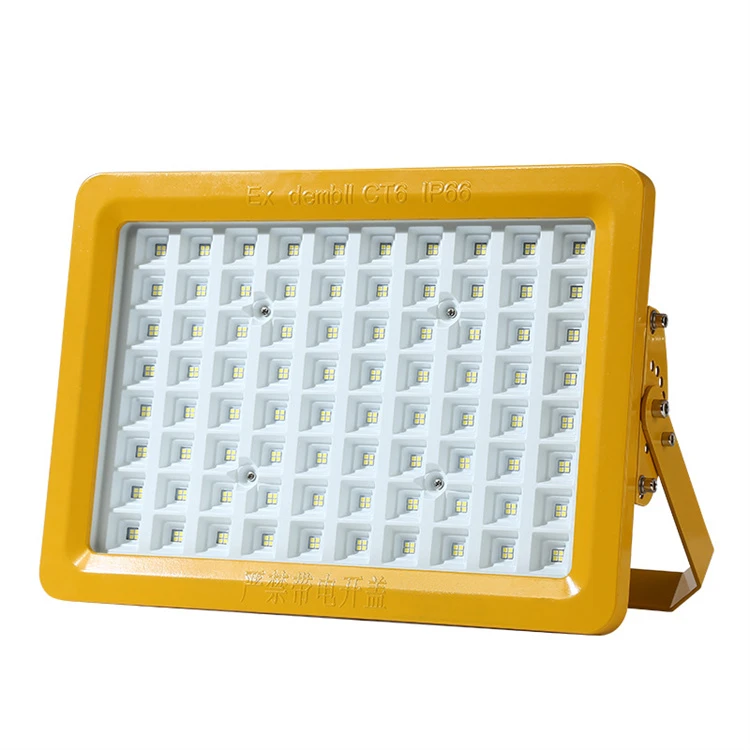
Certification Markings: The First and Most Authoritative Indicator
Mandatory Certification Standards for Explosion‑Proof Luminaires
An authentic explosion‑proof light must bear marks from an accredited certification body (not merely a manufacturer's claim). The most recognised systems are:
| Region | Standard | Certification Marks | Typical Body |
|---|---|---|---|
| International (IECEx) | IEC 60079 series | IECEx logo + certificate number | ExTL (e.g., UL, CSA, SGS) |
| European Union | EN 60079 series (ATEX) | Ex marking inside a hexagon; CE logo | Notified Body (e.g., TUV, DEKRA, BVS) |
| United States (NEC) | UL 844, UL 1203, FM 3615 | UL, cUL, FM, or cFM | Underwriters Laboratories, FM Approvals |
| Canada (CEC) | CSA C22.2 No. 137 | CSA, cUL, cETL | CSA Group |
| China | GB 3836 series | Ex logo + CCC (China Compulsory Certification) | CNEx, CQST |
The absence of any such mark – even if the fixture "looks" heavy‑duty – is conclusive evidence that the light is not certified explosion‑proof.
When present, the Ex marking provides a compact specification. For example:
Ex d IIC T6 Gb
This decodes as:
Ex – Explosion‑protected equipment.
d – Type of protection: flameproof enclosure (IEC 60079‑1). Other types include "e" (increased safety), "n" (non‑sparking), "m" (moulded), "p" (pressurised).
IIC – Gas group (I = mining methane; IIA, IIB, IIC for surface industries – IIC is the most severe, including hydrogen and acetylene).
T6 – Temperature class (max surface temperature ≤85°C). T1 ≤450°C, T2 ≤300°C, T3 ≤200°C, T4 ≤135°C, T5 ≤100°C, T6 ≤85°C.
Gb – Equipment protection level (EPL): Gb = high level for Zone 1 (gas); Gc = normal for Zone 2; Da, Db, Dc for dust.
If the light lacks such a coded marking, it is not certified. Some North American fixtures omit the full Ex code but display a combination of Class, Division, Group, and Temperature Code (e.g., "Class I, Division 1, Groups C, D; T4"). That is equally valid.
Spotting Counterfeit or Invalid Certifications
Counterfeit explosion‑proof lights often include counterfeit labels that copy the appearance of genuine marks but fail on closer inspection. Red flags include:
A generic "CE" mark without a Notified Body number (for ATEX, CE alone is insufficient; the Ex hexagon and certificate number must appear).
A UL or CSA mark that says "Listed" but with an invalid file number (verifiable online at UL Product iQ or CSA Directories).
A certificate number that refers to a different product type (e.g., a certificate for a junction box applied to a lighting fixture).
To validate certification:
Photograph the marking label (including the certificate number).
Search the certification body's online database (e.g., UL's "Certification Verification" tool, IECEx's online certificate directory).
Confirm that the certificate is active (not expired or withdrawn), and that the product model number matches the certificate description.
Check that the listed temperature class and gas group are appropriate for the intended hazardous area (see Section 5).
If the certificate cannot be found or does not match, do not use the light.
Construction Materials: Passive Indicators of Explosion‑Proof Design
Materials That Withstand Internal Explosion Pressure
An explosion‑proof light must contain a deflagration without rupture. This requires ductile, high‑strength materials with adequate wall thickness. The most common are:
Cast aluminium alloy (e.g., A356, AlSi10Mg) – Lightweight, corrosion‑resistant when properly coated (epoxy powder or anodised). Minimum wall thickness typically 4‑6 mm for a given volume per UL 844.
Stainless steel (316L or 304) – Used for corrosive environments (offshore, chemical plants). Heavier and more expensive but superior to aluminium in chloride exposure.
Brass or copper‑free aluminium – For mining applications where sparking from rust (ferrous) is prohibited.
Plastics are not acceptable for flameproof enclosures (Ex d) unless specially formulated and tested, and even then only for "Ex e" increased safety or "Ex n" non‑sparking. A fixture with a polycarbonate lens housing but with a metal base may still be Ex d if the lens is certified as a flameproof glazing (see 3.2). However, the main body of a true explosion‑proof light is almost always metal. If the entire housing is plastic and lacks any certification mark, it is almost certainly not explosion‑proof.
The transparent part of an explosion‑proof light must resist thermal shock, impact, and internal pressure. Acceptable materials:
Tempered soda‑lime glass – Minimum thickness 4‑6 mm, with metal mesh optionally embedded (for additional containment).
Borosilicate glass – Higher thermal shock resistance (used in high‑temperature fixtures).
Quartz (fused silica) – For UV or very high temperature applications.
Sapphire glass – Extremely expensive, rare.
Ordinary float glass, acrylic, or polycarbonate (without certification) is not permitted for flameproof enclosures because they can shatter, releasing hot gases and flames. If a light has a plastic lens and claims to be explosion‑proof, it must show a marking indicating "Ex n" or "Ex e" with a specific lens certification. In practice, for most industrial Ex d lights, the lens is thick, heavy glass retained by a metal ring.
Warning Signs: Fragile Materials and Poor Finishes
The following materials almost always indicate a non‑explosion‑proof (or counterfeit) product:
Unreinforced polycarbonate or ABS for the main enclosure.
Standard soda‑lime glass (non‑tempered) of thickness <3 mm.
Zinc alloys (pot metal) – prone to cracking under pressure.
Ferrous materials without corrosion protection – rust can compromise flame paths (see Section 4.1).
A genuine explosion‑proof light feels significantly heavier than a comparable non‑certified light due to thicker walls and metal construction. The casting should be clean, without porosity or flash. Gaskets (if present) are silicone or fluorocarbon (FKM/Viton), not ordinary neoprene. Cheap lights use low‑quality rubber that hardens and loses seal integrity after a few thermal cycles.
Explosion Protection Features: Engineered Flame Paths and Sealing
Flameproof Joints (Flame Paths)
The defining feature of a flameproof (Ex d) enclosure is its ability to allow hot gases from an internal explosion to escape through precisely machined joints, but cool them below the ignition temperature of the external atmosphere. These joints – also called flame paths – are characterised by:
Joint gap (typically 0.05‑0.2 mm for planar joints).
Joint length (minimum 10‑25 mm depending on gas group and internal volume).
Surface finish (roughness Ra ≤ 3.2 µm to prevent flame transmission).
These dimensions are specified in IEC 60079‑1 (Table 1 for planar, spigot, threaded joints) and are verified during type testing. A non‑explosion‑proof light does not have such controlled gaps; it uses simple o‑rings or no flame path at all.
When examining a light, look for:
Threaded joints on the lens ring, cable entry, and housing cover. Threads must be at least 5 full engaged turns (IEC 60079‑1: 5 threads minimum for thread diameter >50 mm). The threads should be clean and not lubricated with ordinary grease (only anti‑seize or specified lubricant).
Planar joints where two metal surfaces meet (e.g., between housing and cover). These surfaces should be unmarred – any scratch deeper than 0.05 mm that crosses the flame path invalidates the certification.
Spigot or labyrinth joints on some designs – these are more complex but equally critical.
If a light has a simple rubber gasket as the only seal between housing and cover, and no metal‑to‑metal flame path, it is not explosion‑proof (it might be weatherproof IP65 or IP66, but that is unrelated). Some Ex d lights include an additional gasket for weather sealing, but the primary flame path is still metal.
Cable Entry and Conduit Sealing
Cables entering an explosion‑proof enclosure must pass through a certified cable gland (also Ex d or Ex e certified). The gland compresses a sealing ring around the cable outer sheath and often includes an internal sealing washer that hardens (in the case of compound‑filled glands). Common types:
Metric brass glands (Ex d) – with a long thread engagement and a cone or compression ring that grips the armour.
NPT threaded hubs (North America) – used with rigid metal conduit. The conduit threads themselves act as a flame path (taper threads, 3‑4 engaged threads minimum).
Sealing compound glands – for unarmoured cables; a two‑part epoxy is poured into a chamber to create a gas‑tight seal.
If the light has a standard PG or NPT entry without a certified gland, or if the gland is plastic with no markings, the assembly is not explosion‑proof. Moreover, unused entries must be closed with certified explosion‑proof plugs (not a plastic cap or tape).
Inside the enclosure, terminals or wiring compartments may be sealed with a compound (e.g., epoxy) to prevent passage of gas from a sparking area to a non‑sparking area. This is known as "encapsulation" or "sealing of barriers". In many Ex d lights, the LED driver is potted (fully encapsulated) to eliminate arcs and hot components. If you open a light and see exposed circuit boards with no potting, and the certification is Ex d, that is a strong contradiction – it should have been prevented by design.
Absence of Protection Measures – A Clear Negative Indicator
If the light has:
No visible flame path (just a plain gasket),
Standard Phillips or slotted screws (vs. captive socket head cap screws with anti‑vibration washers),
No thread sealant or compound on entries (for conduit systems),
A simple snap‑on lens cover,
then it is not explosion‑proof regardless of what the label says. Counterfeiters often copy labels but cannot economically replicate the intricate machining of flame paths.
Hazard Rating Interpretation: Matching the Light to the Environment
Understanding Area Classification Systems
The NEC (NFPA 70) defines hazardous locations using Classes, Divisions, and Groups.
Class I – Flammable gases or vapours.
Division 1: Ignitable concentrations exist under normal operating conditions, or frequently during repair/maintenance.
Division 2: Ignitable concentrations may exist only under abnormal conditions (e.g., a leak from a broken pipe).
Class II – Combustible dusts.
Class III – Ignitable fibres or flyings.
Groups (A, B, C, D for gases; E, F, G for dusts) indicate the specific material.
An explosion‑proof light must be marked with the appropriate Class, Division, and Group(s). For example, "Class I, Division 1, Groups B, C, D" means the light is suitable for the most severe gas environment (Group B includes hydrogen). If the light is only marked "Class I, Division 2", it is not permitted in Division 1 areas.
The Zone system is more granular:
Zone 0 – Continuous or long‑duration presence of explosive gas atmosphere (>1000 h/yr). Only "Ex ia" (intrinsic safety) or "Ex ma" (encapsulated) equipment permitted – not Ex d.
Zone 1 – Likely to occur occasionally under normal operation (10‑1000 h/yr). Ex d, Ex e, Ex p, etc. allowed.
Zone 2 – Unlikely and only for short periods (<10 h/yr). Ex n, Ex e, Ex d allowed.
The light's marking (e.g., Ex d IIC T6 Gb) shows it is certified for Zone 1 (Gb). Using it in Zone 0 would be non‑compliant.
Matching Temperature Class and Gas Group
The maximum surface temperature of the light under rated operating conditions (including a 40°C ambient, plus a safety margin) must be below the auto‑ignition temperature of the surrounding gas or dust. For example:
| T‑Code | Maximum Surface Temp | Example Ignition‑Sensitive Material |
|---|---|---|
| T1 | 450°C | Acetone, methane |
| T2 | 300°C | Ethanol, propane |
| T3 | 200°C | Diesel fuel, gasoline |
| T4 | 135°C | Ethyl ether, acetaldehyde |
| T5 | 100°C | Carbon disulphide (auto‑ignition 90°C) requires T5 |
| T6 | 85°C | Only for very low ignition temperature substances |
If the hazardous area contains carbon disulphide (T5), you cannot use a T4‑rated light. The marking must be T5 or T6.
The group letter indicates the maximum experimental safe gap (MESG) and minimum igniting current ratio (MIC). Group IIC is the most onerous (hydrogen, acetylene). A light marked IIC can be used in IIB or IIA areas; but a IIB light cannot be used in a IIC area (hydrogen service). This is critical for battery charging rooms (hydrogen evolution) – only IIC or Class I, Group B permitted.
Common Mistakes in Hazard Rating Selection
Using a Division 2 light in a Division 1 area – The light lacks the flame path length and strength to withstand frequent internal explosions.
Ignoring temperature class for dust layers – For Class II dust, the T‑code must consider both the dust cloud and a 5‑mm dust layer (which raises surface temperature due to insulation).
Assuming "Explosion‑proof" is universal – A light certified for gas (Ex d) is not automatically suitable for dust (Ex tD) unless also marked accordingly. Dust explosions require different protection (dust ignition‑proof enclosure, e.g., UL 1203 Class II).
Conclusion: A Multi‑Factor Decision Protocol
Summary of Verification Steps
To conclusively determine if a light is explosion‑proof, the inspector or buyer must:
Locate and decode certification markings – ATEX, IECEx, UL, CSA, or equivalent. Verify the certificate number online.
Examine construction materials – Cast aluminium, stainless steel, or brass enclosure; tempered glass lens; heavy construction. Reject plastic‑bodied lights without valid Ex n or Ex e marks.
Inspect explosion protection features – Machined flame paths (threads or planar joints), certified cable glands, unused entries with plugs, and internal potting.
Match hazard rating – Ensure the light's Class/Division/Group (or Zone/Gas group/T‑code) are appropriate for the actual hazardous location.
If any of the four steps raises doubt (e.g., missing mark, plastic lens, no flame path, wrong T‑code), the light must not be used. Counterfeit products are increasingly sophisticated; the only reliable safeguard is to purchase from authorised distributors and maintain documentation.
Final Answer to the Title Question
How to tell if a light is explosion‑proof? Not by appearance alone, but by systematic verification of certification, materials, flame paths, and area ratings. The presence of a certification label is the single most authoritative indicator, but it must be corroborated by physical inspection of construction details that are expensive to counterfeit. When in doubt, consult a certified equipment supplier or a registered professional engineer experienced in hazardous area classification.

How To Cooperate With Us?
Our firm prides itself on owning its own factory, guaranteeing complete control over the production process and the quality of our goods. We are not only agents; we are manufacturers committed to offering our clients the most competitive rates available. We invite consumers to evaluate our samples first, as we are assured that the quality and pricing of our items are self-evident. Our dedication to excellence and client satisfaction compels us to consistently perform at our best and provide superior quality products.
Our address
3rd Floor, 5th Building, Hebei Industrial Park, Hualian Community, Longhua District, Shenzhen, China





