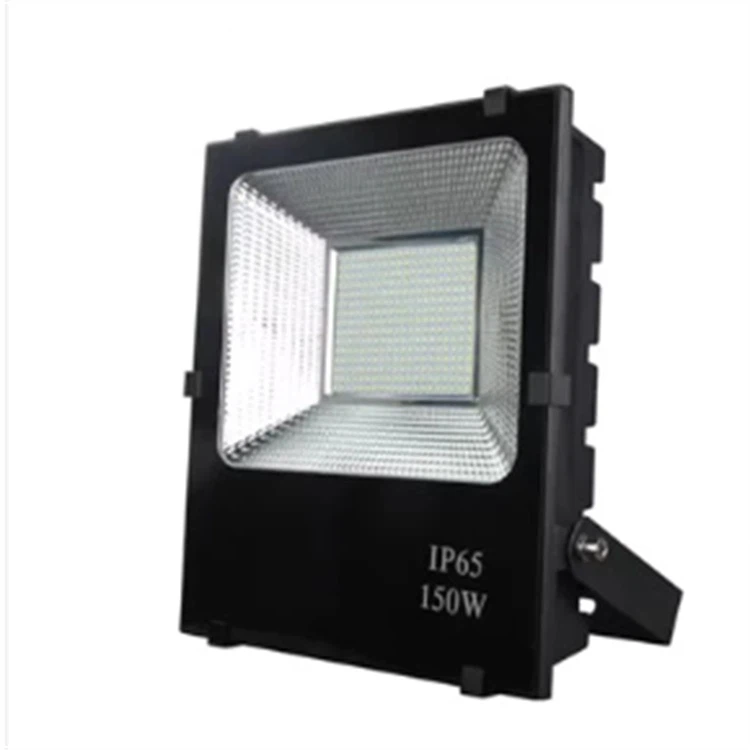
Square floodlights are commonly used for outdoor lighting, but sometimes they can encounter issues that can make them less effective or even completely unusable. As one of the most practical and widely adopted outdoor lighting fixtures, square floodlights are extensively installed in residential yards, commercial plazas, parking lots, building exteriors, stadiums, and industrial outdoor areas. Featuring a square structural design, wide lighting coverage, high brightness, and strong environmental adaptability, these floodlights are designed to withstand long-term outdoor exposure and provide stable, large-area illumination for night environments. However, prolonged exposure to complex outdoor conditions including rain, snow, wind, dust, high temperature, and low temperature, coupled with long hours of continuous operation and aging electrical components, will inevitably lead to various functional failures and performance degradation over time. Minor faults may result in dim lighting, delayed startup, or unstable operation, while severe problems can cause the lights to stop working entirely, affecting outdoor lighting effects, site safety, and daily use. In this article, we will explore some common problems that square floodlights may experience and provide tips on how to troubleshoot and fix them, helping users quickly diagnose daily faults, restore normal lighting functions, and maintain the long-term stable operation of outdoor floodlights.
1. Bulb Problems
One of the most common issues with square floodlights is bulb failure. As the core luminous component of square floodlights, the bulb directly determines the lighting performance and service life of the entire fixture. Compared with indoor lighting bulbs, outdoor floodlight bulbs work in harsher environments and bear higher operating pressure, making them the most vulnerable part to failure and damage in the whole lighting system. This can be due to a variety of reasons, such as age, voltage irregularities, or simply burning out from use. Long-term continuous lighting will cause natural aging of the bulb's internal luminous materials and electronic components, gradually reducing luminous efficiency until complete failure. In addition, unstable outdoor power supply often causes voltage surges, instantaneous high voltage impacts, and low voltage fluctuations, which will break the internal circuit structure of the bulb and cause burnout in a short time. Frequent switching on and off of the floodlight, as well as long-term overload operation, will also accelerate bulb loss and trigger premature burning failure.
To troubleshoot this issue, you should first check if the bulb is still in good condition. Before inspection, it is necessary to cut off the power supply of the floodlight in advance and wait for the bulb to cool down completely to avoid electric shock accidents or scald injuries. Users can carefully disassemble the light cover and take out the bulb for visual inspection, checking for obvious blackening of the bulb surface, broken filaments, damaged lamp pins, or abnormal deformation. If it is not, then you will need to replace it with a new one. It is important to always use the recommended wattage and type of bulb for your square floodlight. Many users tend to replace bulbs with higher-power alternatives in pursuit of brighter lighting, which will not only cause excessive heat generation of the fixture, accelerate the aging of internal circuits and shells, but also trigger short circuits and burnout risks due to mismatched load parameters. Using bulbs with inconsistent models and specifications will also lead to poor matching, unstable lighting, and reduced waterproof and explosion-proof performance of the floodlight. Adhering to the original manufacturer's recommended bulb parameters can ensure the best operating state of the square floodlight and effectively extend the overall service life of the equipment.
2. Electrical Connection Issues
Another common problem with square floodlights is loose or damaged electrical connections. The electrical connection part is the key channel for the floodlight to obtain power, and its stability directly determines whether the lighting equipment can work normally. Unlike indoor lighting wiring that is protected in closed walls, the wiring joints and connection terminals of outdoor square floodlights are mostly exposed or semi-exposed, lacking comprehensive closed protection. This can occur due to exposure to moisture or corrosion. Outdoor rainy days, heavy dew, humid air, and accumulated water in the installation area will continuously erode the electrical connection parts. Over time, moisture will penetrate the wiring interface, causing metal terminals to oxidize and rust, and further leading to corrosion of connection points. In addition, long-term outdoor strong wind shaking, building slight vibration, and thermal expansion and contraction of metal materials in alternating high and low temperatures will cause the connecting wires to loosen and shift gradually.
If you suspect this is the case, turn off the power to the light, and then carefully inspect the electrical connections. Safety is the top priority in all electrical maintenance operations. Users must completely cut off the total power supply of the floodlight circuit and confirm the power-off state before carrying out disassembly and inspection work to avoid electric shock safety accidents. During inspection, focus on checking the wiring terminals, wire joints, and internal circuit connection points of the lamp body to find loose wires, falling joints, rusted terminals, and damaged wire skin. If you find a loose connection, tighten it with a screwdriver. Use a matched screwdriver to fasten the loose screws and fix the displaced wires to ensure tight and stable contact at the connection points. If you notice corrosion, you may need to replace the connector or clean the corroded area. For slightly corroded parts, users can use professional electrical cleaning agents to remove rust and oxide layers, and dry the parts thoroughly before reconnecting the circuit. For severely corroded and aging connectors and wires that have lost their conductive stability, direct replacement is the most reliable solution to avoid recurrent circuit faults and potential electrical safety hazards.
3. Faulty Sensor
If your square floodlight has a motion sensor and it has stopped working, the problem may be a faulty sensor. Most modern outdoor square floodlights are equipped with intelligent motion sensors, which can automatically sense surrounding human body or object movement signals, realizing automatic lighting and delayed shutdown functions. This intelligent design effectively saves electric energy, avoids long-term idle lighting waste, and improves the intelligence and convenience of outdoor lighting. However, the motion sensor is a precision electronic induction component with high sensitivity, and it is easily affected by outdoor harsh environments and human factors, resulting in induction failure and functional abnormality.
Test it by waving your hand or walking in front of the light. Daily sensor fault detection is simple and operable. Users can complete the test under normal power supply conditions by waving hands repeatedly within the sensor induction range or walking back and forth in the monitored area to observe whether the floodlight can be triggered normally. If it does not turn on, then you will need to replace the sensor. When the sensor completely fails to induce and the floodlight cannot be automatically started through effective movement signals, it indicates that the internal induction chip or circuit of the sensor has been damaged and cannot be repaired simply, and overall replacement is required. Make sure to follow the manufacturer's instructions on how to install the new one properly. Different brands and models of square floodlight sensors have different installation structures, wiring sequences, and parameter matching requirements. Users need to strictly abide by the official installation guidelines, complete disassembly, wiring fixation, and position calibration step by step, to ensure that the new sensor can sense accurately and operate stably, restoring the intelligent induction function of the floodlight.
4. Power Problems
Power supply issues can also cause problems with square floodlights. Stable and compliant power supply is the basic guarantee for the normal operation of square floodlights. Most abnormal lighting failures of floodlights are not caused by the lamp body itself, but by external power supply system faults. Outdoor lighting circuits have long laying distances and are exposed outdoors for a long time, so they are prone to circuit aging, line damage, and load abnormality, leading to power supply interruption or unstable power supply for floodlights. If the light is not turning on, first check if the power supply is working properly. When the floodlight fails to start, users should first eliminate the fault of the power supply system, which is the most efficient troubleshooting idea.
You can do this by testing other lights or appliances that are on the same circuit. By checking the operating state of other electrical equipment on the same circuit, users can quickly judge whether the fault occurs in the public power supply circuit or a single floodlight fixture. If other equipment also cannot work normally, it proves that there is a fault in the public circuit. If the circuit breaker has tripped, reset it by turning it all the way off and then back on. Overload operation, short circuit impact, and leakage protection will trigger the automatic tripping of the circuit breaker to cut off the power supply and protect the circuit safety. Users only need to reset the circuit breaker correctly according to the operation specifications to restore power supply in most cases. If the problem persists, then you may need to call a professional electrician to diagnose and fix the problem. If the circuit breaker trips repeatedly, or the power supply is still abnormal after resetting, it indicates that there are hidden dangers such as circuit aging, internal short circuit, and line leakage in the power supply system. Non-professional personnel cannot accurately locate and repair the fault, so it is necessary to contact a professional electrician for detection and maintenance to avoid electrical accidents.
5. Dirty or Cloudy Cover
Sometimes, square floodlights may become less effective due to a dirty or cloudy cover. The outer cover of the square floodlight is a transparent protective and light-transmitting component, which undertakes the dual functions of protecting internal electrical components and ensuring uniform light output. In long-term outdoor open-air use, the light cover is directly exposed to the external environment and is easily polluted and damaged. This can happen due to exposure to the elements or due to moisture buildup inside the light. Outdoor dust, fallen leaves, bird droppings, sand and rain stains will continuously adhere to the lamp surface, forming thick dirt over time and blocking light transmission. In addition, the aging of the lamp body waterproof rubber ring will cause the waterproof performance to decline, resulting in rainwater and humid air penetrating into the lamp body, forming condensed water and water mist inside the cover, making the cover cloudy and blurred.
To clean it, use a soft cloth or sponge and mild soap and water. For surface dirt, users can soak a soft cotton cloth or sponge in diluted mild soapy water, gently wipe the surface of the light cover to remove stains and dust, and then wipe clean with a clean damp cloth. Avoid using abrasive materials that can scratch the cover. Hard cleaning tools such as steel wool and rough scouring pads will leave irreversible scratches on the transparent cover, affect light transmission and beauty, and accelerate cover aging. If it is cloudy due to moisture buildup, you may need to open the light and let it air out before reassembling. For internal water mist and condensed water caused by poor waterproof performance, users need to cut off the power first, gently open the lamp body shell, fully dry the internal moisture through natural air drying or low-temperature ventilation, and check and replace the aging waterproof accessories at the same time to solve the problem of internal water accumulation fundamentally.
There are several common problems that can affect square floodlights. Daily use of outdoor square floodlights is easily troubled by bulb damage, electrical connection failure, sensor faults, power supply abnormalities, and blurred lamp covers. These common faults will not only reduce the lighting brightness and use effect of floodlights, but also accelerate equipment aging and increase replacement costs if not handled in time. By troubleshooting and fixing these issues, you can extend the life of your light and ensure that it is working correctly. Timely detection and scientific maintenance of floodlight faults can effectively avoid minor faults evolving into serious damage, maximize the service life of lighting equipment, and keep outdoor lighting systems efficient and stable. Always follow the manufacturer's instructions and use safety precautions when working with electricity. All disassembly, inspection and maintenance operations of electrical equipment must comply with safety operation specifications, and strictly follow the official guidelines of the product to avoid safety accidents and secondary equipment damage caused by irregular operation. If you are unsure about how to fix an issue, consider consulting a professional electrician. For complex circuit faults, sensor internal damage and other problems that cannot be solved by daily simple maintenance, it is the safest and most effective way to seek help from professional electricians, ensuring the safe and stable operation of square floodlights for a long time.

How To Cooperate With Us?
We are happy that we have total control over the manufacturing process and the quality of our products since we have our own facilities. Since we are producers rather than just brokers, we are dedicated to providing our customers with the best pricing. Since we are certain that the price and quality of our products are transparent, we advise customers to examine our samples first. Our commitment to quality and customer satisfaction drives us to continuously provide top-notch goods.
Our address
3rd Floor, 5th Building, Hebei Industrial Park, Hualian Community, Longhua District, Shenzhen, China